History has a way of hiding in plain sight. In Philadelphia, it waits in cracked bells, narrow cobblestone alleys, and the stone steps of a museum. These landmarks are more than markers of the past – they are evidence of choices, ambitions, and accidents that shaped a nation.
For travelers interested in historical landmarks in Philadelphia, knowing these backstories makes the city easier to understand. These places are famous, yes, but they also reveal how Philadelphia actually worked when history unfolded.
Many visitors also plan their trip around broader things to do in Philadelphia, especially during busy seasons when sightseeing blends with event schedules across the city.
During FIFA World Cup periods, attention often shifts between sightseeing and stadium access. Many visitors then look at where to stay near Lincoln Financial Field to balance travel time with match schedules.
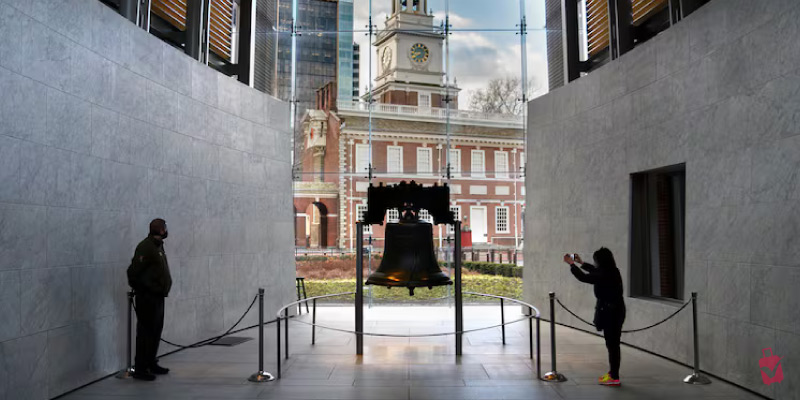
The Liberty Bell is often linked to the moment America declared independence, but its real story is more complex and quietly interesting. The bell was ordered in 1751, well before the American Revolution, to honor William Penn’s Charter of Privileges, which outlined early rights for Pennsylvania residents.
When it arrived in Philadelphia, it cracked almost immediately. Local craftsmen carefully recast it, hoping to fix the problem, but the bell never fully held up under repeated use. The inscription on the bell comes from the Bible and reads, “Proclaim Liberty throughout all the land unto all the inhabitants thereof.” That line later took on deeper meaning when abolitionists embraced the bell as a symbol of freedom for everyone.
The Liberty Bell
Despite popular belief, the bell likely did not ring on July 4, 1776. It may not have rung on July 8 either, when the Declaration of Independence was publicly announced, since the State House steeple was under repair. There are no firsthand records to confirm either event.
What is certain is that the bell rang often for many years. Between 1753 and 1846, it marked major civic events and the deaths of figures like Benjamin Franklin and George Washington. Its final major crack occurred in 1846 during a ringing for Washington’s Birthday, ending its active use.
Today, the Liberty Bell rests quietly at the Liberty Bell Center, shaped as much by mystery as by history.
2. Eastern State Penitentiary
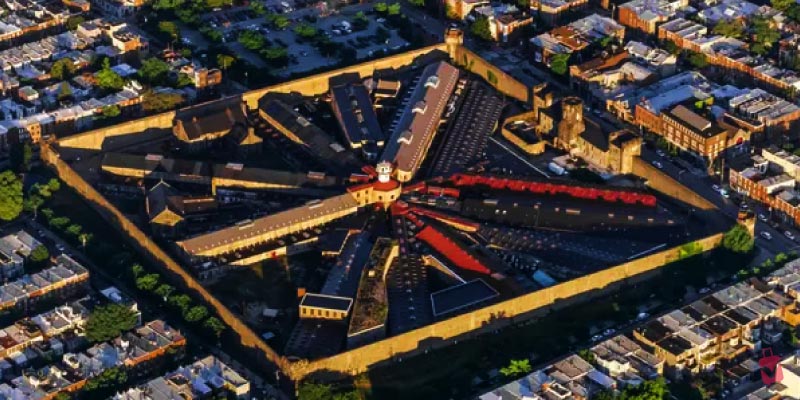
Eastern State Penitentiary began as a hopeful experiment rooted in reform rather than punishment. In the late eighteenth century, Philadelphia reformers such as Benjamin Franklin and Dr. Benjamin Rush believed prisons should encourage reflection and personal change. That belief led to the creation of Eastern State, which opened to its first prisoner in 1829.
The prison was designed around solitary confinement paired with labor. Its radial layout allowed guards to observe calmly from a central point while prisoners remained isolated. The exterior appeared deliberately severe, while the interior felt solemn and church-like.
Eastern State Penitentiary
Criticism emerged quickly. Visitors noticed emotional distress among prisoners, and in 1842, Charles Dickens openly condemned the system as harmful. As the prison population grew, isolation became difficult to maintain, and inmates increasingly shared cells and spaces.
Eastern State closed in 1970 after years of deterioration. Today, it stands preserved as a historic site, inviting visitors to thoughtfully reflect on how idealistic ideas can sometimes lead to lasting consequences.
3. The Navy Yard
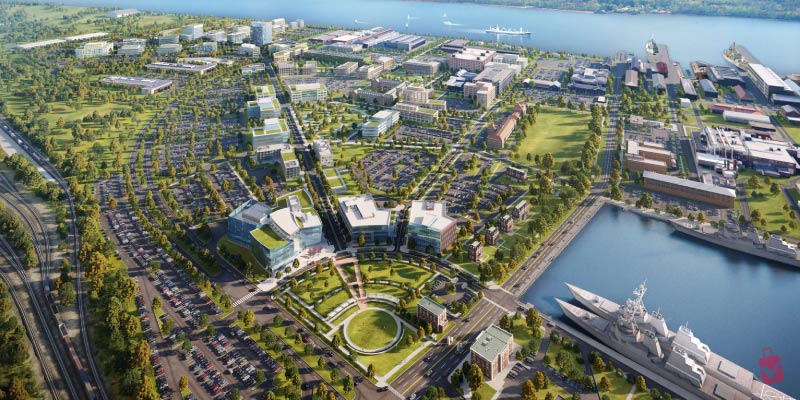
The Navy Yard may look modern today, but its story runs much deeper than most visitors expect. Set along the Delaware River in South Philadelphia, this site once served as a powerful center for shipbuilding and naval operations. During World War II, nearly 50,000 people worked here, building and repairing warships that directly supported the nation’s military effort.
Philadelphia is widely recognized as the birthplace of the U.S. Navy, and decades later, the Navy Yard quietly became the birthplace of naval aviation in the 1940s. In 2000, the City of Philadelphia took ownership of the property and began a careful transformation.
The Navy Yard
What had long been a restricted military zone slowly reopened as a massive riverfront campus. Historic naval buildings remain firmly in place, now standing beside modern offices, research labs, parks, and waterfront paths. The shift feels intentional, allowing history and progress to exist side by side.
Today, the Navy Yard hosts more than 150 companies and supports over 15,000 jobs across fields such as manufacturing, logistics, robotics, health care, and life sciences. With ongoing investment and steady growth, it continues to stand out as one of the country’s most successful large-scale redevelopments.
For FIFA World Cup visitors, the Navy Yard is a perfect nearby stop. Whether you want to take a scenic walk along the river, explore the site’s history, or grab a bite between matches, it offers a calm, inspiring alternative to the stadium crowds.
4. Independence Hall
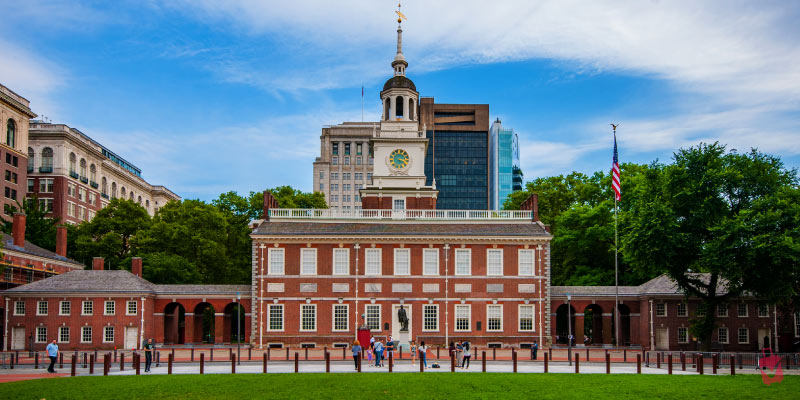
Independence Hall is where the United States slowly and deliberately came into being. Construction began in 1732, with the building originally serving as the Pennsylvania State House. Over time, it became the meeting place for the Second Continental Congress and later the Constitutional Convention, placing it at the center of the nation’s earliest political decisions.
Within the Assembly Room, delegates debated independence, government structure, and representation with intensity and care. The Declaration of Independence and the U.S. Constitution were both debated and signed here.
Independence Hall
George Washington was appointed Commander in Chief of the Continental Army, and the foundation of the nation’s governing system began to take shape. Now recognized as a UNESCO World Heritage Site, Independence Hall stands as lasting proof that American democracy was built through discussion, disagreement, and shared determination.
5. Elfreth’s Alley
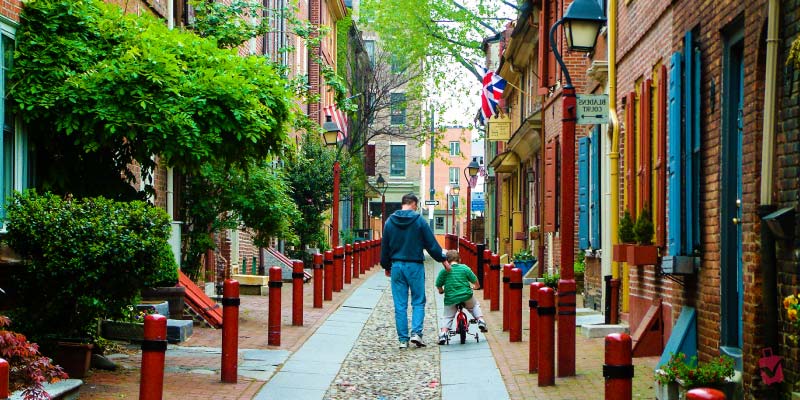
Elfreth’s Alley preserves history at street level, where everyday life has quietly continued for centuries. Established in 1703, it is the oldest continuously inhabited residential street in the United States. The narrow cobblestone path was home to working Philadelphians such as carpenters, blacksmiths, and glassblowers.
Its location near the river made it practical for artisans who relied on shipping and trade. Over time, the alley suffered neglect and faced the possibility of demolition. Preservation efforts that began in the 1930s helped save the homes and restore their historic character. Today, about 60 residents still live here, maintaining an unbroken sense of continuity.
Elfreth’s Alley
Beyond its preserved architecture, Elfreth’s Alley is known for its folklore and long-standing ghost stories, often shared during guided tours. Whether approached for history or atmosphere, the alley offers an unusually personal window into early American urban life.
6. The American Swedish Historical Museum
The American Swedish Historical Museum tells a quieter story, yet one that reshapes how Philadelphia’s early history is understood. Founded in 1926, it holds the distinction of being the oldest Swedish museum in the United States.
The museum sits on ancestral Lenape land and within the former boundaries of the New Sweden Colony, a seventeenth-century settlement that once followed the Delaware River through parts of present-day Pennsylvania, New Jersey, and Delaware.
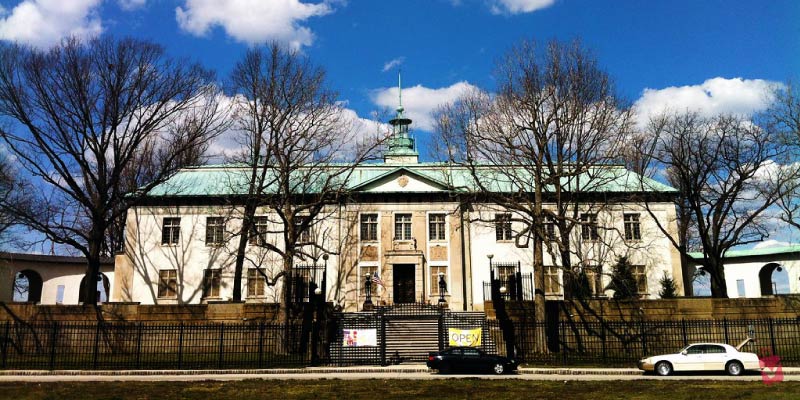
The American Swedish Historical Museum
The museum was created to recognize Swedish contributions to American history and was intentionally placed in Philadelphia due to the city’s direct ties to New Sweden. Its architecture reflects that purpose clearly, blending the form of a traditional Swedish manor house with arcades inspired by George Washington’s Mount Vernon.
For FIFA World Cup visitors staying near the stadium complex, the museum offers an easy and meaningful cultural stop between matches or events. Inside, twelve galleries explore immigration, craftsmanship, innovation, and daily life, offering context that quietly deepens the understanding of how early Philadelphia developed.
Visitors planning their trip around major celebrations may also want to review upcoming festivals in Philadelphia to see how cultural events align with their stay.
7. The Rocky Steps
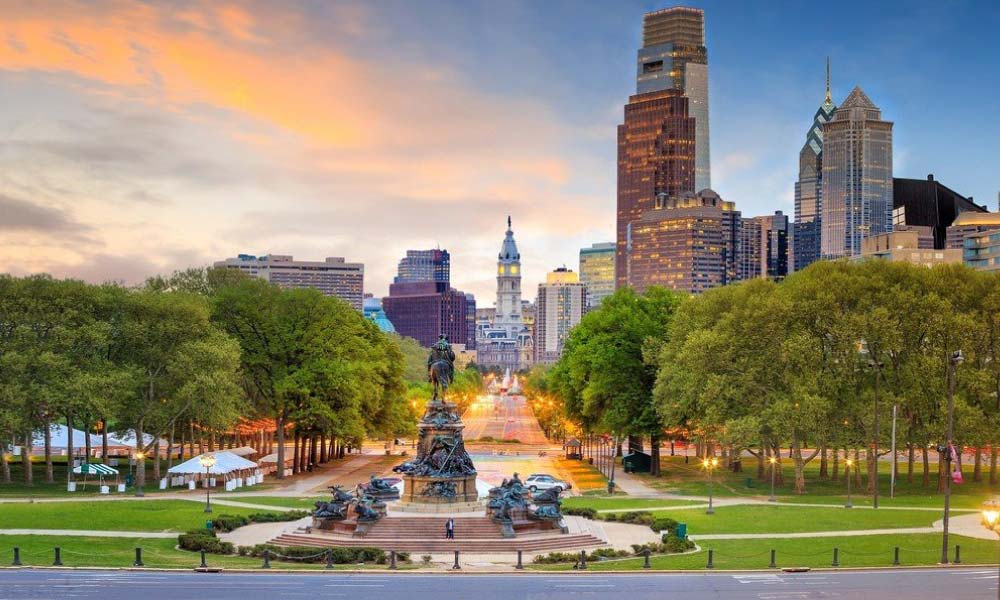
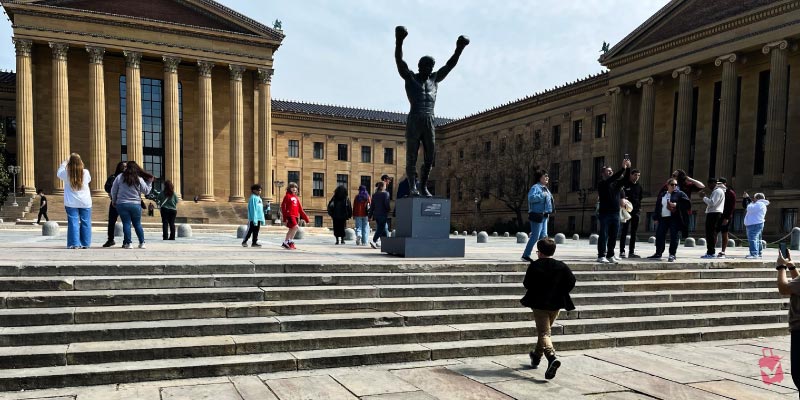
The Rocky Steps became famous not through history books, but through film. The 72 stone steps leading to the Philadelphia Museum of Art gained worldwide attention after appearing in the 1976 movie Rocky. In the film, Rocky Balboa runs up the steps during training, finishing with a triumphant pose at the top.
The moment quickly became one of the most recognizable scenes in modern cinema. Today, visitors recreate the climb daily, often laughing, sometimes breathing hard, and usually stopping for photos. A bronze statue of Rocky stands near the base of the steps and remains one of the city’s most photographed landmarks.
The Rocky Steps
From the top, the view opens along the Benjamin Franklin Parkway toward City Hall. What started as a simple filming decision naturally evolved into a global symbol of perseverance, turning an ordinary set of museum steps into one of Philadelphia’s most recognizable experiences.
Conclusion
These historical landmarks in Philadelphia don’t just tell stories—they invite reflection. You see how decisions made long ago still ripple through the city’s streets, shaping its character and, perhaps, offering subtle lessons for today. For anyone curious about the past, paying attention to these details can transform a casual visit into a genuinely grounding experience.
If a city can teach patience, curiosity, and respect for the past, Philadelphia does it quietly and effectively. Look a little closer on your next visit—you may be delightfully surprised at what history patiently shows you.
Top landmarks include the Liberty Bell, Independence Hall, Eastern State Penitentiary, Elfreth’s Alley, the Navy Yard, the American Swedish Historical Museum, and the Rocky Steps. Each tells a unique story about the city and the nation’s history.
Built in 1732 as Pennsylvania’s State House, Independence Hall hosted the Second Continental Congress and the Constitutional Convention. The Declaration of Independence and the U.S. Constitution were debated and signed here.
Elfreth’s Alley was established in 1703, making it the oldest continuously inhabited residential street in the U.S. It’s famous for its cobblestone charm, colonial homes, and tales of everyday life from Philadelphia’s early residents.
The 72 steps at the Philadelphia Museum of Art became iconic after the 1976 film Rocky. Climbing them symbolizes perseverance and determination, and a bronze Rocky statue at the base is a popular photo spot.
Key National Historic Landmarks include the Liberty Bell, Independence Hall, Elfreth’s Alley, Eastern State Penitentiary, Betsy Ross House, and Carpenter’s Hall. Each landmark preserves a piece of American history.
Margaret C. Jones, a passionate explorer of North America, captivates readers with her vivid tales on Travelarii’s blog. With a keen eye for hidden gems and local culture, Margaret offers expert advice and unique insights to enhance your travel experience. Her stories bring the diverse landscapes and vibrant cities of North America to life, inspiring readers to embark on their own adventures.






 Stay Near
MetLife Stadium
Stay Near
MetLife Stadium