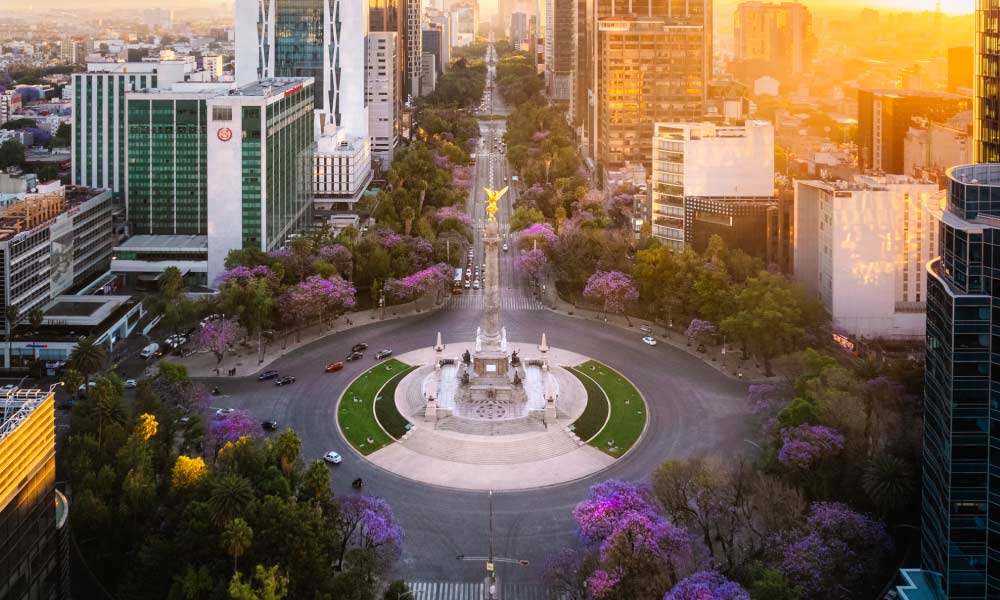
Historical landmarks in Mexico City will stop you mid-step. Completely without warning, no buildup. Just a street corner that suddenly makes 700 years feel surprisingly close.
You’ll come for the World Cup, the goals, the crowd noise, the face paint. The city totally gets that. But it has quietly other plans for your in-between hours. Aztec ruins sit closely beside colonial cathedrals. Plazas where emperors once proudly stood, now casually packed with food carts and football jerseys. That kind of thing adds up remarkably fast.
A lot of fans will easily treat all of this as background noise. That’ll honestly be the wrong call. Mexico City is already deeply extraordinary before FIFA officially put it on the schedule, and the list of things to do in Mexico City between match days is longer than most people actually expect.
If you’re still sorting your stay, checking hotels near Azteca Stadium, Mexico City, early will save you real trouble later.
This blog will carefully take you through the landmarks that genuinely gave this city its actual backbone, so when the game clock runs out, you’ll already know exactly where to head next.
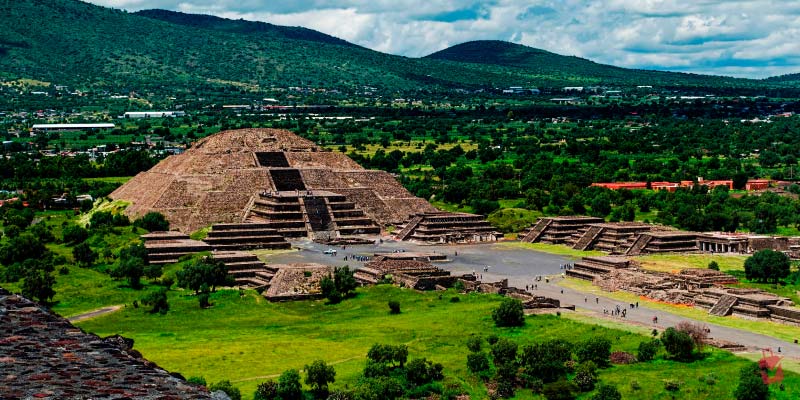
Long before the Mexica founded Tenochtitlan, Teotihuacán was already a giant. The city rose around the first centuries of the Common Era and reached a population that rivaled Rome at the time. Its builders remain unknown, which makes the scale even more striking. The Avenue of the Dead runs straight and wide, framed by the Pyramid of the Sun and the Pyramid of the Moon, both aligned with celestial events rather than political borders.
Teotihuacán
Walking here gives context to later historical places in Mexico City. The Mexica did not build Teotihuacán, yet they treated it as sacred ruins, believing the gods created the sun and moon there. That belief shaped how later rulers understood power and ritual. This site helps travelers see that Mexico City history did not begin with the Spanish arrival. It was already layered and deeply symbolic.
Entry Fee: $210 MXN for international visitors; $105 MXN for Mexican nationals/residents.
Visiting Hours: Daily, 8:00 AM – 5:00 PM.
2. Plaza de las Tres Culturas
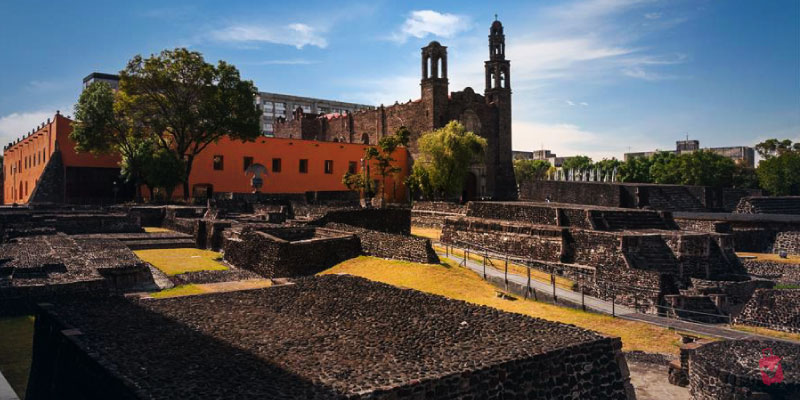
Plaza de las Tres Culturas in Tlatelolco compresses centuries into a single open space. Pre-Hispanic ruins stand beside a colonial church, with a modern government building looming behind them. The name reflects Indigenous, Spanish, and modern Mexican cultures sharing one ground.
The plaza is also tied to a painful recent chapter. In 1968, student protests ended in violence here, just days before the Olympic Games. That moment still shapes how many locals talk about civic power and public space.
Plaza de las Tres Culturas
As historical landmarks in Mexico City go, this one is less about architecture and more about memory. It shows how the past keeps interrupting the present, sometimes quietly, sometimes forcefully.
Entry Fee: Free
Visiting Hours:Daily, 8:00 AM – 6:00 PM.
3. Museo Nacional de Antropología
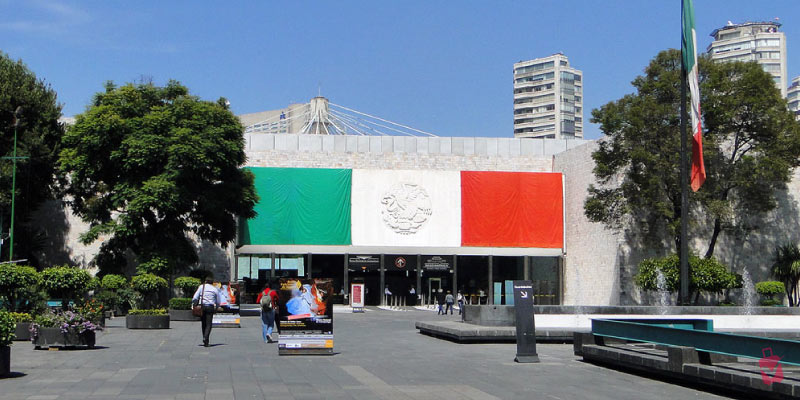
If there is one place that helps first-time visitors understand the full arc of Mexico, this museum does that work patiently and clearly. It holds artifacts from across Mesoamerica, including the Aztec Sun Stone, Maya stelae, and objects from cultures many travelers have never heard named elsewhere.
Museo Nacional de Antropología
The building itself matters. Designed in the 1960s, it reflects a moment when Mexico invested heavily in defining its national identity through scholarship rather than myth. For those asking what are the most famous landmarks in Mexico City connected to history, this museum stands out because it explains how the others connect. Visiting before or after major historical sites makes those places easier to read.
Entry Fee: $90 MXN (It’s free every Saturday afternoon, on Sundays, and on select special days.)
Visiting Hours: Tuesday to Sunday, 9:00 AM – 6:00 PM.
4. Palacio de Bellas Artes
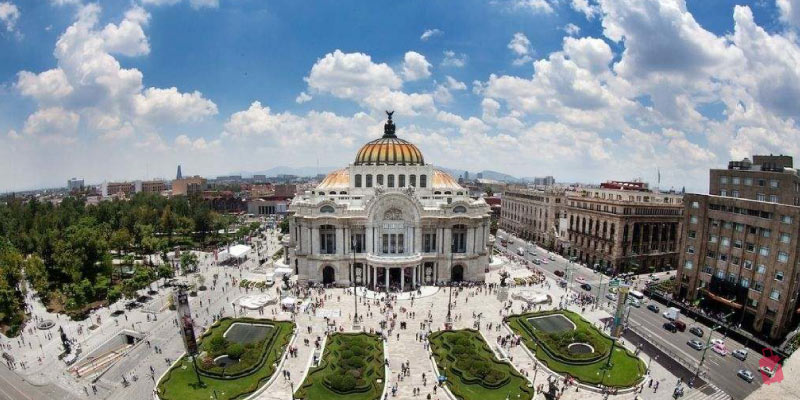
From the outside, the palace looks European, built during the final years of the Porfirio Díaz era when France heavily influenced elite taste. Inside, the murals tell a different story. Works by Rivera, Orozco, and Siqueiros confront colonialism, labor, and revolution directly.
Palacio de Bellas Artes
Palacio de Bellas Artes sits at a cultural crossroads. Opera and ballet share space with political art that once shocked conservative audiences. The structure also sank over time due to the soft lakebed beneath the city, a quiet reminder that Mexico City never fully escaped its geography. As historical buildings in Mexico City go, Bellas Artes shows how art became a tool for public debate rather than decoration.
Entry Fee: $95 MXN for the museum/murals. (Free on Sundays for residents).
Visiting Hours: Tuesday to Sunday, 10:00 AM – 6:00 PM.
5. Templo Mayor
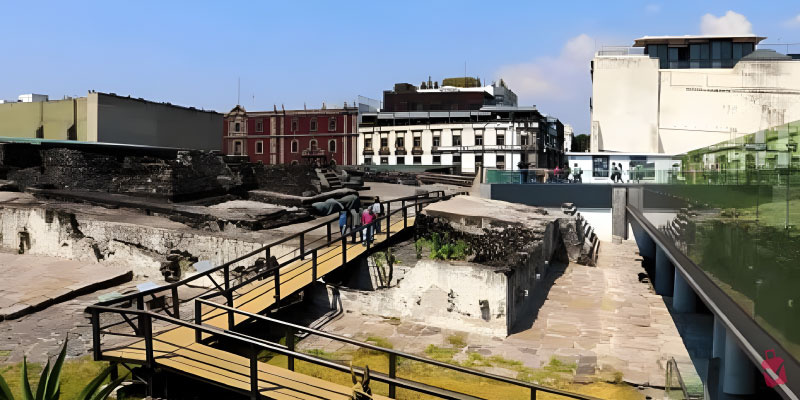
Steps away from the cathedral and the main square, Templo Mayor reveals the heart of Mexica religious life. Excavations uncovered temples, offerings, and sculptures buried after the Spanish destruction of Tenochtitlan. The site shows how colonial Mexico literally built itself over what came before.
Templo Mayor
The contrast here feels sharp. On one side stands the cathedral. On the other, the remains of a temple dedicated to Tlaloc and Huitzilopochtli. This is one of the most important historical monuments in Mexico City because it makes the conquest visible at ground level. Visitors see stones reused, symbols erased, and traditions forced underground yet never fully gone.
Entry Fee: MX$100.00 (Sunday free entry for Mexican citizens or resident foreigners with a valid ID).
Visiting Hours: Tuesday to Sunday, 9:00 AM – 5:00 PM.
6. Xochimilco
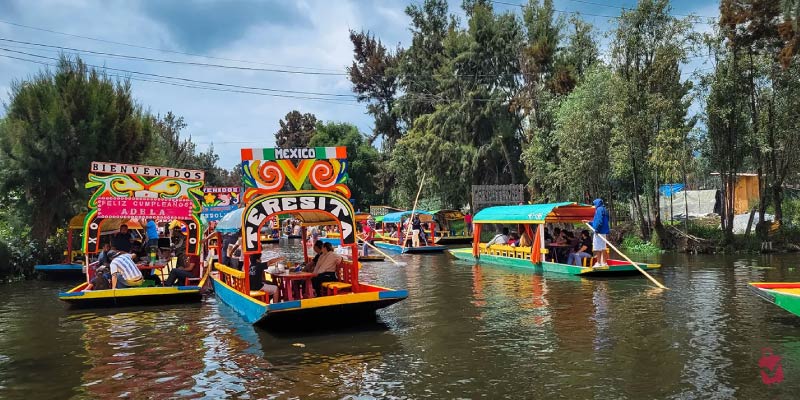
Xochimilco is often misunderstood. It is not just boats and music. It is one of the last living traces of the lake system that once filled the Valley of Mexico. The chinampas, artificial farming islands built by the Mexica, still exist and still produce food.
Xochimilco
This area explains how people adapted to water long before modern drainage projects reshaped the city. As historical sites in Mexico City go, Xochimilco stands apart because it is still functional. It shows how daily life worked before streets and cars took over. Understanding this place changes how travelers see the city’s environmental challenges today.
Entry Fee: $750 MXN per boat, per hour
Visiting Hours: Daily, 9:00 AM – 6:00 PM (varies by pier).
7. Centro Histórico of Mexico City
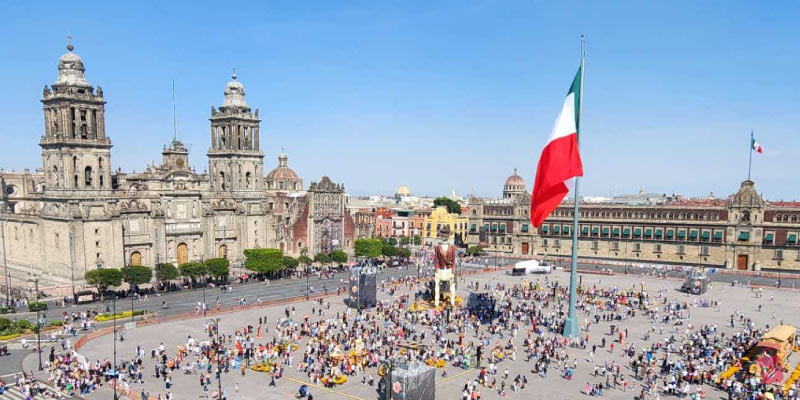
The historic center gathers many famous landmarks in Mexico City within a walkable area. The Zócalo, the cathedral, the National Palace, and the surrounding streets follow the footprint of Tenochtitlan. Political power has stayed rooted here for centuries.
Centro Histórico of Mexico City
What matters is not just what stands, but how it is used. Government ceremonies, protests, religious events, and everyday commerce all share the same blocks. This continuity makes the Centro Histórico one of the best historical sites in Mexico City for grasping how public life works. It is not preserved behind glass. It is active and sometimes tense.
Entry Fee: Free (Public district).
Visiting Hours: 24/7 (Public streets).
8. Chapultepec
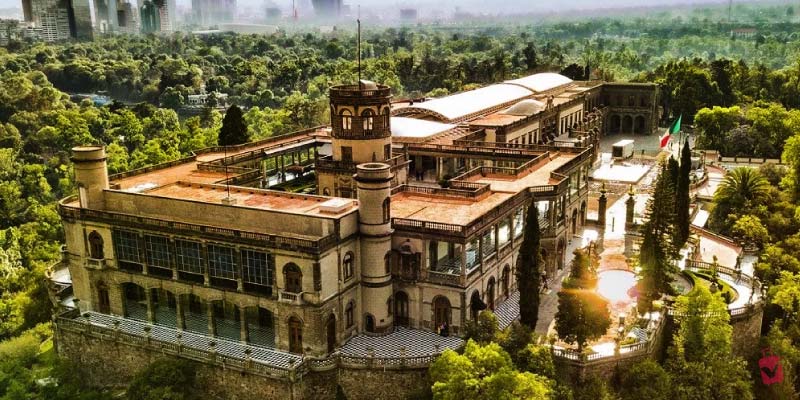
Chapultepec has served many roles. It was a sacred hill in pre-Hispanic times, a retreat for Aztec rulers, a military academy, and later an imperial residence under Maximilian I. Chapultepec Castle now houses the National Museum of History, overlooking the city from a rare elevated point.
Chapultepec
This area also tells a military story. The battle involving the Niños Héroes during the US-Mexican War remains central to national memory. As historical attractions in Mexico City go, Chapultepec ties together power, defense, and symbolism. Its location explains why control of this hill mattered across different regimes.
Entry Fee: $210 MXN for Chapultepec Castle (National History Museum). Park entry is free.
Visiting Hours: Castle: Tuesday to Sunday, 9:00 AM – 5:00 PM.
Tips for Tourists in Mexico
Visiting Mexico City’s historical landmarks can feel overwhelming if you try to do too much in one day. Here are some tips to make your trip smoother and more enjoyable:
Plan by area: Group sites that are close together. Teotihuacán is outside the city, so dedicate a full morning or afternoon. The Centro Histórico, Templo Mayor, and Palacio de Bellas Artes can be seen in a single day on foot.
Arrive early: Popular spots like Templo Mayor and the Museo Nacional de Antropología get busy. Arriving early lets you enjoy the sites calmly and take in details before the crowds arrive.
Wear comfortable shoes: Many landmarks involve walking on uneven streets, cobblestones, or large archaeological grounds. Comfortable shoes make exploring more pleasant.
Use public transport wisely: The metro and buses are efficient and inexpensive. For longer trips like Teotihuacán or Xochimilco, consider rideshares or guided tours to save time.
Bring water and snacks: Some sites, especially outdoor ones like Xochimilco or Chapultepec, do not have convenient food options inside. Staying hydrated keeps energy levels up.
Check schedules in advance: Museums and historic homes sometimes close for special events or maintenance. Chapultepec Castle, for example, has fixed hours for exhibits, so plan ahead.
Respect local rules and customs: Photography may be restricted in certain areas, and some landmarks, like Templo Mayor, are active archaeological sites. Follow posted guidelines to help preserve them.
Choose accomodation strategically: Staying in neighborhoods like Centro Histórico puts you near major historical landmarks, while Polanco is close to museums and Chapultepec. Roma and Condesa offer boutique hotels and apartments with local charm.
If you’re attending the 2026 World Cup games, consider hotels near stadiums to reduce travel stress on match days. You can also time your visit to coincide with Mexico’s famous festivals and events happening across the city.
Take your time: The city rewards slow observation. Pause, read plaques, and notice how streets and buildings relate to the stories of the past. Even five minutes at the right spot can reveal something meaningful.
Learn a few phrases in Spanish: A simple greeting or “gracias” goes a long way when interacting with guides, vendors, or locals near historical sites.
Closure
Already pointed out that Mexico City rewards patience. When you take time to notice sequence and connection, the city starts to feel clearer. These historical landmarks in Mexico City do more than tell stories. They explain how the city learned, adapted, and moved forward. At that point, history stops feeling distant and starts feeling present.
If you’re heading to Mexico for the 2026 World Cup, take a few extra days to explore the city’s historical landmarks. You’ll get a deeper sense of Mexico City beyond the stadiums and crowds, making your trip even more memorable.
Palacio de Bellas Artes, Museo Nacional de Antropología, and the Walled City areas around the Zócalo highlight art, archaeology, and colonial architecture.
Margaret C. Jones, a passionate explorer of North America, captivates readers with her vivid tales on Travelarii’s blog. With a keen eye for hidden gems and local culture, Margaret offers expert advice and unique insights to enhance your travel experience. Her stories bring the diverse landscapes and vibrant cities of North America to life, inspiring readers to embark on their own adventures.