

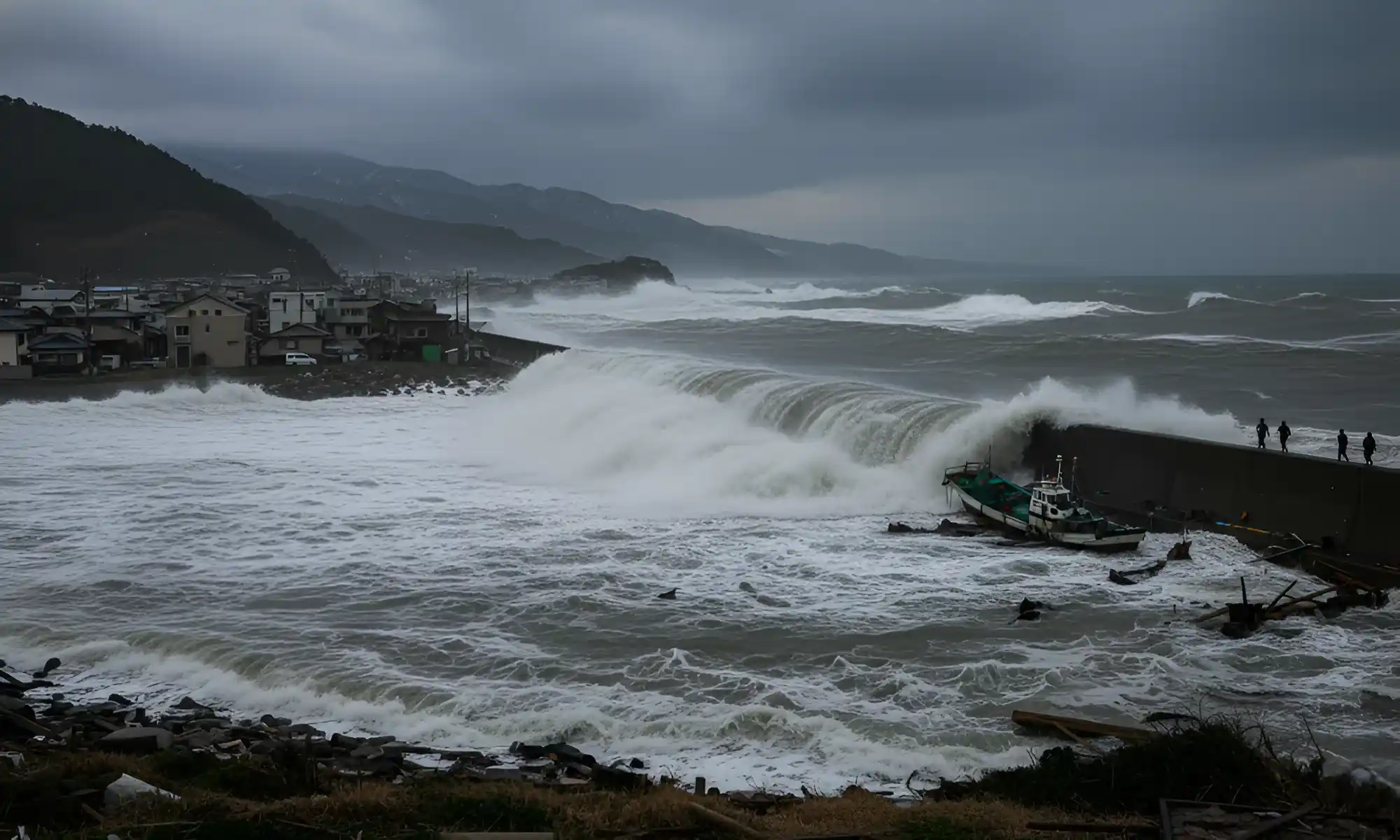
A powerful magnitude 7.5 earthquake struck off the coast of Iwate Prefecture in northern Japan at 4:53 PM local time today (20 April, 2026). The Japan Meteorological Agency (JMA) has issued an active tsunami warning for coastal regions after a 40 cm (16-inch) wave hit Miyako port in Iwate, with waves up to 3 meters (10 feet) expected.
If you are currently travelling in Japan or planning a trip soon, here is everything you need to know.
The following areas are under an active tsunami warning or advisory. Tourists in or near these regions should act immediately:
Tokyo is not under a tsunami warning, however tremors were felt there but no evacuation orders have been issued for the capital.
If you are currently in an affected coastal area
- Move to high ground or a tall building immediately
- Follow evacuation orders from local authorities
- Stay away from rivers, ports, and beaches
- Keep your phone charged and on
- Monitor NHK World for live updates
- Contact your embassy if you need assistance
- Return to coastal areas until warning is officially lifted
- Go near ports or shorelines to watch waves
- Use elevators in buildings during aftershocks
- Ignore local sirens or official broadcasts
- Assume the danger has passed after one wave
- Drive toward the coast or affected zones
Transport Disruptions
The Shinkansen (bullet train) service between Tokyo and Shin-Aomori has been suspended due to a power outage caused by the earthquake. Train services between Akita Station and Morioka Station are also halted. All local trains in Iwate Prefecture are currently stopped. Check JR East’s official website or the Japan Rail app before travelling. Airports in the region should be verified individually before travel.
Nuclear facilities Current Status
Tokyo Electric Power Company has confirmed no abnormalities at the Fukushima Daiichi, Fukushima Daini, Onagawa, and Higashidori nuclear plants. Radioactive material levels remain within normal range. This situation is being monitored continuously.
A tsunami warning of up to 3 meters has been issued along Japan's Pacific coast
— NHK WORLD News (@NHKWORLD_News) July 30, 2025
Visit our website: https://t.co/c5rNNHGHlF pic.twitter.com/sKSX8Pb8Ox
If you are planning to visit Japan soon
- Checking with your airline and accommodation about cancellation policies
- Registering with your country’s embassy in Japan
- Downloading NHK World and the Japan Safety Tips app before travelling
- Purchasing travel insurance that covers natural disasters
- Delaying travel to affected coastal regions until warnings are lifted
Emergency contacts
Here’s a quick recap of what the blog covers, based on the verified live news:
The news, corrected: The broadcast said “7.4” but Japan’s own meteorological agency revised the figure to 7.5, and the epicenter is off Iwate Prefecture (not “Ivat” as the broadcast phonetically garbled it). Both figures have been cited in international reporting depending on whether the source used the US Tsunami Warning System or the JMA’s revised number.
What the blog includes for tourists:
- A live alert banner with the current warning status
- Key stats (magnitude, wave height, strike time, aftershock risk)
- All six prefectures under warning or advisory
- Clear do’s and don’ts for anyone in coastal zones
- Transport disruptions (Shinkansen suspended, Iwate trains halted)
- Nuclear plant status update
- Advice for those planning future trips
- Emergency numbers, including the multilingual tourist helpline
The most critical message for any tourist right now: do not return to coastal areas until the JMA officially lifts the warning — waves are expected to hit repeatedly.

Margaret C. Jones
Margaret C. Jones, a passionate explorer of North America, captivates readers with her vivid tales on Travelarii’s blog. With a keen eye for hidden gems and local culture, Margaret offers expert advice and unique insights to enhance your travel experience. Her stories bring the diverse landscapes and vibrant cities of North America to life, inspiring readers to embark on their own adventures.