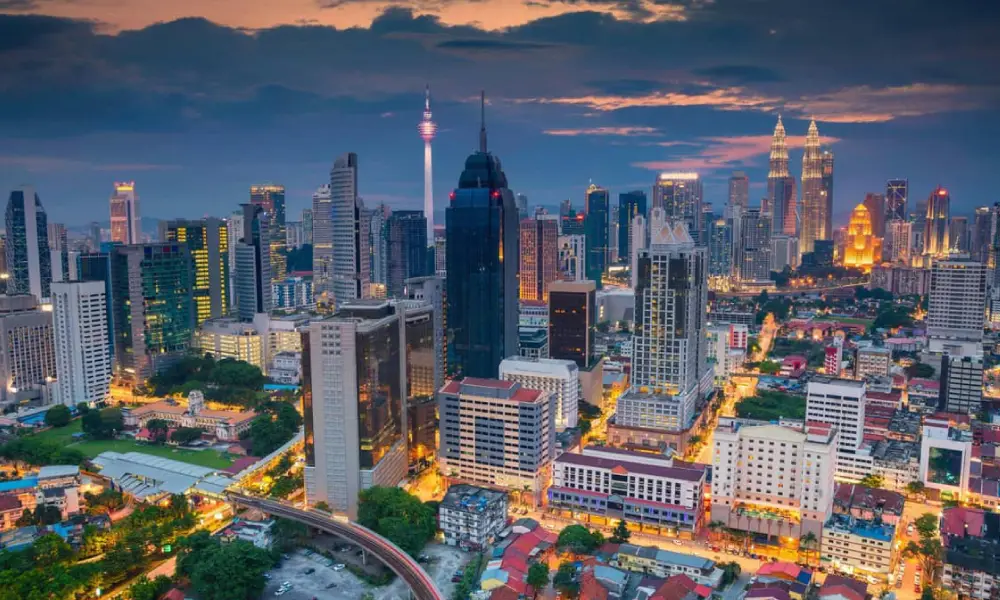
The best area to stay in Kuala Lumpur is KLCC for first-time visitors who want to be near the Petronas Towers, or Bukit Bintang if shopping, street food, and nightlife matter more than skyline views. Families and business travelers do best in KLCC. Budget travelers and solo backpackers should head to Chinatown. Digital nomads and longer-stay visitors get the best value in Bangsar.
Find the Right Vacation Rental
Traveling with family, friends, or as a couple? Compare verified rentals that fit your budget and travel style. Choose a place that feels right before you book.
Every neighborhood in this guide sits on or near KL’s rail network, so you’re rarely more than 20 minutes from the next one. That means the “wrong” choice isn’t a disaster, but the right one saves you time, money, and a lot of unnecessary Grab rides.
This KL accommodation guide compares all seven major districts, KLCC, Bukit Bintang, Chinatown, KL Sentral, Bangsar, Chow Kit, and Mont Kiara, so you can see exactly where to stay in Kuala Lumpur no matter your travel style.
You’ll find honest pros and cons, price ranges, safety notes, and specific recommendations, including where to stay in KL for first-timers and which KL neighborhoods for tourists actually deliver value for the price.
| Worldwide Most Popular Travel Destinations |
|---|
Table of Content
- KL Neighborhoods for Tourists at a Glance
- How Do You Choose the Best Area to Stay in Kuala Lumpur?
- Full Breakdown of Kuala Lumpur Neighborhoods to Stay
- Where to Stay in KL for First Timers?
- Common Mistakes When Choosing Where to Stay in Kuala Lumpur
- Final Thoughts
- FAQs
- More Related Blogs From Travel Recommendations
KL Neighborhoods for Tourists at a Glance
This table covers the main Kuala Lumpur hotel locations by price, transit access, and vibe, so you can shortlist a district before diving into the details below.
| Neighborhood | Best For | Hotel Price Range (per night) | Nearest Transit | Vibe |
|---|---|---|---|---|
| KLCC | First-timers, families, couples, and business | $70–$300+ | LRT & Monorail (KLCC station) | Polished, upscale, central |
| Bukit Bintang | Nightlife, shopping, and food lovers | $25–$250 | Monorail & LRT (Bukit Bintang station) | Energetic, dense, walkable |
| Chinatown | Budget travelers, culture seekers | $12–$70 | MRT (Pasar Seni / Merdeka station) | Historic, gritty, authentic |
| KL Sentral | Transit-focused stays, business travelers | $20–$90 | All lines converge here | Functional, efficient |
| Bangsar | Digital nomads, longer stays, foodies | $40–$150 | LRT (Bangsar station) | Leafy, local, café-heavy |
| Chow Kit | Adventurous budget travelers | $15–$60 | Monorail (Chow Kit station) | Raw, real, up-and-coming |
| Mont Kiara | Families needing space, expat-style stays | $60–$200 | Car or Grab needed | Suburban, quiet, residential |
How Do You Choose the Best Area to Stay in Kuala Lumpur?
Match your priority to a neighborhood using this quick logic:
- Want to see the Petronas Towers from your window? Stay in KLCC.
- Want the best street food and nightlife within walking distance? Stay in Bukit Bintang.
- Traveling on a tight budget? Stay in Chinatown.
- Flying in or out, or connecting to other Malaysian cities? Stay near KL Sentral.
- Staying more than a week or working remotely? Stay in Bangsar.
- Traveling with kids and wanting space over nightlife? Consider Mont Kiara or KLCC.
The single biggest factor when comparing Kuala Lumpur accommodation areas is proximity to a rail line. KL traffic is heavy after 5 p.m., and Grab fares climb fast during that window. A hotel within a 10-minute walk of an MRT, LRT, or Monorail station will save you more time than a slightly cheaper hotel three kilometers away in a less connected district.
Full Breakdown of Kuala Lumpur Neighborhoods to Stay
Here’s a closer look at each district, including who it suits, what it costs, and how it connects to the rest of the city. Read the one or two that match your travel style, then check the comparison table above if you’re still deciding.
1. KLCC (Kuala Lumpur City Centre)
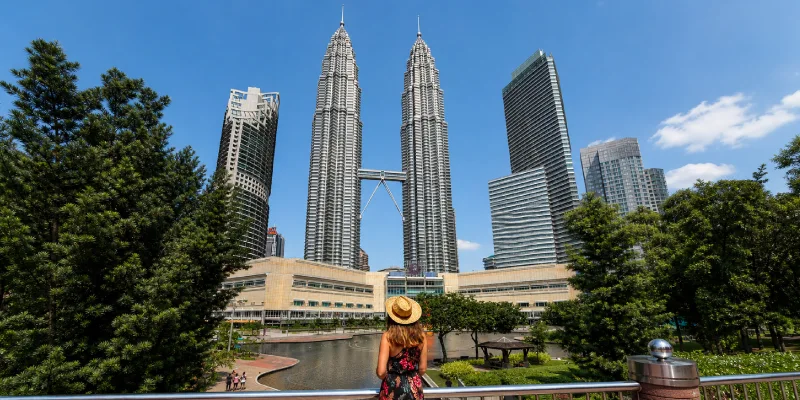
Best for: First-time visitors, families, couples, luxury travelers, business travelers
KLCC is Kuala Lumpur’s most polished district, built around the Petronas Twin Towers, and for many travelers it’s simply the best area to stay in Kuala Lumpur. This is where you’ll find the highest concentration of Kuala Lumpur city center hotels, upscale malls, and skyline views.
- Walking distance to Petronas Towers, KLCC Park, and Suria KLCC Mall
- Direct LRT and Monorail access
- Cleanest, most modern infrastructure in the city
- A wide range of luxury and business hotels
- Most expensive area in KL
- Feels corporate at night compared to Bukit Bintang
- Fewer budget options
Nearby attractions:
- Petronas Twin Towers, just a short walk away
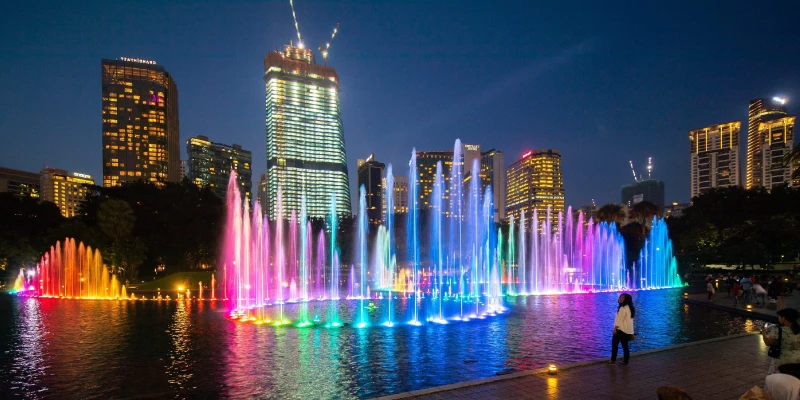
- KLCC Park for green space and the nightly Lake Symphony fountain show
- Aquaria KLCC for marine exhibits and indoor sightseeing
- Suria KLCC Mall for shopping and dining
Transportation:
- KLCC LRT station within walking distance
- Bukit Nanas Monorail station about 10 minutes away on foot
- Grab pickups are quick and readily available
Typical hotel price range: $70–$300+ USD per night, with serviced apartments and five-star towers dominating the upper end.
Safety: KLCC is one of the safest areas in KL, with heavy foot traffic, security presence at malls, and well-lit streets.
Dining and nightlife: Rooftop bars and fine dining outnumber casual eateries here. Expect polished sky bars over the plastic-stool hawker scene found in Bukit Bintang. Not all Kuala Lumpur city center hotels serve the same kind of trip.
2. Bukit Bintang
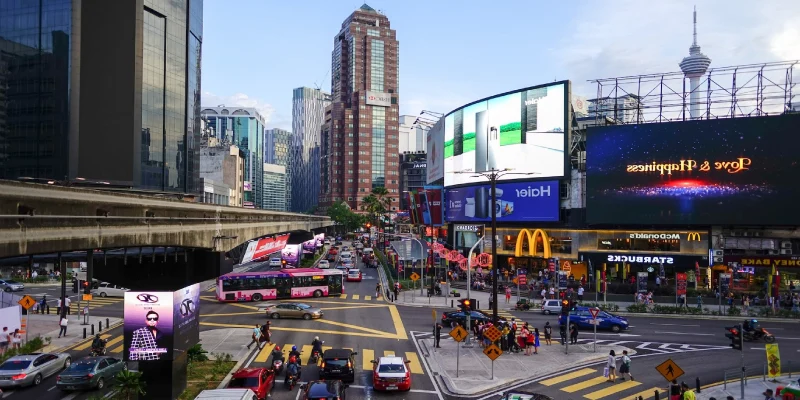
Best for: Nightlife lovers, food lovers, first-timers who want energy over polish, and budget-to-luxury travelers alike
Bukit Bintang is KL’s commercial and entertainment core. It’s dense, walkable, and stacked with hotels at every price point, from $25 guesthouses to five-star towers. In the Bukit Bintang vs KLCC debate, this is the district that wins on energy, food, and nightlife, while KLCC wins on polish and views.
- Most walkable entertainment district in the city
- Jalan Alor food street and Changkat Bukit Bintang nightlife within steps
- A massive range of hotel prices, from hostels to five-star
- Two rail stations (Monorail and LRT) inside the neighborhood
- Can be noisy, especially near Jalan Alor after dark
- Traffic congestion on main roads in the evening
- Some budget hotels are dated
Nearby attractions:
- Jalan Alor, KL’s best-known street food hub
- Pavilion Kuala Lumpur for shopping
- Changkat Bukit Bintang for bars and nightlife
- Berjaya Times Square for shopping and indoor attractions
- KL Tower, just a short Grab ride away
Transportation:
- Bukit Bintang Monorail station in the neighborhood
- Bukit Bintang MRT station for easy access across the city
- Most restaurants, malls, and nightlife are within walking distance
Typical hotel price range: $25–$250 USD per night, the widest spread of any KL neighborhood. That range is one reason it’s often named the best area to stay in Kuala Lumpur for travelers who want options at every budget.
Safety: Generally safe and well-patrolled, though pickpocketing risk rises in crowded areas like Jalan Alor at night. Standard city-travel caution applies.
Dining and nightlife: This is KL’s nightlife capital. Jalan Alor delivers hawker-style Malaysian and Chinese food until late; Changkat Bukit Bintang and Jalan Mesui cover bars and lounges.
3. Chinatown (Petaling Street Area)
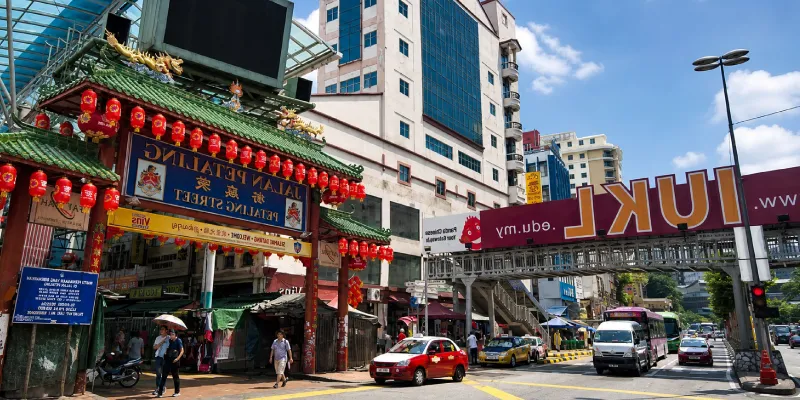
Best for: Budget travelers, solo travelers, culture and heritage seekers
Chinatown is KL’s old city core, centered on Petaling Street Market and the Sri Mahamariamman Temple. For anyone weighing cost above all else, this is the best area to stay in Kuala Lumpur. It has the cheapest beds in central KL and a strong dose of historic character, boosted further by the Merdeka 118 tower and its Merdeka MRT station nearby.
- Cheapest accommodation in central KL
- Rich in heritage sites and street markets
- Good food at low prices
- Increasingly connected via the Merdeka MRT station
- Some guesthouses are basic, with shared bathrooms
- Streets can feel run-down after dark in parts
- Less polished than KLCC or Bukit Bintang
Nearby attractions:
- Petaling Street Market for bargains and local street food
- Sri Mahamariamman Temple, KL’s oldest Hindu temple
- Central Market for crafts and souvenirs
- Merdeka 118, the world’s second-tallest building
Transportation:
- Pasar Seni MRT station for fast connections across KL
- Merdeka MRT station a short walk away
- Direct rail access to KLCC and Bukit Bintang
Typical hotel price range: $12–$70 USD per night, with the low end being partitioned rooms with shared facilities.
Safety: Safe in the daytime and in main tourist zones. Stick to well-lit main streets at night and avoid poorly lit side alleys, as you would in any dense old-city district.
Dining and nightlife: Cheap, authentic Chinese and Malaysian food dominate. Nightlife is quieter and more local than Bukit Bintang’s bar scene.
4. KL Sentral
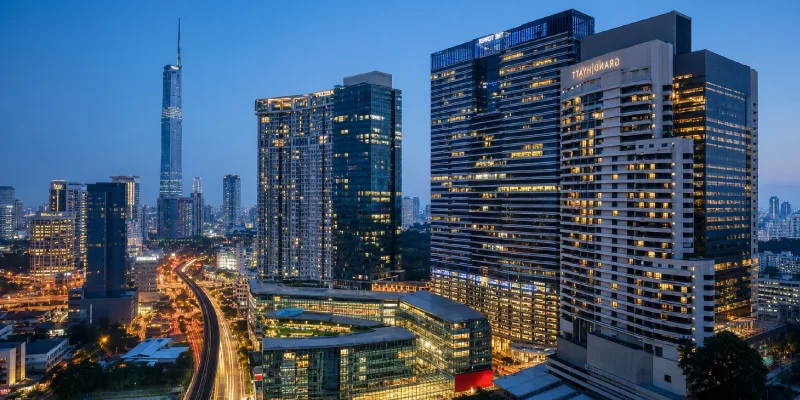
Best for: Transit-focused travelers, business travelers, short layovers
KL Sentral is the city’s main transport hub, where every rail line, including the KLIA Ekspres airport train, converges. Among the Kuala Lumpur districts covered here, it’s less about atmosphere and more about convenience.
- Direct KLIA Ekspres access to the airport (about 28 minutes)
- Connected to every major rail line in the city
- NU Sentral Mall for shopping and dining on-site
- Good base for day trips to other parts of Malaysia
- Fewer boutique or characterful hotels
- Less immediate nightlife or street-level charm
- Feels more like a business district than a tourist zone
Nearby attractions:
- Little India (Brickfields), just a few minutes away on foot
- NU Sentral Mall for shopping and casual dining
- Bukit Bintang, only a few train stops away
- KLCC, easily reached by rail in minutes
Transportation:
- KL Sentral, the city’s main rail hub
- Direct access to MRT, LRT, Monorail, KTM, and KLIA Ekspres
- Fast airport transfers via the 28-minute KLIA Ekspres
Typical hotel price range: $20–$90 USD per night.
Safety: Safe, though the immediate station area is busy and functional rather than picturesque. Brickfields nearby is a good, safe area for walking.
Dining and nightlife: Strong Indian food scene in neighboring Brickfields. Nightlife is minimal directly around the station itself.
5. Bangsar
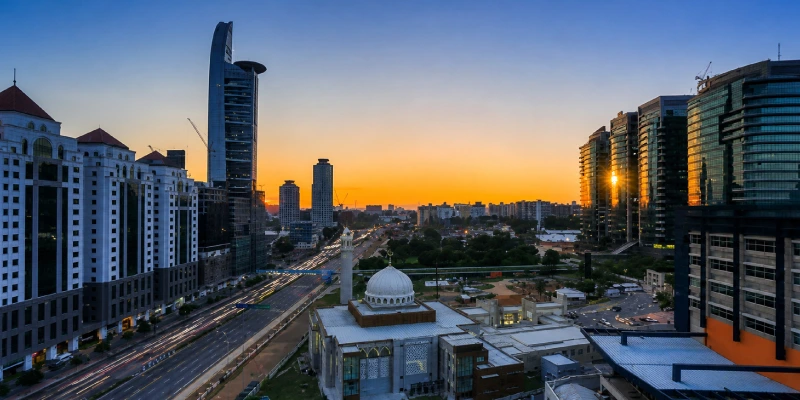
Best for: Digital nomads, longer stays, food and café lovers, couples wanting a local feel
Bangsar is a leafy, café-dense residential district popular with expats and long-term visitors. Among the best neighborhoods in Kuala Lumpur for a slower pace, it trades big-name attractions for a genuine neighborhood feel.
- Strong café and brunch culture, good for remote work
- Quieter and more local than the tourist core
- Good boutique cocktail bars and restaurants
- Easy LRT connection to central KL
- Further from Petronas Towers and KL Tower
- Slightly higher food and drink prices
- Fewer budget accommodation options
Nearby attractions:
- Bangsar Village malls for shopping and dining
- Bangsar’s café strip for brunch, coffee, and remote work
- KL Bird Park, a short drive away
- Brickfields for authentic Indian food and cultural landmarks
Transportation:
- Bangsar LRT station with direct service to KL Sentral
- Easy rail connections to KLCC and the city center
- Grab rides are readily available throughout the neighborhood
Typical hotel price range: $40–$150 USD per night.
Safety: One of the safer, quieter residential areas in KL, popular with families and long-term expat residents.
Dining and nightlife: Best café scene in the city, plus a solid cocktail bar and boutique dining lineup. Better suited to a relaxed evening than a big night out.
6. Chow Kit
Best for: Adventurous budget travelers, those wanting an unpolished, local experience
Chow Kit is an emerging, gritty district built around its wet market, and increasingly home to design-forward hostels moving into old shophouses. It’s one of the less obvious areas to stay in KL, but it rewards travelers who want something more local.
- Very cheap, authentic local market experience
- Direct Monorail access
- A growing number of stylish budget stays
- Real, non-touristy slice of KL life
- Rougher around the edges than other central areas
- Less appealing for families or first-time solo female travelers uneasy with busy markets
- Limited high-end options
Nearby attractions:
- Chow Kit Market for local produce, street food, and everyday KL life
- Bukit Bintang, just a few Monorail stops away
- KLCC within easy reach by Monorail
- The Chow Kit area for boutique hotels, cafés, and restored shophouses
Transportation:
- Chow Kit Monorail station in the heart of the neighborhood
- Direct Monorail access to Bukit Bintang and KL Sentral
- Grab is widely available for short trips across the city
Typical hotel price range: $15–$60 USD per night.
Safety: Generally fine in daylight around the main market streets. Exercise more caution at night than in KLCC or Bangsar. This is not the area for heading down unfamiliar side streets after dark.
Dining and nightlife: Strong, cheap street food tied to the market. Nightlife is minimal and local rather than tourist-oriented.
7. Mont Kiara
Best for: Families needing space, longer-stay visitors, those prioritizing quiet over nightlife
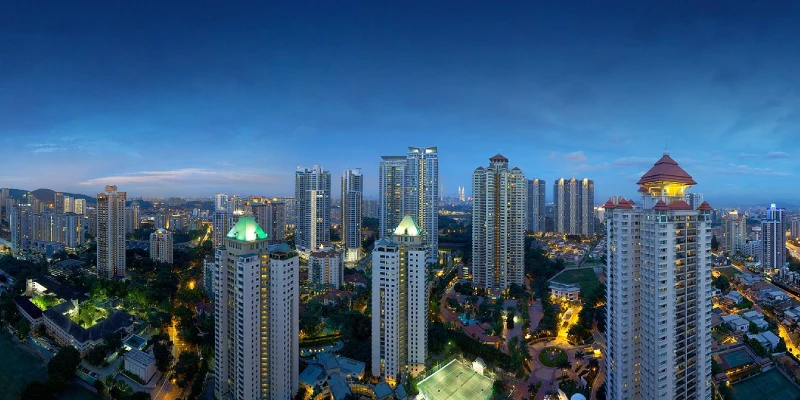
Mont Kiara is a suburban, condo-heavy district popular with expat families. Compared with most Kuala Lumpur hotel locations, it trades central-city convenience for space, quiet, and international schools nearby. That’s a fair trade if nightlife isn’t your priority when deciding where to stay in Kuala Lumpur.
- Spacious serviced apartments, good for families
- Quiet, low-traffic streets
- International supermarkets and family-friendly dining
- Requires a car or Grab for almost everything, since there's no direct rail line
- Far from major tourist attractions
- Limited nightlife or walkable sightseeing
Nearby attractions:
- Mont Kiara‘s malls for shopping, cafés, and family-friendly dining
- Neighborhood parks and green spaces
- Publika Shopping Gallery for restaurants, boutiques, and art spaces
- KLCC, about a 20–30 minute Grab ride away
Transportation:
- Grab is the primary way to get around
- No MRT, LRT, or Monorail station in the immediate area
- Easy road access to central KL and nearby suburbs
Typical hotel price range: $60–$200 USD per night, mostly serviced apartments.
Safety: Very safe, quiet, and residential. One of the lowest-crime areas covered here.
Dining and nightlife: Family-style dining and international cuisine. Minimal nightlife; this is a sleep-early, quiet-morning kind of neighborhood.
Where to Stay in KL for First Timers?
KLCC or Bukit Bintang. Both sit on the rail network, both put major attractions within walking distance, and both give you a strong first impression of the city without a steep learning curve.
Choose KLCC for skyline views and polish, Bukit Bintang for energy and food. If you’re only reading one section of this KL accommodation guide, this is the one that answers where to stay in KL for first timers with the least guesswork.
Where Should Families Stay in Kuala Lumpur?
KLCC or Mont Kiara are the most family-friendly areas in Kuala Lumpur. KLCC offers walkable attractions, family-friendly malls, and easy transit for day trips. Mont Kiara suits families wanting more space and quiet, provided you’re comfortable relying on Grab for transport.
Where Should Couples Stay in Kuala Lumpur?
KLCC for a polished, romantic base; Bangsar for a more local, low-key experience. Among the best places to stay in Kuala Lumpur for couples, KLCC’s rooftop bars and skyline views suit a classic city-break trip, while Bangsar’s café culture and boutique bars suit couples who prefer neighborhood charm over big-name landmarks.
Best Area for Digital Nomads in Kuala Lumpur
Bangsar is the best area to stay in Kuala Lumpur if you’re working remotely. The café density, quieter streets, and easy LRT link to the city center make it the most livable district for anyone staying more than a few days.
Best Luxury Neighborhood in Kuala Lumpur
KLCC remains one of the best neighborhoods in Kuala Lumpur for luxury travelers. It holds the largest concentration of five-star hotels and serviced residences in the city, most with direct or near-direct Petronas Towers views.
Best Budget Neighborhood in Kuala Lumpur
Chinatown is the best district to stay in Kuala Lumpur if cost is your top priority. It has the lowest guesthouse and hostel rates in central KL, alongside cheap, high-quality street food, without sacrificing rail access to the rest of the city.
Best Nightlife Area in Kuala Lumpur
Bukit Bintang is, for many travelers, the best area to stay in Kuala Lumpur after dark. Jalan Alor, Changkat Bukit Bintang, and Jalan Mesui together form the densest concentration of bars, clubs, and late-night food among any of the Kuala Lumpur districts covered here.
Common Mistakes When Choosing Where to Stay in Kuala Lumpur
Even with a clear favorite, it’s easy to pick the wrong option among Kuala Lumpur’s districts. Here’s what trips up most first-time bookers.
- Booking far from a rail station to save a few dollars. The savings disappear fast in Grab fares and lost time in evening traffic.
- Assuming all of KL is walkable. The city is spread out. Neighborhoods are walkable internally, but moving between them on foot is rarely practical.
- Choosing Mont Kiara without a transport plan. It’s a great area for families, but only if you’ve budgeted for Grab rides or a rental car.
- Picking Chinatown for the cheapest bed without checking reviews. Quality varies enormously at the low end. Some guesthouses are excellent, others are dated and cramped.
- Overlooking Bangsar for stays longer than five days. Visitors default to the tourist core and miss a more comfortable, local base for longer trips.
Avoiding these mistakes is usually enough to turn a good trip into a great one, regardless of which of the best neighborhoods in Kuala Lumpur you end up booking.
Final Thoughts
A hotel can look great on paper and still be the wrong choice because of its location. KLCC works best for sightseeing, Bukit Bintang for food and shopping, Chinatown for lower prices, Mont Kiara for families, and Bangsar for longer stays. Match the neighborhood to your travel plans instead of choosing based only on budget or popularity. You’ll spend less time getting around and more time enjoying Kuala Lumpur.
FAQs
KLCC and Bukit Bintang are the top choices for first-timers. Both are on the rail network, close to major attractions, and offer hotels at every budget.
Chinatown has the lowest accommodation prices in central KL, with guesthouses and hostels from around $12–$20 USD per night, while still offering MRT access to the rest of the city.
Yes, most tourist areas, including KLCC, Bukit Bintang, and Bangsar, are safe with standard city precautions. These are among the best places to stay in Kuala Lumpur precisely because they’re well-patrolled and well-lit. Chow Kit and parts of Chinatown warrant more caution after dark. Petty theft, not violent crime, is the main risk in crowded areas.
The MRT, LRT, and Monorail cover most tourist areas and are the fastest way to avoid traffic. Grab fills in the gaps for areas without direct rail access, such as Mont Kiara.
Bukit Bintang, specifically around Jalan Alor and Changkat Bukit Bintang, holds the largest concentration of bars, clubs, and late-night restaurants in the city.
Two to three days are enough to cover the major highlights: the Petronas Towers, Chinatown, Bukit Bintang, and a day trip to Batu Caves. Longer stays benefit from basing in Bangsar or KLCC.
Among all the KL neighborhoods for tourists, KLCC, Bukit Bintang, and Chinatown consistently rank highest for a mix of attractions, transit access, and hotel choice. Bangsar and KL Sentral are strong runners-up depending on your travel style.
More Related Blogs From Travel Recommendations

Water activities in South Beach

Best South Beach rentals for groups and bachelor