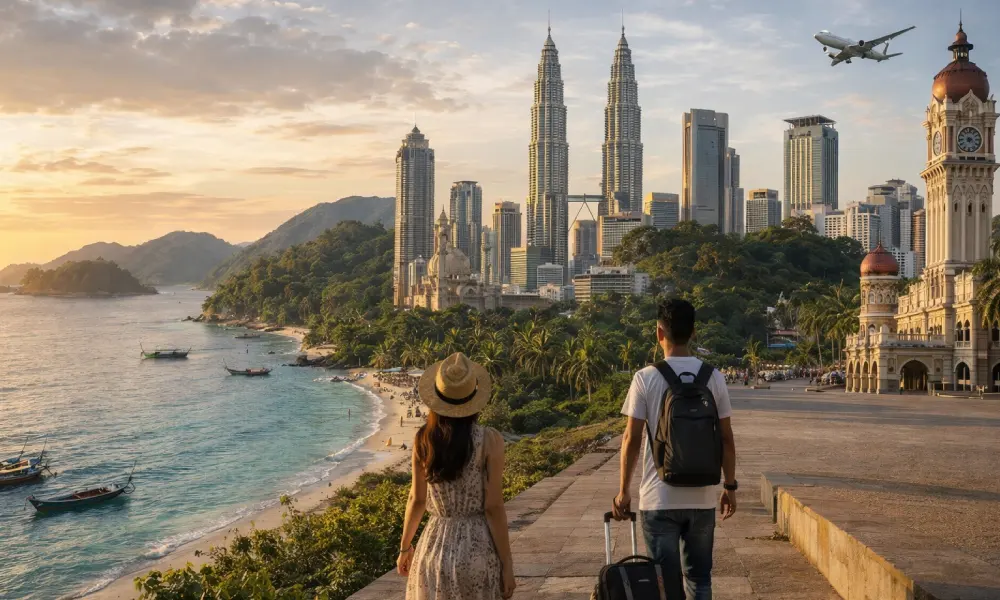
Malaysia is running its biggest tourism push in a decade. The Visit Malaysia 2026 (VM2026) campaign is targeting 43 million international visitors this year, building on 38.3 million arrivals recorded between January and November 2025.
Find the Right Vacation Rental
Traveling with family, friends, or as a couple? Compare verified rentals that fit your budget and travel style. Choose a place that feels right before you book.
That means more flight routes, more festivals, and more competition for hotel rooms in peak weeks. It also means first-timers have more resources than ever, but not all of them are accurate or current.
This guide covers what a first-time visitor actually needs – entry requirements, costs in real currency terms, where to go, how to get around, and the mistakes that trip up new arrivals. Every section is built to stand on its own, so use the headings to jump straight to what you need.
| Worldwide Most Popular Travel Destinations |
|---|
Table of Content
- Why Visit Malaysia in 2026?
- Essential Facts First-Time Visitors Should Know Before Visiting Malaysia
- Malaysia Entry Requirements & Visa Guide
- Best Time to Visit Malaysia
- Malaysia Monthly Rainfall & Temperature by Destination
- Best Places to Visit in Malaysia
- How Many Days Do You Need to Visit Malaysia?
- What's the Best Way to Get Around Malaysia?
- Where to Stay in Malaysia
- How Much Does a Trip to Malaysia Cost?
- What Food Should You Try in Malaysia?
- Malaysia Cultural Etiquette and Local Customs
- Common Mistakes First-Time Visitors Make
- Travel Tips for Visit Malaysia 2026
- Conclusion
- FAQs
- More Related Blogs From Travel Recommendations
Why Visit Malaysia in 2026?
VM2026 is Malaysia’s official tourism campaign for the year. It launched January 1, 2026, with welcoming ceremonies at 55 entry points across all 13 states. Its mascots, two sun bears named Wira and Manja, appear at major airports and events throughout the year.
Highlights for travelers include:
- 300+ cultural events scheduled nationwide, including Chinese New Year, Hari Raya, and regional festivals like Sarawak’s Gawai Dayak
- New airline partnerships, with Malaysia Airlines, AirAsia, and Batik Air adding routes and campaign-branded flights
- Hotel group tie-ins, including Marriott and Shangri-La, which have introduced new promotional packages
Peak dates around Chinese New Year and school holidays will book out faster and cost more, so book early.
Essential Facts First-Time Visitors Should Know Before Visiting Malaysia
A handful of practical details cover most of what trips up new arrivals.
- Currency: Malaysian ringgit (MYR). As of mid-2026, USD 1 equals roughly RM 4.07 to RM 4.09. Cards and e-wallets cover most cities; carry cash for hawker stalls and rural areas.
- Language: Bahasa Malaysia is official, but English is widely spoken in tourism and business.
- Time zone: Malaysia Standard Time, UTC+8, year-round, with no daylight saving.
- Internet: Tourist SIMs (Maxis, Digi, Celcom) run RM30 to RM60 at the airport; eSIMs work on most modern phones.
- Safety: Violent crime against tourists is rare. Petty theft and scams near tourist spots are the real risk, so use registered taxis or Grab.
- Etiquette: Remove shoes at homes, mosques, and some temples. Dress modestly at religious sites. Use your right hand for giving or eating. Ask before photographing people.
Malaysia Entry Requirements & Visa Guide
Most tourists don’t need a visa, but nearly all visitors must submit a Malaysia Digital Arrival Card (MDAC) online within three days of arrival, through the official government portal only. Fraudulent copycat sites have been reported, so bookmark the real one.
| Nationality / Region | Visa-Free Stay | Important Entry Notes |
|---|---|---|
| US, UK, EU, Australia | Up to 90 days | Passport must be valid for 6 months; MDAC required. |
| ASEAN Nations (including Myanmar) | Up to 30 days | Automatic visa-free entry for regional tourism. |
| India | Up to 30 days | Visa-free incentive extended through Dec 31, 2026. |
| Other Nationalities | eVisa Required | Must apply online via the official eVisa portal prior to travel. |
Your passport must be valid for 6+ months beyond arrival. Visa rules shift periodically, so confirm with the Malaysian Immigration Department before booking.
Best Time to Visit Malaysia
No matter when you visit, Malaysia is warm, with temperatures usually ranging from 25°C to 33°C. What changes throughout the year is the rain. The east and west coasts have different monsoon seasons, so your best travel dates depend on where you plan to go.
- West Coast (Kuala Lumpur, Penang, Langkawi): Driest and most settled from December through February.
- East Coast (Perhentian Islands, Tioman): Best from March through September. The severe northeast monsoon hits from November through February, causing rough seas and forcing most island resorts to close completely.
- Malaysian Borneo (Sabah & Sarawak): Rainfall is distributed more evenly across the calendar. While it showers year-round, March to October offers the clearest windows for jungle trekking and wildlife viewing.
Malaysia Monthly Rainfall & Temperature by Destination
Rainfall varies significantly across Malaysia, while temperatures remain consistently warm throughout the year. This table highlights the driest and wettest months for the country’s most popular destinations, along with their typical daytime temperatures, making it easier to choose the best time for your trip.
| Destination (Region) | Driest Period (Avg Rainfall) | Wettest Period (Avg Rainfall) | Typical Daytime High |
|---|---|---|---|
| Kuala Lumpur (West Coast, Inland) | June (125–130 mm) | November (360–375 mm) | 31°C to 33°C |
| Langkawi (West Coast Island) | January (45–50 mm) | September–October (>300 mm) | 30°C to 32°C |
| George Town, Penang (West Coast) | January–February (~70 mm) | September–October (330–360 mm) | 31°C to 32°C |
| Kota Kinabalu (Sabah, Borneo) | February–March (100–150 mm) | October (270–280 mm) | 30°C to 31°C |
| Kuching (Sarawak, Borneo) | July (180–185 mm) | December–January (>430 mm) | 31°C to 33°C |
| Kota Bharu (East Coast / Peninsula) | February (<100 mm) | November–December (>500 mm) | 31°C to 33°C |
Best Places to Visit in Malaysia
Eight regions cover most of what a first-timer wants to see, though no single trip fits all of them in. Most visitors build their trip around two or three of these rather than trying to cover everything.
1. Kuala Lumpur
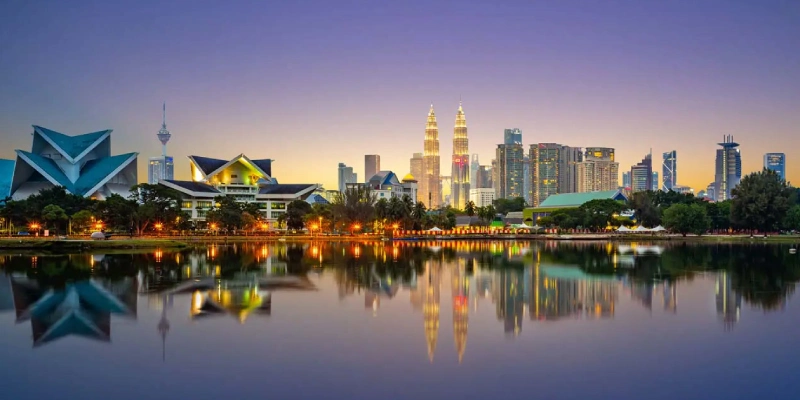
Best first base for 2 to 3 nights.
The Petronas Twin Towers are the city’s signature landmark, standing 452 meters tall with an 86th-floor observation deck and a Skybridge connecting the two towers at the 41st and 42nd floors, 170 meters up; book tickets online in advance, since daily entry is capped and the attraction sells out on peak days.
Batu Caves, about 13 km north of the city center, is a limestone Hindu temple complex reached by a stairway of 272 brightly painted steps, guarded by a towering golden statue of Lord Murugan.
For food, Jalan Alor turns into an open-air street food strip every evening, known for grilled satay and seafood. See our Kuala Lumpur neighborhood guide for where to base yourself by budget and travel style.
2. Langkawi
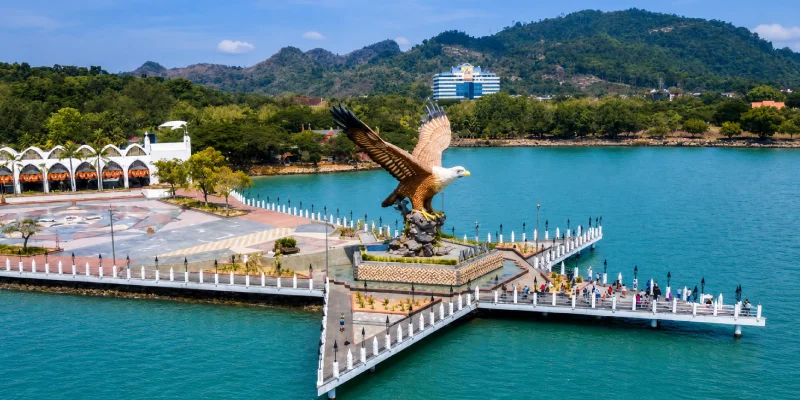
A duty-free island built around beach resorts and its own international airport.
The Langkawi Sky Bridge, a 125-meter curved pedestrian bridge suspended 660 meters above sea level on Gunung Mat Cincang, is reached via the Langkawi Cable Car and makes for one of the more distinctive short excursions in the country.
Mangrove tours through Kilim Geoforest Park and beach time at Pantai Cenang round out a typical stay.
3. Penang
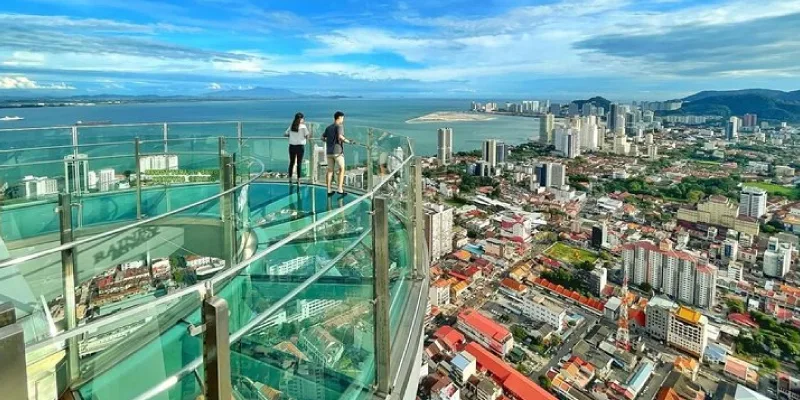
George Town, Penang‘s capital, was named a UNESCO World Heritage Site in 2008 for its colonial-era shophouses, street art, and multicultural architecture, and remains one of the country’s strongest food destinations.
Batu Ferringhi, on the north coast, is the resort-beach alternative for travelers who want sand alongside the heritage sightseeing.
4. Cameron Highlands
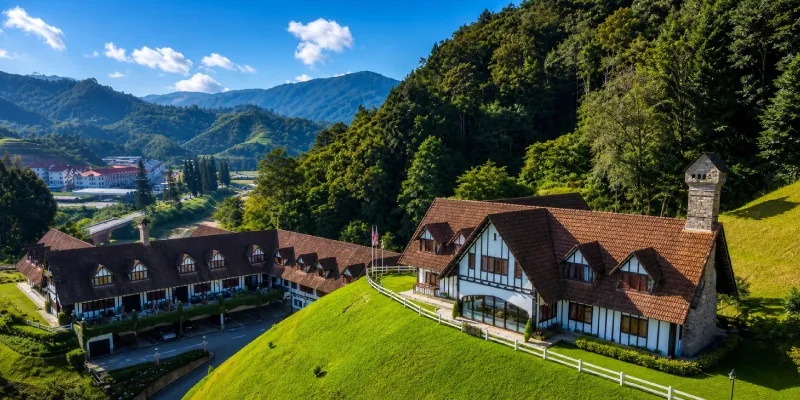
A hill station roughly 4 hours by road from Kuala Lumpur, known for its tea plantations (including the well-known BOH estates), strawberry farms, and cooler air (15 to 25°C) that makes for a welcome break from lowland heat and humidity.
5. Borneo (Sabah/Sarawak)
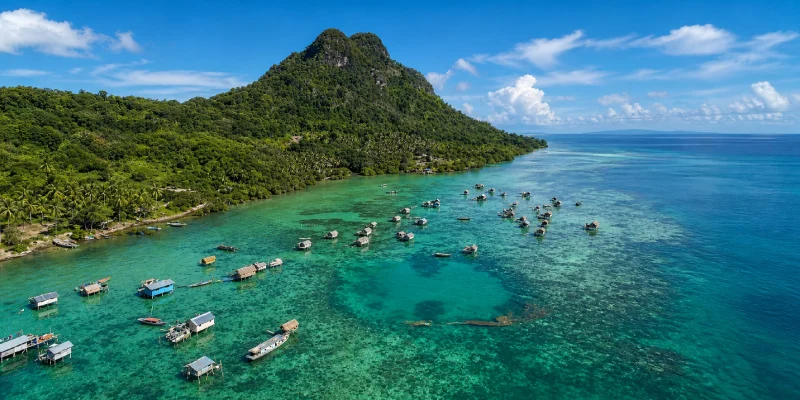
Home to orangutan rehabilitation at Sepilok, world-class diving off Sipadan, and multi-day treks up Mount Kinabalu, Southeast Asia’s highest peak, which most climbers summit over a two-day guided ascent. Getting here requires a separate domestic flight, and 4 to 5 days is the practical minimum to make the trip worthwhile.
6. Melaka (Malacca)
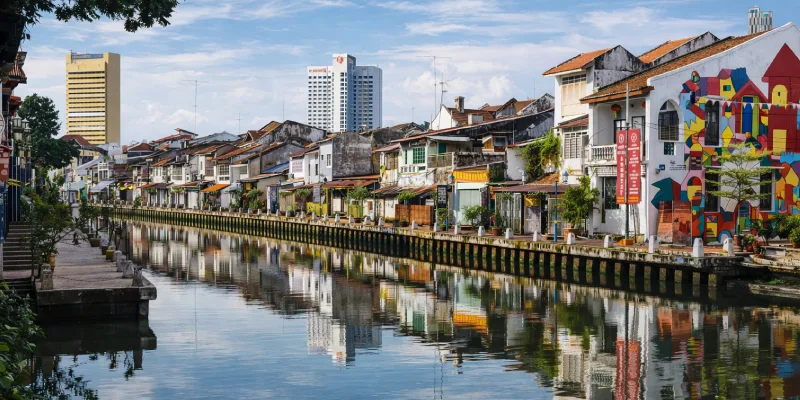
A UNESCO-listed port city about 2 hours from KL, with layered Portuguese, Dutch, and British colonial architecture along the Jonker Street heritage district. Best done as a day trip or single overnight.
7. Perhentian Islands
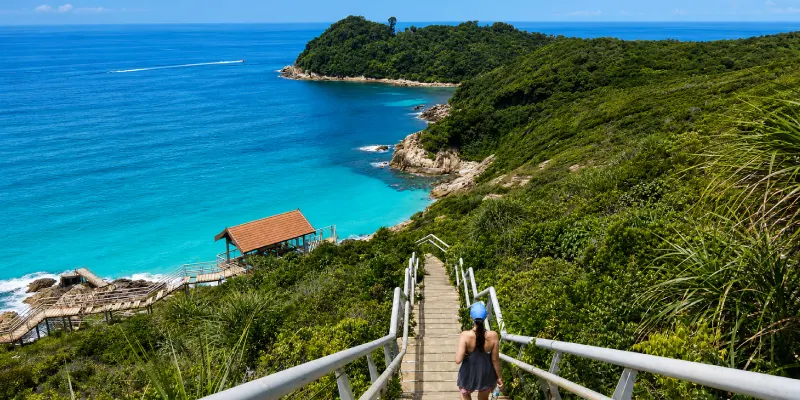
Two small east-coast islands known for snorkeling and diving in clear, reef-lined waters, reachable by boat from Kuala Besut. Accessible only from March through October due to monsoon closures.
8. Taman Negara

One of the world’s oldest rainforests. Its long-running canopy walkway had been closed for maintenance since 2024, and a new canopy walkway opened in its place in June 2026, spanning roughly 700 meters across 17 suspension bridges; capacity is limited daily, so book through a registered operator ahead of time rather than expecting to walk up.
How Many Days Do You Need to Visit Malaysia?
The ideal length of your trip depends on what you want to experience. Malaysia is divided into two distinct regions, Peninsular Malaysia and Malaysian Borneo so trying to cover everything in a short visit usually leads to a rushed itinerary.
- 5 Days
Five days are best spent in Kuala Lumpur. You’ll have enough time to visit the city’s major landmarks, sample its diverse food scene, and take a day trip to either Batu Caves or the historic city of Malacca.
- 7 – 10 Days
A week to ten days gives you the flexibility to visit two destinations at a relaxed pace. A popular route combines Kuala Lumpur with Penang for its heritage streets and famous street food. If you prefer cooler weather and nature, replace Penang with the Cameron Highlands.
- 12+ Days
If you want to experience both Peninsular Malaysia and Malaysian Borneo, plan for at least 12 days. Domestic flights, longer travel times, and wildlife experiences in Sabah or Sarawak require extra time, making a longer itinerary much more enjoyable.
What's the Best Way to Get Around Malaysia?
Five transport modes cover almost every route a first-timer will need.
| Mode | Best For | Typical Cost (One-Way) |
|---|---|---|
| Domestic flight | Long distances, Borneo | RM100 to RM350 |
| ETS train | West coast city-to-city | RM35 to RM80 |
| Long-distance bus | Budget overland travel | RM20 to RM60 |
| Grab (ride-hailing) | City transport | RM10 to RM40 per ride |
| Rental car | Highlands, countryside | RM120 to RM250 per day |
AirAsia, Malaysia Airlines, and Batik Air cover domestic routes; Borneo is only reachable by air. The ETS train runs KL to Penang in about 4 hours. Grab is standard in cities. Self-driving suits the Highlands, not central KL traffic.
Where to Stay in Malaysia
Malaysia has accommodation for every budget, from backpacker hostels to luxury beachfront resorts. The best place to stay depends on your travel plans, preferred atmosphere, and budget not just the destination itself.
-
Kuala Lumpur
Malaysia
KL Times Square Service Residencies
Live ratefrom $110.45/night -
Kuala Lumpur
Malaysia
Vivatel Kuala Lumpur
Live ratefrom $60.86/night -
Kuala Lumpur
Malaysia
Hote123
Live ratefrom $22.95/night -
Kuala Lumpur
Malaysia
Alor Boutique Hotel
Live ratefrom $17.02/night -
Bukit Bintang
Malaysia
Park Hyatt Kuala Lumpur
Live ratefrom $455.59/night -
Bukit Bintang
Malaysia
Mandarin Oriental Kuala Lumpur
Live ratefrom $390.58/night -
Bukit Bintang
Malaysia
Cormar Suites Kuala Lumpur
Live ratefrom $78.17/night -
Bukit Bintang
Malaysia
Fahrenheit Suites Kuala Lumpur
Live ratefrom $91.96/night -
Chinatown
Malaysia
Hotel Arba
Live ratefrom $24.27/night -
Chinatown
Malaysia
InnB Park Hotel
Live ratefrom $43.61/night -
Chinatown
Malaysia
Raissa Boutique Hotel
Live ratefrom $27.08/night -
Chinatown
Malaysia
Hotel Westree
Live ratefrom $28.41/night -
KLCC
Malaysia
DoubleTree by Hilton Hotel Kuala Lumpur
Live ratefrom $148.47/night -
KLCC
Malaysia
The RuMa Hotel and Residences
Live ratefrom $277.44/night -
KLCC
Malaysia
Flixses Suites at Platinum Klcc
Live ratefrom $95.80/night -
KLCC
Malaysia
12FLY Hotel
Live ratefrom $51.55/night -
Bangsar
Malaysia
Manhattan Business Hotel TTDI
Live ratefrom $34.63/night -
Bangsar
Malaysia
Hilton Petaling Jaya
Live ratefrom $101.76/night -
Bangsar
Malaysia
Regalia Upper View Hotel
Live ratefrom $52.50/night -
Bangsar
Malaysia
Hyatt House Kuala Lumpur Mont Kiara
Live ratefrom $110.34/night -
Penang
Malaysia
Dconcept Hotel Kulim
Live ratefrom $36.38/night -
Penang
Malaysia
Mercure Penang Beach
Live ratefrom $80.43/night -
Penang
Malaysia
Fifth Avenue Hotel
Live ratefrom $119.54/night -
Penang
Malaysia
PARKROYAL Penang Resort
Live ratefrom $218.32/night -
George Town
Malaysia
Collection O Near Sunway Karnival Mall
Live ratefrom $15.20/night -
George Town
Malaysia
Flamingo by The Beach Penang
Live ratefrom $51.61/night -
George Town
Malaysia
Sea View Paradise
Live ratefrom $49.04/night -
Langkawi
Malaysia
T Hotel Kuala Perlis
Live ratefrom $25.54/night -
Langkawi
Malaysia
Ramada by Wyndham Langkawi Marina
Live ratefrom $61.10/night -
Langkawi
Malaysia
Tyh Hotel
Live ratefrom $19.30/night -
Kuala Lumpur
Malaysia
KL Times Square Service Residencies
Live ratefrom $110.45/night -
Kuala Lumpur
Malaysia
Vivatel Kuala Lumpur
Live ratefrom $60.86/night -
Kuala Lumpur
Malaysia
Hote123
Live ratefrom $22.95/night -
Kuala Lumpur
Malaysia
Alor Boutique Hotel
Live ratefrom $17.02/night
Use the table below as a general guide to typical prices, recommended areas, and what you can expect from each category.
| Travel Style | Typical Price (Per Night) | Recommended Areas | What You Can Expect |
|---|---|---|---|
| Budget | RM 40–100 | Kuala Lumpur: Bukit Bintang, Chinatown | Hostels, capsule hotels, and basic guesthouses with essential amenities. |
| Mid-Range | RM 150–350 |
Kuala Lumpur:
KLCC,
Bangsar Penang: George Town |
Comfortable 3- and 4-star hotels, boutique stays, swimming pools, fitness centers, and convenient locations. |
| Luxury | RM 500–1,500+ |
Langkawi:
Beachfront resorts and villas Kuala Lumpur: KLCC |
Five-star hotels, luxury resorts, spacious rooms, premium facilities, and high-quality service. |
Penang: George Town
Kuala Lumpur: KLCC
Book Langkawi at least a month ahead during VM2026 peak months, since campaign-driven demand is pushing up occupancy.
How Much Does a Trip to Malaysia Cost?
While Malaysia offers premium infrastructure, it remains one of the most budget-friendly destinations in Southeast Asia. Estimated costs are per person, per day, in USD (based on the current average exchange rate of $1 USD = RM 4.08).
| Style | Accommodation | Food | Local Transport | Daily Total |
|---|---|---|---|---|
| Budget | $10 to $20 | $8 to $12 | $3 to $5 | $25 to $35 |
| Mid-range | $35 to $75 | $20 to $30 | $8 to $15 | $65 to $110 |
| Luxury | $120+ | $50+ | $20+ | $200+ |
A 7-day mid-range trip covering KL, Penang, and Cameron Highlands generally runs $600 to $900 per person, excluding international flights.
What Food Should You Try in Malaysia?
Food is one of the best reasons to visit Malaysia. The country’s cuisine blends Malay, Chinese, and Indian influences, creating a wide variety of flavors. Every region has its own specialties, so you’ll find different dishes as you travel across the country.
- Nasi Lemak
Often called Malaysia’s national dish, nasi lemak consists of coconut rice served with sambal, fried anchovies, roasted peanuts, a boiled egg, and cucumber. Many places also offer fried chicken, beef rendang, or seafood as an extra.
- Char Kway Teow
A favorite street food, char kway teow is made with flat rice noodles stir-fried over high heat with prawns, eggs, bean sprouts, Chinese sausage, and sometimes cockles. The best versions have a smoky flavor created by cooking in a very hot wok.
- Roti Canai
This flaky flatbread is a popular breakfast and snack. It is served fresh from the griddle with dhal, chicken curry, or fish curry, making it a simple but satisfying meal at any time of day.
- Satay
Satay features skewers of grilled chicken, beef, or mutton marinated with spices and cooked over charcoal. It is usually served with peanut sauce, rice cakes (ketupat), sliced onions, and cucumber.
- Laksa
Laksa is a spicy noodle soup with several regional variations. Penang Assam Laksa has a tangy fish-based broth flavored with tamarind, while Sarawak Laksa is richer and made with coconut milk and a fragrant blend of spices. Both are worth trying if you visit those regions.
Malaysia Cultural Etiquette and Local Customs
Malaysia’s population is roughly 60% Malay-Muslim, alongside large Chinese and Indian communities. Friday is the main prayer day, and some offices shorten hours around midday prayers outside major cities. During Ramadan, avoid eating in public during fasting hours as a courtesy. Tipping isn’t expected, since restaurants typically add a service charge
Common Mistakes First-Time Visitors Make
Most first-time visitors have a smooth trip, but a few common mistakes can cause unnecessary delays or extra costs. Here’s what to watch out for:
- Booking hotels in Langkawi too late, especially during the busiest Visit Malaysia 2026 travel periods.
- Trying to include Borneo in a short itinerary without allowing enough travel time.
- Forgetting to complete the Malaysia Digital Arrival Card before your trip.
- Drinking tap water outside major cities instead of choosing bottled or filtered water.
- Assuming Grab is available everywhere. Service is reliable in major cities but can be limited in smaller towns and rural areas.
- Packing only lightweight clothing and forgetting that places like the Cameron Highlands can be much cooler, especially in the evenings.
Travel Tips for Visit Malaysia 2026
A few extra steps make a real difference in a higher-demand year like this one.
- Book flights and Langkawi or Penang resorts 4 to 6 weeks ahead for Chinese New Year, Hari Raya, and school holidays
- Complete the Malaysia Digital Arrival Card only through the official portal
- Carry some ringgit cash even if you plan to rely on cards
- Check state-level VM2026 event calendars, since festivals like Gawai Dayak are regional
Conclusion
Malaysia in 2026 combines a major tourism push with its usual strengths: varied food, short flights between different landscapes, and lower costs than Singapore or coastal Thailand. The main planning risk this year is timing, not the destination, since VM2026 is pushing up demand on popular dates.
Start with entry requirements and the Malaysia Digital Arrival Card, match your dates to the rainfall pattern for your coast, and book Langkawi or Penang earlier than usual.
FAQs
Most Western passport holders enter visa-free for up to 90 days, but must complete the Malaysia Digital Arrival Card before arrival.
Malaysia’s national tourism campaign for 2026, targeting 43 million visitors through year-long festivals and airline and hotel partnerships.
Yes, violent crime against tourists is uncommon. Petty theft and scams near tourist areas are the main risk.
7 to 10 days works well- Kuala Lumpur plus one or two regions such as Penang, Cameron Highlands, or Langkawi. Add days for Borneo.
January through March offers the most reliable weather on both coasts. East coast islands close for monsoon November through February.
A mid-range 7-day trip, excluding international airfare, generally runs $600 to $900 per person.
More Related Blogs From Travel Recommendations
Water activities in South Beach

Best South Beach rentals for groups and bachelor