More Related Blogs From Travel Recommendations Founded in 1565, St. Augustine predates Jamestown by 42 years and Plymouth by 55 years, giving it a documented history that reaches back more than four and a half centuries. The city welcomes about 2 million visitors each year, while its downtown visitor center alone serves roughly 650,000 people annually.

Find the Right Vacation Rental

Traveling with family, friends, or as a couple? Compare verified rentals that fit your budget and travel style. Choose a place that feels right before you book.

That history is concentrated in a relatively compact area, so a good St. Augustine travel guide should focus on priorities rather than trying to cover every attraction. The Castillo de San Marcos, historic downtown, Spanish colonial sites, and waterfront are the main starting points, with beaches and museums adding another day if time allows.

This guide covers what to see in St. Augustine, how long to stay, and which historic sites deserve priority on a short visit. If you’re arriving as part of an Atlantic coast road trip, see our A1A Scenic Highway road trip guide for route planning around the city.

Worldwide Most Popular Travel Destinations

History of St. Augustine You Probably Don’t Know!

St. Augustine was founded by Pedro Menéndez de Avilés on September 8, 1565, under Spanish rule, making it the oldest continuously inhabited European-established settlement in the continental United States. That puts the city more than 460 years into its history today.

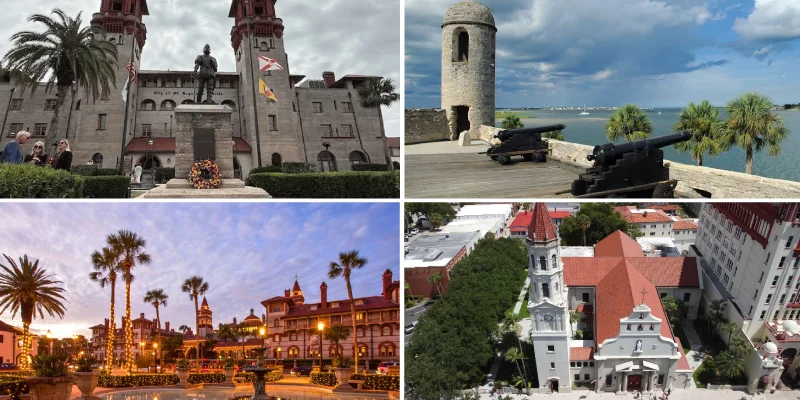
Explore the History of St. Augustine with this collage featuring the Ponce de Leon statue, historic cannons, an illuminated plaza, and the Cathedral Basilica.

The historic district still contains hundreds of structures that reflect different periods of Spanish, British, and American rule. Among the most important historic sites in St. Augustine is the Castillo de San Marcos, completed in 1695 after 23 years of construction. Built from coquina stone, the fort is the oldest masonry fort in the continental United States.

The city’s historic core is compact enough to explore on foot, with St. George Street, the Plaza de la Constitución, the Cathedral Basilica of St. Augustine, and the Castillo all within a relatively short distance of one another. That makes the historical side of St. Augustine easy to cover in a single day, while beaches and attractions farther from downtown can fill a second day.

Section 2: Castillo de San Marcos: What to Know Before You Go

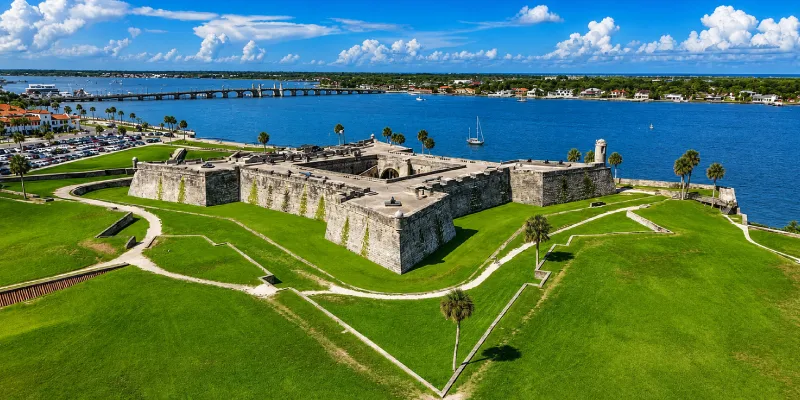
A bright aerial view of the historic star-shaped Castillo de San Marcos fortress surrounded by green grass and blue water in St. Augustine.

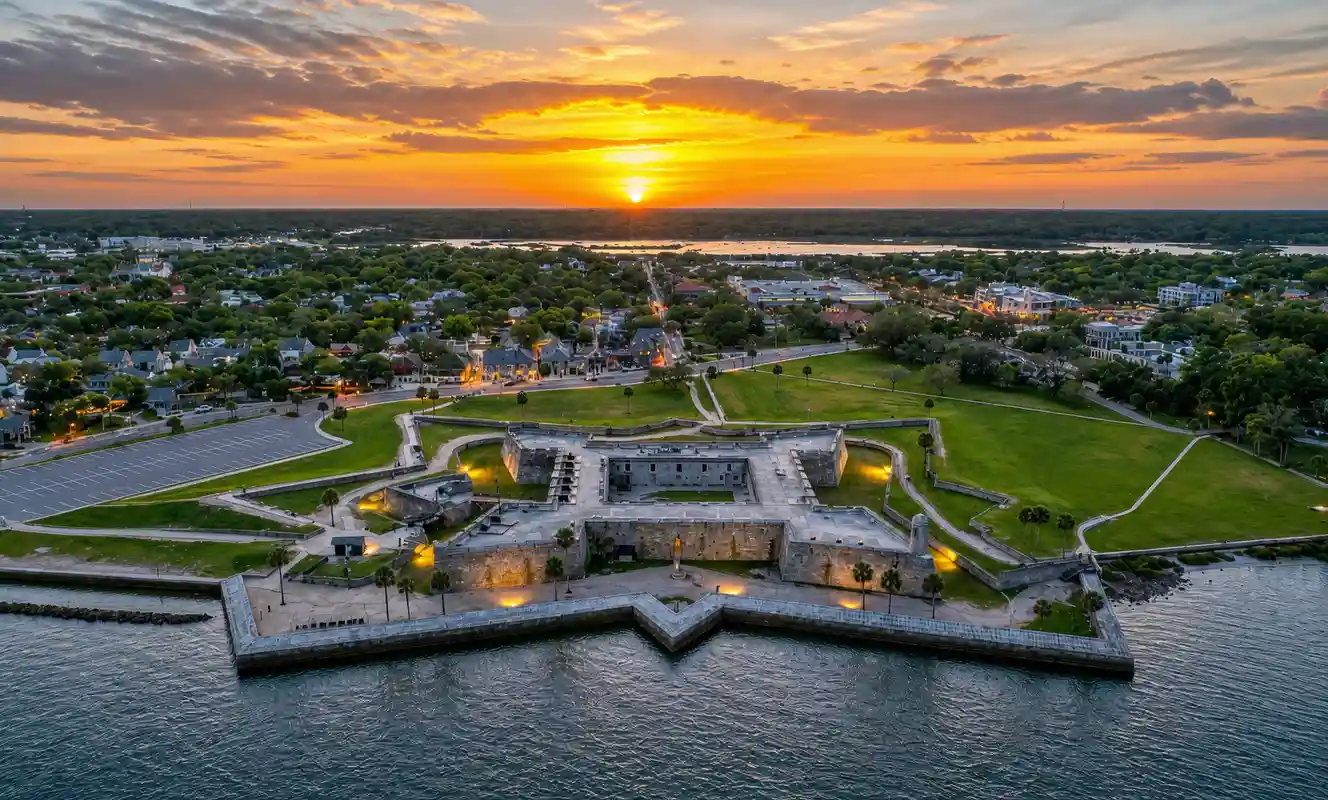
The Castillo de San Marcos is a Spanish-built fort in St. Augustine and the oldest masonry fortification in the continental United States. Construction began in 1672 and was completed in 1695, after 23 years of work. Built from locally sourced coquina stone, the fort was designed to defend St. Augustine and the Atlantic trade route. (National Park Service)

Practical Visitor Information

Visitor Information - Quick Guide
Detail Information
Hours 9:00 AM to 5:15 PM daily
Admission $15 for adults 16+; children 15 and under are free
Reservations Not required for regular visitors
Time to allow About 1.5 to 2 hours
Best time to visit Early morning or a weekday
Visitor Information
Hours Info
Hours 9:00 AM to 5:15 PM daily
Admission Info
Admission $15 for adults 16+; children 15 and under are free
Reservations Info
Reservations Not required for regular visitors
Time to allow Info
Time to allow About 1.5 to 2 hours
Best time to visit Info
Best time to visit Early morning or a weekday

The National Park Service says the fort’s first admission is at 9:00 AM, with visitors required to leave by 5:15 PM. It is closed on Thanksgiving Day and Christmas Day. The current standard entrance fee is $15 for visitors aged 16 and over, while children 15 and under enter free. 

For fewer crowds, arrive early or visit on a weekday. The NPS reports that weekends and holidays are among the busiest periods, with a busy Saturday averaging around 3,500 visitors

Allow around 1.5 to 2 hours if you want time to explore the fort’s rooms, walls, gun deck, and views across Matanzas Bay. The coquina construction is a major part of what makes the site worth seeing. The soft shell-based stone helped the fort withstand repeated attacks while giving it a distinctly different appearance from traditional masonry forts.

For visitors building a list of St. Augustine Florida things to do, the Castillo is an easy priority because it combines the city’s military history, Spanish colonial past, and waterfront location in one stop.

Top 3 Historic Sites in St. Augustine Beyond the Castillo

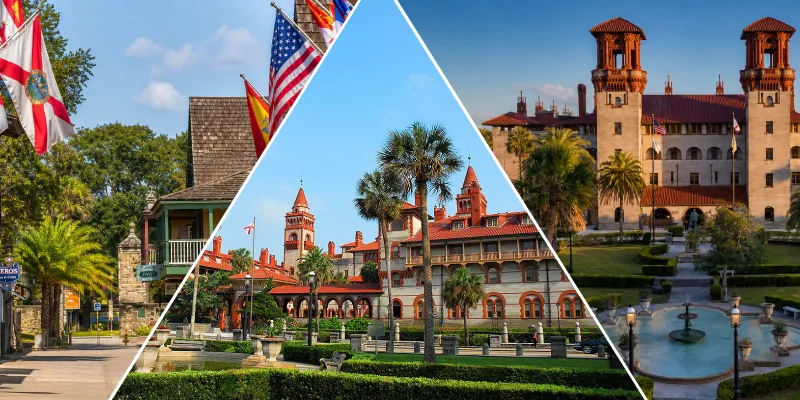
A collage of the Top 3 Historic Sites in St. Augustine featuring Spanish colonial architecture, palm trees, and lush green gardens under a clear blue sky.

St. George Street and the Colonial Quarter

St. George Street is the main pedestrian corridor through St. Augustine’s historic district, with shops, restaurants, museums, and preserved buildings lining the route. The Colonial Quarter adds historical context through reconstructed and preserved structures representing different periods of the city’s Spanish and British rule.

For visitors looking for historic sites in St. Augustine, this area is easy to combine with the Castillo because the attractions are close enough to explore on foot. Allow around 1.5 to 2 hours to walk the street, visit the Colonial Quarter, and make a few stops along the way.

Best for: Walking tours, first-time visitors, and seeing several historic sites in one area.

Flagler College and the Gilded Age Sites

Flagler College reflects a very different chapter of St. Augustine’s history. Henry Flagler developed the city as a winter destination in the late 19th century, investing heavily in hotels, rail connections, and major buildings.

The former Ponce de León Hotel, completed in 1888, is now part of Flagler College and remains one of the city’s most recognizable examples of Gilded Age architecture. Guided tours provide access to areas that are not part of a normal campus visit, including the former hotel’s grand spaces.

Nearby, the Villa Zorayda and other historic buildings add more context to the period when St. Augustine was being reshaped for wealthy winter visitors.

Best for: Architecture, photography, and travelers interested in St. Augustine’s late-1800s development.

Lightner Museum and Ponce de León-Era Landmarks

The Lightner Museum occupies another former Henry Flagler property, the Alcazar Hotel, built in 1888. Today, its collection includes decorative arts and objects gathered largely from the Victorian era, giving visitors a look at the interests and lifestyles associated with St. Augustine’s Gilded Age.

The building itself is part of the attraction, with elaborate interiors that contrast with the city’s earlier Spanish colonial structures. Together with Flagler College and nearby landmarks, it helps show how dramatically St. Augustine changed centuries after its founding.

For a broader history-focused visit, combine the museum with the Ponce de León Hotel and the historic downtown streets rather than treating it as a standalone stop.

Best for: Museum visits, architecture, and adding Gilded Age history to a historic St. Augustine itinerary.

Best Things to Do in St. Augustine Beyond History

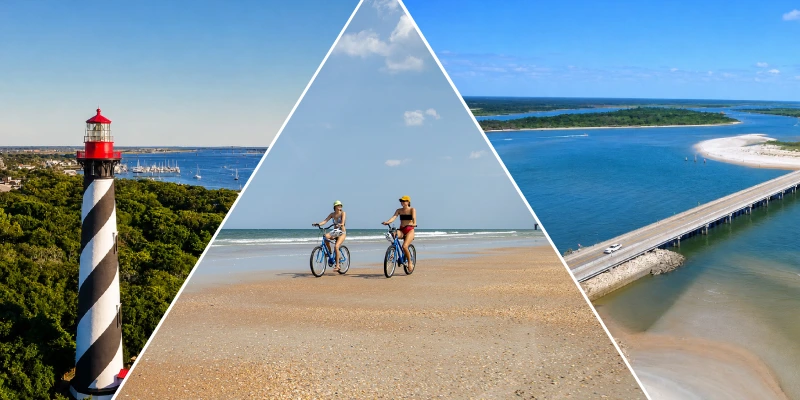
Highlights of the Best Things to Do in St. Augustine Beyond History, including the lighthouse, biking on the beach, and enjoying scenic coastal bridges.

St. Augustine’s historic core may be the main draw, but the city’s things to do extend well beyond forts and old buildings. Add a few of these stops if you have an extra day or want to break up a history-heavy itinerary.

St. Augustine Lighthouse

The St. Augustine Lighthouse stands 165 feet above the city and has 219 steps to the top. The climb takes some effort, but the observation deck provides wide views across the city and surrounding coastline. Allow around 1 to 1.5 hours for the lighthouse and grounds.

Anastasia State Park

For a change of pace, head to Anastasia State Park, just south of the historic district. The park has several miles of beach, walking trails, and areas for swimming, kayaking, and paddling. It works well for families or anyone who wants to include some outdoor time in a St. Augustine itinerary.

Waterfront Dining

The area around the Matanzas River has restaurants with outdoor seating and views toward the water. This is an easy addition after a day of sightseeing, particularly around the historic downtown and Bridge of Lions.

Fountain of Youth Archaeological Park

The Fountain of Youth Archaeological Park combines tourism and history, with exhibits tied to St. Augustine’s Spanish colonial story and the expedition of Pedro Menéndez. The site is best treated as a short attraction rather than a full-day activity.

How to Prioritize

With one day, focus on the historic district, Castillo de San Marcos, and one additional attraction such as the lighthouse. With two days, add Anastasia State Park, waterfront dining, or the Fountain of Youth.

Best for: Families, outdoor time, coastal views, and travelers who want more than historic sites.

How Many Days Do You Need in St. Augustine?

One full day is enough to cover St. Augustine’s historic core, including the Castillo de San Marcos, St. George Street, the Plaza de la Constitución, and several nearby historic sites. Two days gives you time to add the lighthouse, Anastasia State Park, and a more relaxed evening downtown. Three days works well for a slower itinerary with nearby coastal stops.

St. Augustine Trip Planner - What You Can Cover
Trip length What you can cover
1 day Castillo, historic district, St. George Street, waterfront
2 days Historic sites + lighthouse + Anastasia State Park
3 days Full city visit + beach time + nearby coastal stops
St. Augustine Trip Planner
1 day Quick
Coverage Castillo, historic district, St. George Street, waterfront
2 days Extended
Coverage Historic sites + lighthouse + Anastasia State Park
3 days Full
Coverage Full city visit + beach time + nearby coastal stops

For a first visit, 2 days is the most practical choice. It avoids rushing through the historic district while leaving enough time for St. Augustine’s beaches and other attractions.

With three days, you can also use St. Augustine as a base for stops farther along the Atlantic coast, including Flagler Beach. Travelers continuing south can follow A1A toward Daytona Beach and the Space Coast rather than returning to the interstate.

For a longer Atlantic coast road trip, see our A1A Scenic Highway road trip guide for route ideas, drive times, and stops beyond St. Augustine.

Where to Stay in St. Augustine

Where you stay depends largely on how much of the city you plan to cover. Hotels in the historic district put attractions such as St. George Street and the Castillo de San Marcos within easy reach, while rentals around the waterfront or Anastasia Island can give you more space and easier access to the beach.

For stays of two nights or more, a vacation rental can be particularly practical. Having a kitchen, living area, and separate sleeping space makes it easier to settle in rather than repack every morning. Travelarii listings in St. Augustine’s historic district, waterfront areas, and Anastasia Island can be useful starting points when comparing locations for your itinerary.

For a wider selection, browse Travelarii’s St. Augustine vacation rentals and compare properties by location, size, and amenities.

FAQs

St. Augustine was founded by the Spanish in 1565, making it more than 460 years old. It predates the English settlement of Jamestown by 42 years and Plymouth Colony by 55 years. The city’s long Spanish and colonial history is reflected in its forts, streets, churches, and other historic sites.

Yes. The Castillo de San Marcos is one of the strongest reasons to visit St. Augustine. Completed in 1695, it is the oldest masonry fort in the continental United States. Allow around 1–2 hours to explore the fort, see its defensive features, and take in its waterfront position.

One day is enough to cover the historic district and major landmarks. Two days gives you time for the Castillo, museums, St. George Street, the lighthouse, and nearby beaches. A three-day stay works well if you want a slower schedule or plan to add nearby stops along the A1A coastal route.

St. Augustine is best known for its 1565 Spanish founding, historic architecture, and Castillo de San Marcos. Other major attractions include St. George Street, Flagler College, the Lightner Museum, St. Augustine Lighthouse, and the city’s waterfront. Its concentration of historic sites makes the city a major stop on Florida’s northeast coast.

Yes, particularly around the historic district. Many major attractions, including St. George Street, the Castillo de San Marcos, Flagler College, and the Lightner Museum, are within walking distance of one another. A car becomes more useful for reaching Anastasia Island, the lighthouse, beaches, and attractions outside the central district.

More Related Blogs From Travel Recommendations