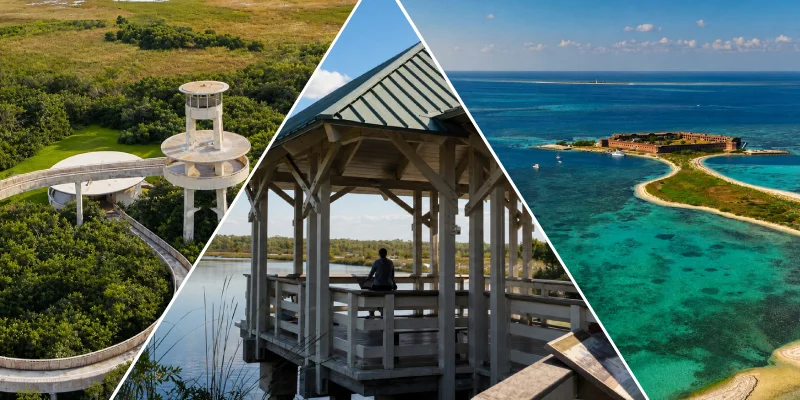
At 1.5 million acres, Everglades National Park protects one of the largest subtropical wilderness areas in the United States. The park is also recognized as a UNESCO World Heritage Site, with wetlands, mangrove forests, sawgrass marshes, and coastal habitats spread across South Florida.
Find the Right Vacation Rental
Traveling with family, friends, or as a couple? Compare verified rentals that fit your budget and travel style. Choose a place that feels right before you book.
This Everglades National Park travel guide breaks down which entrance to use, what to expect from Everglades airboat tours, where wildlife sightings are most likely, and how much time to allow. It also covers the best time to visit the Everglades, including weather and seasonal considerations, plus whether an Everglades day trip from Miami is realistic. If you’re combining the park with the Keys, see our Miami to Key West road trip guide for route-planning ideas.
| Worldwide Most Popular Travel Destinations |
|---|
Table of Content
- Quick Facts about Everglades National Park
- Everglades Airboat Tours: What to Know Before You Book
- Everglades Wildlife: What You Will Actually See
- Best Time to Visit the Everglades
- Is the Everglades a Good Day Trip From Miami?
- Where to Stay Near the Everglades
- FAQs
- More Related Blogs From Travel Recommendations
Quick Facts about Everglades National Park
Everglades National Park covers about 1.5 million acres across South Florida, but there is no single road connecting its main visitor areas. The park has three main entrances: Homestead, Shark Valley in Miami, and Gulf Coast in Everglades City.
From Miami, Shark Valley is the closest entrance, about 25 miles west of the Florida Turnpike on U.S. 41. The Homestead entrance is farther south, while Gulf Coast is across the park’s western side.For a first visit, choose your entrance based on the activity you want.
Shark Valley is particularly convenient for wildlife viewing and its tram route, Homestead provides access to Royal Palm, Anhinga Trail, and the road to Flamingo, while Gulf Coast is the gateway to the Ten Thousand Islands and water-based exploration. The entrances do not connect inside the park, so trying to combine multiple areas in one short visit can add substantial driving time.
| Entrance | Nearest city | Best for | Approx. distance from Miami |
|---|---|---|---|
| Shark Valley | Miami | Wildlife viewing, tram tours, cycling | ~25 miles west |
| Homestead / Ernest F. Coe | Homestead | Hiking, Anhinga Trail, Royal Palm, Flamingo | ~40–50 miles south |
| Gulf Coast | Everglades City | Boat tours, Ten Thousand Islands | ~80+ miles west |
Distances are approximate and can vary depending on your starting point in Miami and traffic. The National Park Service identifies Shark Valley as the entrance closest to the Greater Miami area.
Everglades Airboat Tours: What to Know Before You Book
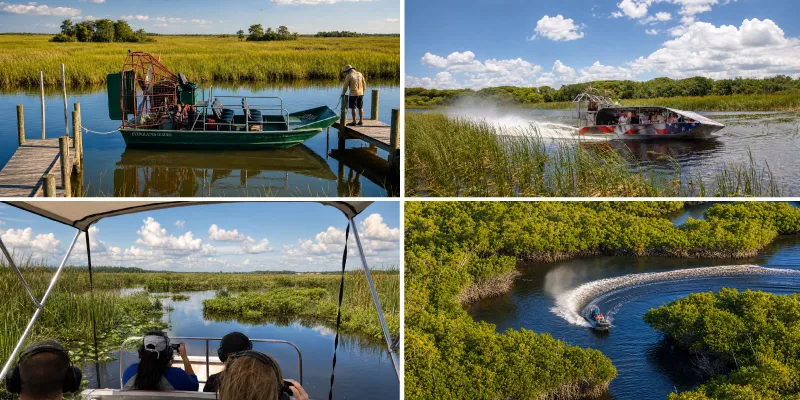
An Everglades airboat tour is a guided ride across shallow wetlands in a flat-bottomed boat powered by a large rear-mounted fan. Tours commonly run from about 30 minutes to 2 hours, depending on the operator and whether you choose a shared or private experience. Prices vary considerably, but a typical shared tour is often around $30–$60 per person, while longer private tours can cost substantially more.
One detail often gets confusing: airboat tours do operate within Everglades National Park, but only in specifically authorized areas. The National Park Service currently lists three authorized commercial operators along U.S. 41/Tamiami Trail, including locations near Coopertown, Gator Park, and Everglades Safari Park. Airboats are prohibited across most of the park because much of Everglades National Park is designated wilderness.
The U.S. 41 corridor is therefore the practical area to look at when combining an airboat ride with a Miami visit. The authorized operators are east of Shark Valley, while Shark Valley itself does not have airboat tours at the visitor center.
What wildlife should you expect?
Wildlife sightings are possible, but an airboat tour should not be treated as a guaranteed alligator-spotting trip. Guides may point out American alligators, turtles, wading birds, fish, and other wetland wildlife, but conditions, water levels, temperature, and time of day all affect what you see. A good guide explains the ecosystem and helps passengers understand why animals may be visible in one area but absent from another.
For choosing an operator, look for proper authorization or licensing, clear tour-duration and pricing information, manageable group sizes, and consistent recent reviews. Avoid judging a tour solely by promises of seeing a particular animal. The quality of the guide and the way the tour is conducted are just as important as the wildlife count.
Everglades Wildlife: What You Will Actually See
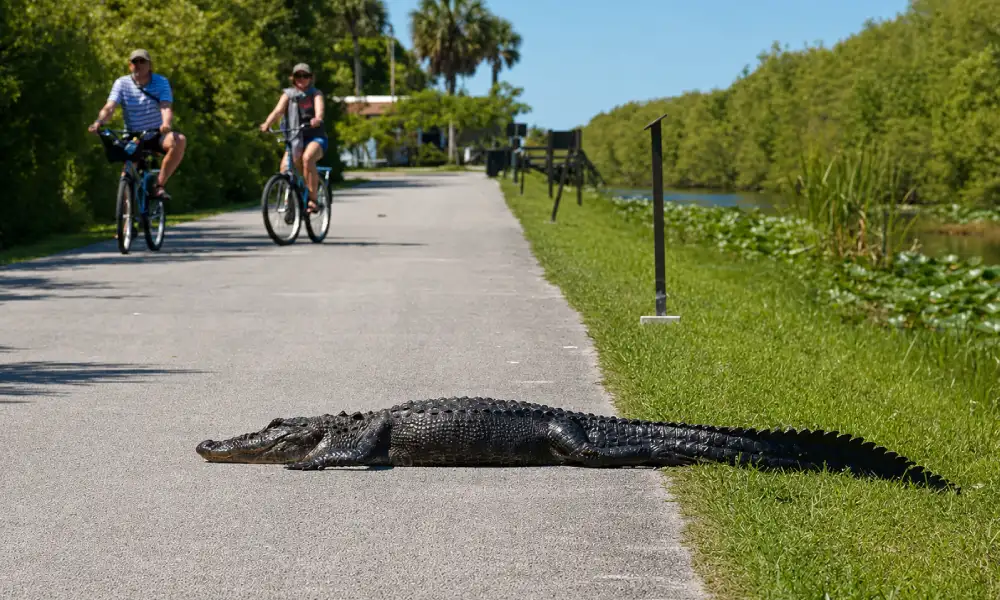
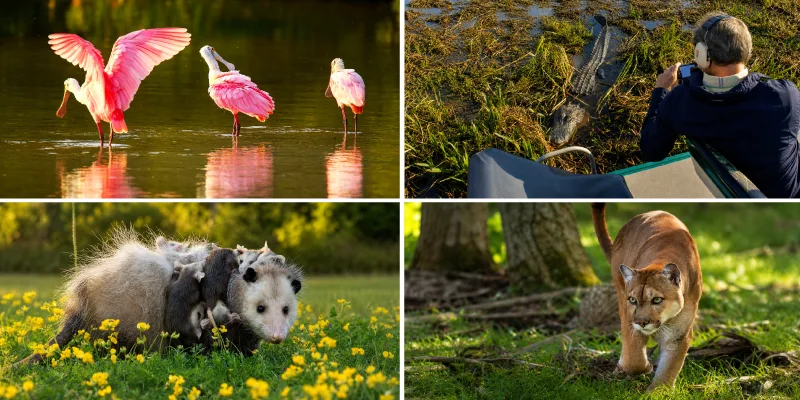
Wildlife is one of the main reasons people visit the Everglades, but sightings depend heavily on season, water levels, weather, and location. Alligators are among the easiest animals to spot, particularly around freshwater ponds, canals, and trails where they regularly bask near the water.
Wading birds are another reliable sight. Great egrets, great blue herons, ibises, anhingas, and other waterbirds can be seen around marshes and waterways. The dry season generally makes wildlife viewing easier because animals concentrate around shrinking pools of water, while birds often gather in feeding areas.
The Florida panther is present in the broader Everglades ecosystem, but seeing one in the park is extremely unlikely. These cats occupy large territories and tend to avoid people, so a visit should never be planned around finding one. West Indian manatees are also found in South Florida’s waterways, particularly around freshwater and coastal areas, but sightings are not guaranteed.
Burmese pythons have also established a population in South Florida. The species is invasive and has become a management concern because it preys on native wildlife. Visitors may hear about python research or removal efforts during their visit, but encountering one in the wild is uncommon.
When is wildlife easiest to see?
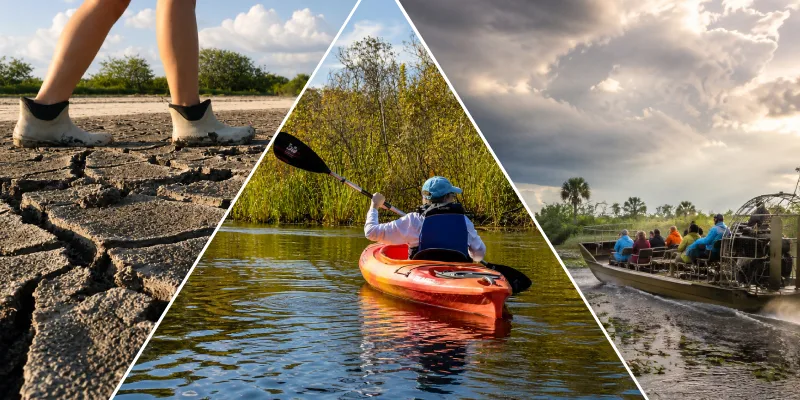
For most visitors, the dry season from roughly December through April offers the best general wildlife-viewing conditions. Lower water levels concentrate animals around remaining water sources, while cooler temperatures can make daytime exploration more comfortable. The wet season brings higher water levels, afternoon storms, and denser vegetation, which can make some animals harder to spot.
That seasonal difference is one reason the best time to visit the Everglades depends on whether wildlife viewing, weather, or fewer visitors is your priority.
Best Time to Visit the Everglades
The best time to visit the Everglades is generally December through April. This dry-season window brings lower mosquito activity, more comfortable conditions for exploring, and wildlife that is often easier to locate around remaining water sources. May through November is wetter, with higher mosquito activity and wildlife spread across a larger area.
1. Visit Everglades in December through April:
The dry season, roughly December through April, is the most practical choice for a first visit. As water levels fall, fish and other prey become concentrated in fewer pools, which can bring alligators and wading birds into more predictable areas. Cooler, drier weather also makes hiking and longer outdoor activities more manageable.
2. Visit Everglades in May through November:
The wet season runs roughly May through November. Afternoon rain is more common, humidity is higher, and mosquitoes can be more noticeable. Higher water levels also spread wildlife across a larger area, so sightings can require more patience. On the other hand, this period can mean fewer visitors and greener conditions throughout the park.
3. Visit Everglades in June through November:
The wet season overlaps with Atlantic hurricane season, which runs from June 1 through November 30. A hurricane does not mean the park will be affected during every visit, but tropical weather can change road, trail, and tour conditions. Check the forecast and park alerts shortly before setting out, particularly when visiting during late summer or fall.
Is the Everglades a Good Day Trip From Miami?
Yes, the Everglades works well as a day trip from Miami. The closest visitor areas can be reached in roughly 45–90 minutes by car, depending on the entrance and your starting point. With an early departure, you can visit one area of the park, take a guided tour, walk a short trail, and return to Miami the same day.
The key is choosing one part of the park rather than trying to cover everything. The Everglades is spread across a huge area, and its main entrances are not connected by a straightforward internal road.
What can you cover in one day?
A typical Everglades day trip from Miami can include:
- One park entrance: Shark Valley is convenient for Miami visitors, while the Homestead entrance provides access toward Royal Palm and Flamingo.
- One guided activity: An airboat tour along the Tamiami Trail or a tram tour at Shark Valley can provide a structured way to see the wetland ecosystem.
- One or two short walks: Trails such as Anhinga Trail near the Homestead entrance can add wildlife viewing without taking up several hours.
- A few hours of flexible time: Allow room for parking, visitor centers, meals, and unexpected delays.
A multi-day Everglades visit makes more sense if you want to experience different parts of the park. Extra time allows you to visit multiple entrances, join ranger-led programs, explore longer trails, or plan around early-morning and late-afternoon wildlife activity.
For a first visit from Miami, though, one well-planned day is enough to get a useful introduction without booking an overnight stay. The main mistake is trying to combine Shark Valley, Flamingo, and the Gulf Coast in a single day. The distances between these areas can consume much of the time you came to spend in the park.
Where to Stay Near the Everglades
Most visitors do not need to stay inside Everglades National Park. In-park lodging is limited, so Miami and Homestead are the two practical bases for a visit. Homestead works particularly well if the Everglades is a main stop, while South Miami is convenient for travelers combining the park with several days in the city.
For an overnight trip, a Travelarii rental in Homestead can put you closer to the park’s eastern entrances and leave more time for an early start. A Travelarii property in South Miami makes more sense if the Everglades is one part of a wider Miami and Florida Keys itinerary.
-
Everglades National Park
Lotus Garden by Florida Spirit★ 1.0(1) Check priceView Property -
Everglades National Park
5 Bed 4 Bathroom Town Home★ 3.0(4) Check priceView Property -
Everglades National Park
Runaway Beach Resort by Magical Memories★ 2.8(10) Check priceView Property -
Everglades National Park
Royal Floridian by VillaDirect★ 1.0(1) Check priceView Property -
Everglades National Park
On a Whim 2 Bedroom Home by Redawning★ 2.0(1) Check priceView Property -
Everglades National Park
Regal Palms Resort & Spa 1327★ 3.4(58) Check priceView Property -
Everglades National Park
Lotus Garden by Florida Spirit★ 1.0(1) Check priceView Property -
Everglades National Park
5 Bed 4 Bathroom Town Home★ 3.0(4) Check priceView Property -
Everglades National Park
Runaway Beach Resort by Magical Memories★ 2.8(10) Check priceView Property -
Everglades National Park
Royal Floridian by VillaDirect★ 1.0(1) Check priceView Property -
Everglades National Park
On a Whim 2 Bedroom Home by Redawning★ 2.0(1) Check priceView Property -
Everglades National Park
Regal Palms Resort & Spa 1327★ 3.4(58) Check priceView Property
Browse Travelarii’s Miami-area stays to compare available properties before booking. For travelers staying more than one night, having a kitchen and additional living space can also make the rental more practical than booking a hotel room for every member of the group.
FAQs
The distance depends on which entrance you use. Ernest F. Coe Visitor Center near Homestead is roughly 40 miles from central Miami, while Shark Valley is about 40 to 45 miles away. Driving time is typically around 45 to 90 minutes, depending on traffic and your starting point.
Generally, no. Commercial airboat tours operate outside the boundaries of Everglades National Park, particularly around the Tamiami Trail area. Airboats are not permitted throughout most of the national park itself. Inside the park, visitors can instead use designated trails, visitor areas, and authorized boat tours.
December through April is generally the best time to visit the Everglades. The dry season brings lower rainfall, fewer mosquitoes, and wildlife that is often easier to spot around remaining water sources. May through November is wetter and more humid, with greater mosquito activity and more dispersed wildlife.
Alligators are among the wildlife visitors are most likely to see, particularly around accessible freshwater areas, boardwalks, and waterways. Sightings are never guaranteed, though. Early morning and cooler periods can be productive for wildlife viewing, especially during the dry season when animals concentrate around available water.
Yes. A one-day Everglades trip is realistic from Miami. With an early start, you can focus on one entrance, take an airboat tour outside the park or a boat tour where available, and fit in a short trail or visitor center. A longer stay gives you more time to explore different areas and join ranger programs.
More Related Blogs From Travel Recommendations
Space Coast Day Trip: Kennedy Space Center & Cocoa Beach
St. Augustine Travel Guide: Exploring America’s Oldest City
Miami to Key West Road Trip: The Complete Overseas Highway Guide
Margaret C. Jones
Margaret C. Jones, a passionate explorer of North America, captivates readers with her vivid tales on Travelarii’s blog. With a keen eye for hidden gems and local culture, Margaret offers expert advice and unique insights to enhance your travel experience. Her stories bring the diverse landscapes and vibrant cities of North America to life, inspiring readers to embark on their own adventures.