The Art Deco Historic District walking guide starts in one of the world’s largest concentrations of Art Deco architecture, packed into a compact, walkable section of South Beach, Miami.
Pastel-colored facades, geometric patterns, curved corners, glass-block windows, and neon signs give this part of the city its distinctive look. Most of the main sights sit close together, making it possible to explore the district on foot in a couple of hours without rushing.
Find Your Ideal Stay in Art Deco Historic District on Vrbo
Search extensive private home inventory, review verified guest feedback, and book your trip
with complete confidence.
Ocean Drive is the obvious starting point, with its historic hotels, sidewalk cafés, and preserved 1930s buildings. However, the district extends beyond this famous waterfront street. Nearby Collins Avenue and Washington Avenue offer more examples of the architecture, often with fewer crowds and better opportunities to notice the details.
A self-guided walk works well for visitors who prefer to explore at their own pace. A little preparation helps, especially when deciding which buildings deserve a closer look and where to pause along the route.
This guide covers the Art Deco Historic District Miami Beach, the key stops along Ocean Drive, the architectural features worth noticing, how to use an Art Deco Historic District map, and where to stay nearby for easy access to the area.
Table of Content
What Is the Art Deco Historic District?
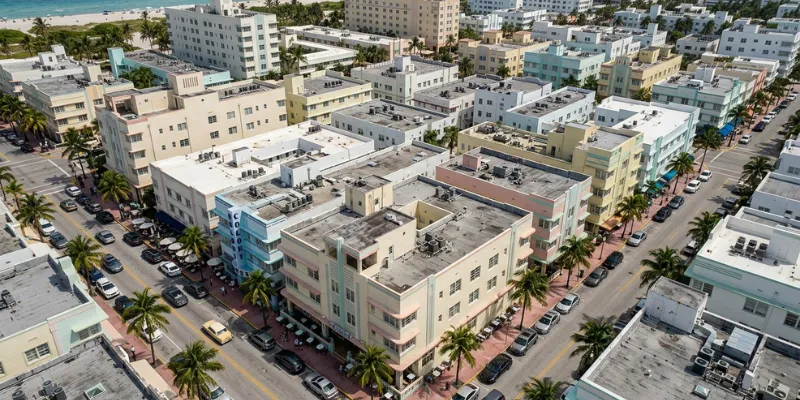
Art Deco Historic District (Photo Credit: Author’s Own Contribution)
The Art Deco Historic District Miami Beach is a protected area in South Beach, Florida, known for its concentration of historic buildings from the 1920s through the 1940s. The district generally stretches between the Atlantic Ocean and Lenox Court, from Fifth Street north to around 23rd Street, with Ocean Drive, Collins Avenue, and Washington Avenue forming its main architectural corridors.
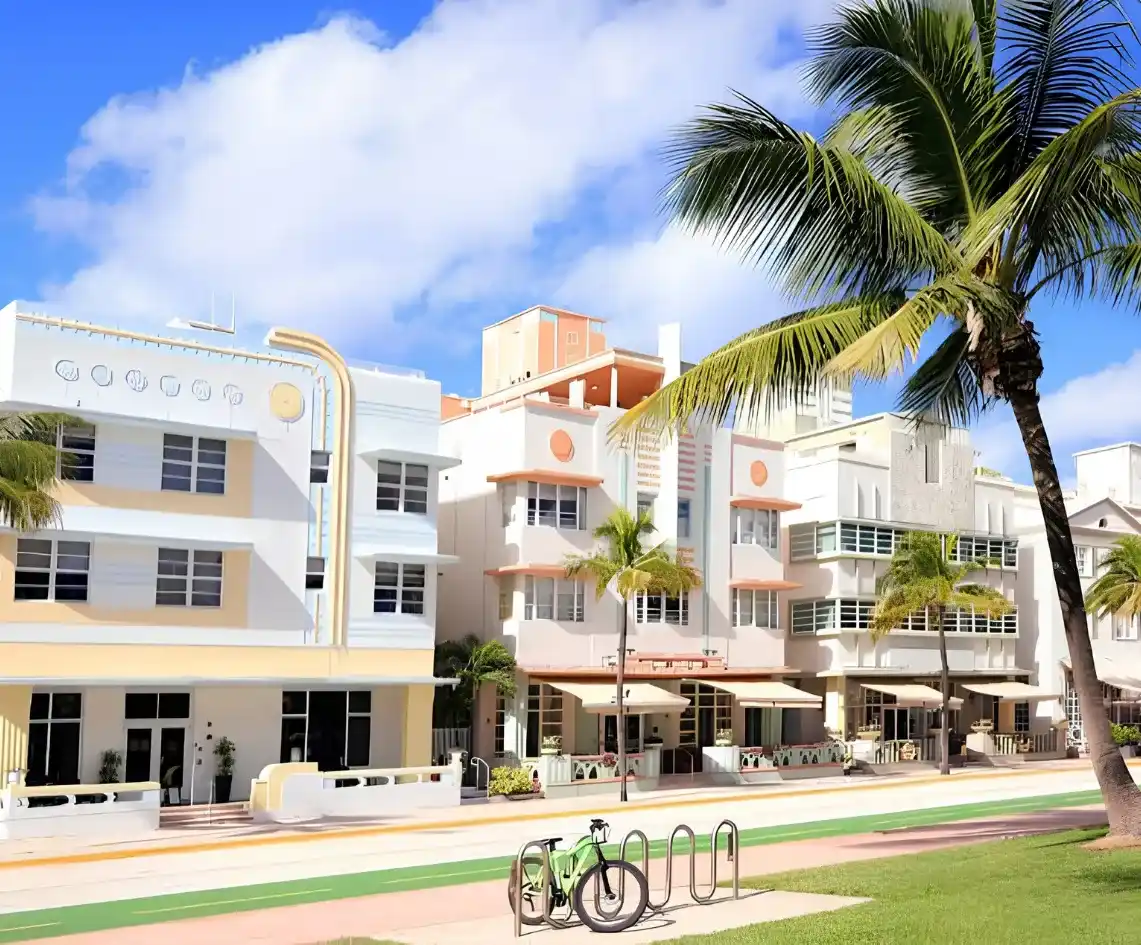
Art Deco architecture is easy to recognize here. Buildings feature geometric patterns, rounded corners, horizontal lines, decorative reliefs, porthole-style windows, and pastel shades of pink, mint green, yellow, and blue. Many also have distinctive roofline details and neon signage. Miami Beach developed its own interpretation of the style, often called Tropical Art Deco, which incorporates features suited to the coastal climate, including awnings, balconies, and light-colored facades.
The district’s significance goes beyond its appearance. During the 1970s, many older buildings faced demolition as developers pushed for redevelopment. Preservation advocates, including Barbara Baer Capitman, campaigned to protect the area’s architectural heritage. Their efforts helped secure the designation of the Miami Beach Architectural District on the National Register of Historic Places in 1979. It became the first 20th-century historic district recognized on the register.
Today, the preserved buildings remain part of the city’s working streetscape, housing hotels, restaurants, shops, and residences. That continued use makes the district a practical place to explore on foot while seeing how Miami Beach’s architectural history has survived decades of change.
Art Deco Walking Tour of Ocean Drive
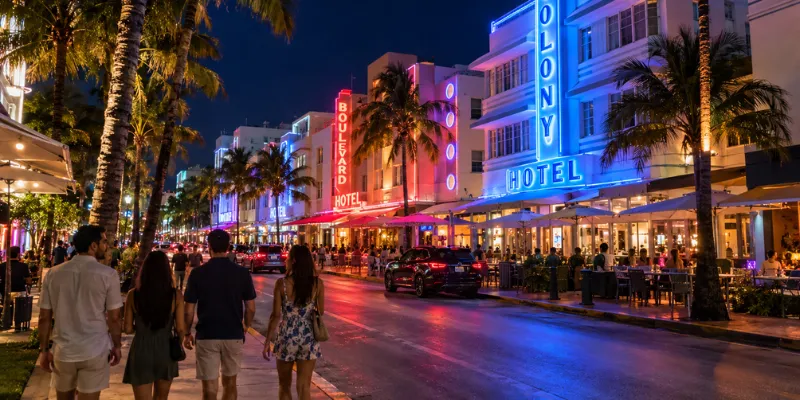
Art Deco Walking Tour of Ocean Drive (Photo Credit: Author’s Own Contribution)
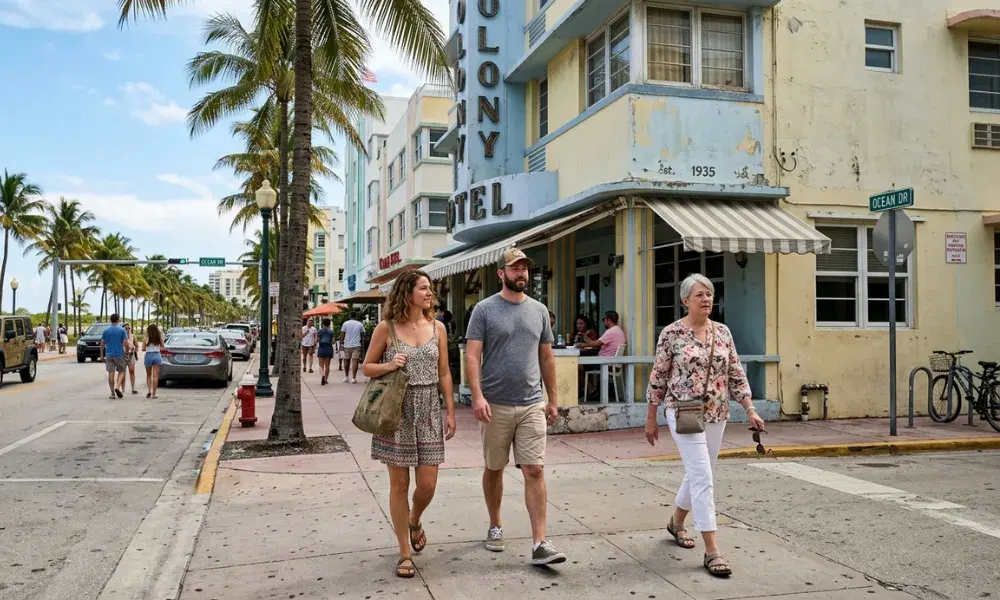
An Art Deco walking tour of Ocean Drive is the best way to see Miami Beach’s most recognizable collection of historic hotels and commercial buildings. The stretch between Fifth Street and 15th Street is a useful starting point. Many of the district’s best-known facades sit along this section, facing the beach or lining the opposite side of the road.
Start near Fifth Street and walk north at an easy pace. Look at the buildings from across the street as well as from the sidewalk directly in front of them. The wider view reveals how their pastel colors, curved edges, and stepped rooflines work together. Up close, smaller details become easier to spot, including porthole windows, decorative lettering, glass blocks, and geometric motifs above entrances.
Neon signage is another feature worth watching for, especially around the historic hotels. Some signs have become closely associated with the Ocean Drive streetscape. The buildings also use horizontal bands and rounded corners to suggest movement, even when the structures themselves are compact. These details distinguish Miami Beach’s Tropical Art Deco style from the more rigid geometric designs found in other cities.
Allow around 45 minutes to an hour for this stretch if the goal is to examine the architecture and stop for photographs. The actual walk can be shorter, but rushing past the buildings makes it easy to miss their decorative features. Visit in the morning, ideally before the midday heat and heavier pedestrian traffic build up. The light is often useful for photographing the facades, and the sidewalks tend to be easier to navigate.
Ocean Drive also has restaurants, cafés, and hotel terraces, so the walk can easily take longer if you stop for breakfast or coffee. Keep in mind that the historic buildings are best appreciated from public sidewalks. Many are operating businesses or private properties, so interior access depends on the venue.
For a more complete route, continue beyond Ocean Drive to nearby Collins Avenue and Washington Avenue. These streets reveal additional examples of the district’s architecture and provide a broader view of how the style extends beyond its most photographed waterfront stretch.
Best Art Deco Buildings to See in Miami Beach
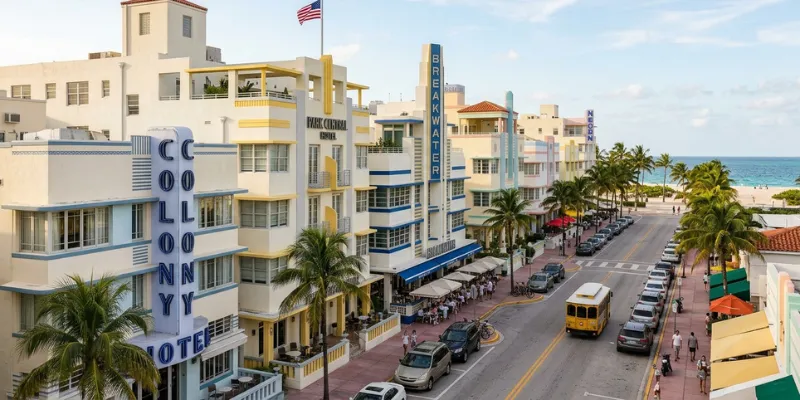
Best Art Deco Buildings to See in Miami Beach (Photo Credit: Author’s Own Contribution)
The best Art Deco buildings to see in Miami Beach include several historic hotels along Ocean Drive, each with distinct features worth looking for. Focus on a few landmarks rather than trying to examine every facade. The Colony Hotel, Park Central Hotel, The Tides, and The Leslie offer a useful introduction to the area’s architectural styles.
Colony Hotel
At 736 Ocean Drive, the Colony Hotel dates to 1935 and was designed by architect Henry Hohauser. Its compact facade, stepped roofline, and prominent vertical neon sign make it one of the street’s most recognizable buildings. Look at how the sign draws the eye upward while the building’s horizontal lines keep the overall design balanced.
Park Central Hotel
The Park Central Hotel at 640 Ocean Drive opened in 1937. Also designed by Hohauser, it features clean geometric lines and nautical-inspired details associated with Miami Beach’s Tropical Art Deco style. Its position beside Lummus Park makes it easy to view the facade from across the street.
The Tides
At 1220 Ocean Drive, The Tides stands out for its greater height and strong vertical emphasis. Designed by L. Murray Dixon and completed in 1936, the building contrasts with the smaller hotels nearby. Examine its symmetrical composition and rounded architectural details, which reflect the streamlined direction Art Deco took in Miami Beach.
The Leslie
The Leslie Hotel, at 1244 Ocean Drive, was built in 1937 and designed by Albert Anis. Its low-rise facade and geometric detailing fit the compact scale of the surrounding historic hotels. It is a useful stop for comparing the simpler proportions of smaller Art Deco buildings with the taller structures along the same street.
These landmarks are close enough to include in one walking route. View them from the public sidewalk and compare their rooflines, window shapes, signage, and facade patterns. The differences become clearer when the buildings are seen together rather than in separate photographs.
Self-Guided Art Deco Tour Tips
A self-guided Art Deco tour Miami visitors can complete in about two hours is easy to arrange without paying for a guide. Start around Fifth Street on Ocean Drive and walk north toward 15th Street. This route passes several well-known historic hotels and gives you time to examine their facades, signs, windows, and decorative details. Continue onto Collins Avenue or Washington Avenue if you want to see more of the district.
Start early in the morning. Temperatures rise quickly in Miami Beach, especially during summer. An early walk also means fewer people on the sidewalks and clearer views of the buildings. Late afternoon is another option, although Ocean Drive can become busier as restaurants fill up.
Before setting out, check the Miami Design Preservation League’s official website. The organization operates the Art Deco Museum and Welcome Center at 1001 Ocean Drive and provides information about the district’s architectural heritage. Its resources can help identify significant buildings and explain the design features to look for. Check current opening hours and tour details before visiting, as schedules may change.
Use an Art Deco Historic District map to plan your stops rather than relying on Ocean Drive alone. Mark the buildings you want to see and leave room for nearby streets. Many facades are best viewed from across the road, so allow time to cross at designated crossings and take photographs safely.
A paid walking tour is worth considering if you want more historical context. Guides can explain how the buildings were designed, how preservation efforts developed, and why certain architectural features matter. The Miami Design Preservation League offers guided tours, subject to its current schedule. For a short visit, a self-guided route works well; for a deeper architectural history lesson, a guided tour can provide more detail than signs and online resources alone.
Art Deco Historic District Map
An Art Deco Historic District map helps visitors plan a walking route through South Beach without doubling back between landmarks. The historic district generally extends from Fifth Street to around 23rd Street, between the Atlantic Ocean and the western edge of the historic neighborhood near Lenox Court. Ocean Drive, Collins Avenue, and Washington Avenue are the main streets to follow, with many notable buildings clustered between Fifth and 15th streets.
For a short visit, start at Fifth Street and head north along Ocean Drive. Stop at the Colony Hotel, Park Central Hotel, and The Tides before continuing toward The Leslie. From there, cross to Collins Avenue to see more historic hotels and architectural details. Washington Avenue provides another route through the district if you have extra time.
Before leaving, check the Miami Design Preservation League’s official website for current visitor information and available maps. Its Art Deco Museum and Welcome Center at 1001 Ocean Drive is a useful starting point for learning about the district and finding out whether printed maps or guided tours are available. Use the official resources to confirm specific building locations and tour details, as boundaries and mapped landmarks may vary by resource.
A simple route map embedded in this guide can mark the main streets, key buildings, and suggested walking direction. Keep it focused on the central district so visitors can follow the route easily on a phone while exploring on foot.
Where to Stay Near the Art Deco District Miami Beach
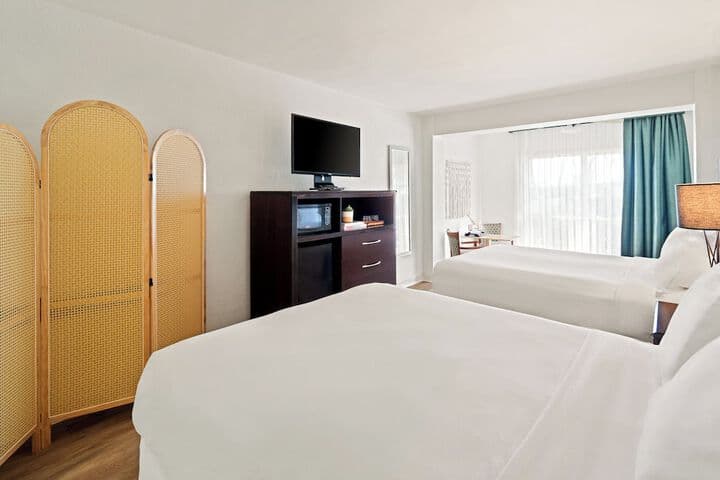
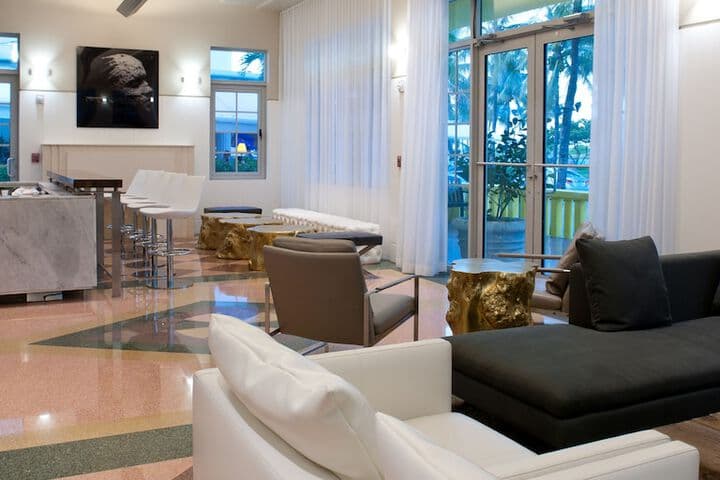
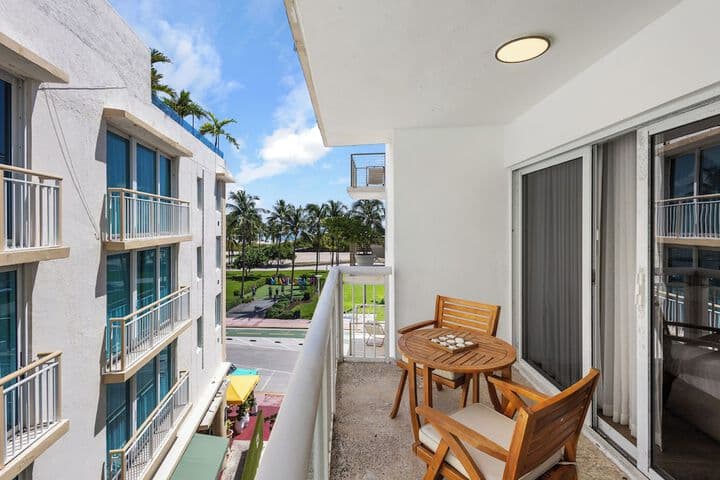
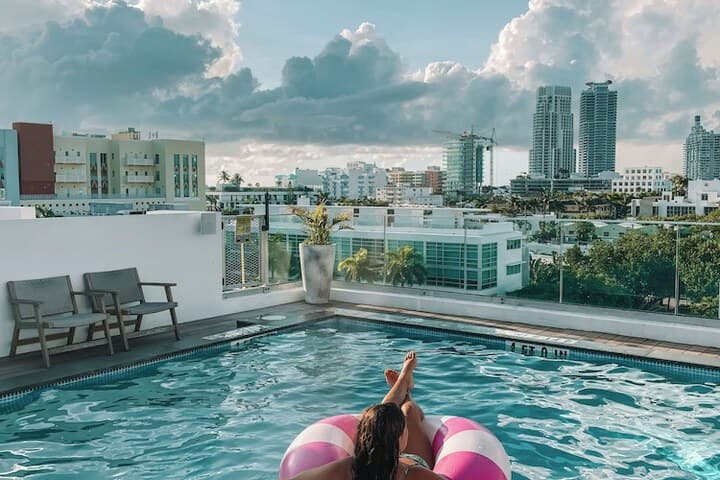
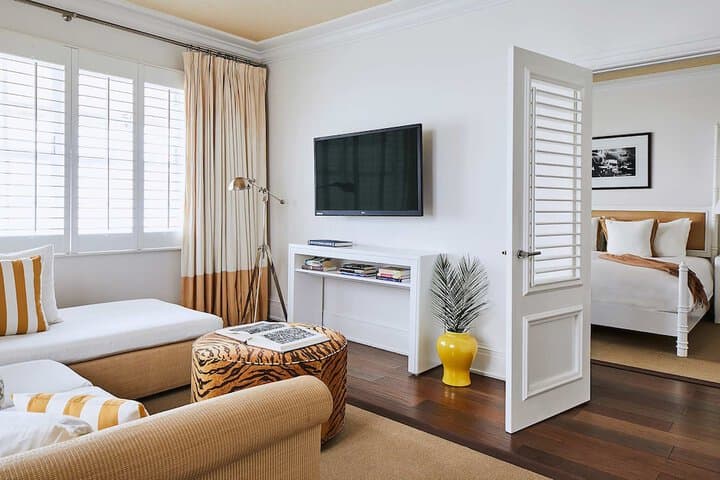
Choosing where to stay near Art Deco District Miami Beach comes down to how close you want to be to Ocean Drive. Staying within the historic district puts the architecture, restaurants, beach access, and main walking route close to your accommodation. Hotels here range from restored Art Deco landmarks to smaller boutique properties in historic buildings.
-
North Bay Village
Palm Tree Club Miami Hotel★ 4.3(1,102) $142/nightView Property -
Miami Beach
Leslie Hotel Ocean Drive★ 4.5(1,876) $169/nightView Property -
Miami Beach
Bentley Hotel South Beach★ 4.1(2,102) $156/nightView Property -
Miami
Upsun Hotel★ 4.4(654) $328/nightView Property -
Miami
The Cove by Renzzi★ 4.6(321) $154/nightView Property -
Miami
Hampton Inn & Suites Miami Brickell Downtown★ 4.3(1,532) $913/nightView Property -
Miami
Comfort Inn & Suites Downtown Brickell★ 4.3(2,310) $299/nightView Property -
Miami
East Miami★ 4.7(3,221) $184/nightView Property -
Miami Beach
The Villa Casa Casuarina★ 4.8(543) $135/nightView Property -
Miami Beach
The Betsy South Beach★ 4.7(1,876) $329/nightView Property -
Miami Beach
Hyatt Centric South Beach Miami★ 4.4(1,645) $249/nightView Property -
Miami Beach
Clinton Hotel South Beach★ 4.1(1,988) $159/nightView Property -
North Bay Village
Palm Tree Club Miami Hotel★ 4.3(1,102) $142/nightView Property -
Miami Beach
Leslie Hotel Ocean Drive★ 4.5(1,876) $169/nightView Property -
Miami Beach
Bentley Hotel South Beach★ 4.1(2,102) $156/nightView Property -
Miami
Upsun Hotel★ 4.4(654) $328/nightView Property -
Miami
The Cove by Renzzi★ 4.6(321) $154/nightView Property -
Miami
Hampton Inn & Suites Miami Brickell Downtown★ 4.3(1,532) $913/nightView Property -
Miami
Comfort Inn & Suites Downtown Brickell★ 4.3(2,310) $299/nightView Property -
Miami
East Miami★ 4.7(3,221) $184/nightView Property -
Miami Beach
The Villa Casa Casuarina★ 4.8(543) $135/nightView Property -
Miami Beach
The Betsy South Beach★ 4.7(1,876) $329/nightView Property -
Miami Beach
Hyatt Centric South Beach Miami★ 4.4(1,645) $249/nightView Property -
Miami Beach
Clinton Hotel South Beach★ 4.1(1,988) $159/nightView Property
South Beach is the most practical base for a walking-focused visit. Properties around Ocean Drive and Collins Avenue make it easy to explore the district early in the morning or return after dinner without arranging transport. Expect more street activity, particularly near popular restaurants and nightlife venues. Check the room’s location within the hotel before booking, as rooms facing busy streets may experience more noise.
For a slightly quieter base, consider Mid-Beach, north of the main South Beach attractions. This area has beachfront hotels and other accommodation options, with Ocean Drive accessible by a longer walk, local transport, or a short ride depending on the exact location. It can suit visitors who want to spend part of the day exploring the Art Deco district and the rest enjoying the beach or hotel facilities.
Vacation rentals are another option, particularly for families and groups who need multiple bedrooms, a kitchen, or shared living space. Compare the total price, cleaning fees, parking costs, and cancellation terms before choosing a property. Also check whether the address is genuinely within walking distance of the historic district rather than simply listed as Miami Beach.
For a broader comparison of neighborhoods and rental types, see the guide to Vacation Rentals in Miami. For properties closer to Ocean Drive, the dedicated South Beach vacation rentals guide can help narrow the search by location and group size. Always confirm the exact address and walking distance before booking.
FAQs
The Art Deco Historic District in Miami Beach generally extends from Fifth Street to around 23rd Street, between the Atlantic Ocean and the western edge near Lenox Court. Ocean Drive, Collins Avenue, and Washington Avenue contain many of its best-known historic buildings.
Yes. The district is easy to explore independently, with historic buildings concentrated along several walkable streets. Use a map to plan stops, identify architectural details, and follow a route that suits your schedule. Guided tours are available for visitors who want more historical context.
Allow around two hours for a relaxed walk covering Ocean Drive and nearby streets. A shorter route focused on the main hotels can take about 45 minutes to an hour. Photography stops, café breaks, and visits to the Art Deco Museum will add time.
Yes. Ocean Drive is one of the district’s main architectural corridors. Its historic hotels, geometric facades, pastel colors, and distinctive neon signs make it a useful starting point for exploring Miami Beach’s Art Deco architecture.
Morning is a practical choice, especially during warmer months. Temperatures are generally more manageable, and sidewalks tend to be less crowded. Late afternoon also works well for photographs, although restaurant traffic can increase as the day progresses.
Not all of them. Many historic buildings operate as hotels, restaurants, or private residences. Visitors can view their exterior architecture from public sidewalks, but interior access depends on the property’s rules and services.
Yes. Walking along public streets and viewing the buildings from the outside is free. Some guided tours, museum visits, and hotel experiences may charge admission or fees, so check current details before visiting.
More Related Blogs From Tips & Tricks
Miami International Airport to South Beach
Margaret C. Jones
Margaret C. Jones, a passionate explorer of North America, captivates readers with her vivid tales on Travelarii’s blog. With a keen eye for hidden gems and local culture, Margaret offers expert advice and unique insights to enhance your travel experience. Her stories bring the diverse landscapes and vibrant cities of North America to life, inspiring readers to embark on their own adventures.