Seattle’s most recognizable places are not only photo stops. Many of them began as working structures tied to the city’s early growth in trade, transportation, and urban development.
When you visit these locations today, you are still standing in spaces that helped shape how Seattle expanded from a small port settlement into a major Pacific Northwest hub.Several historic landmarks in Seattle remain part of everyday city life.
The observation tower at Space Needle still anchors the skyline, while the stalls inside Pike Place Market continue serving residents and travelers alike. Along the waterfront, attractions such as the Seattle Great Wheel offer views across Elliott Bay while sitting beside some of the city’s oldest commercial routes.
This guide focuses on historic sites that still influence how visitors experience the city today. You will learn why these landmarks remain relevant, what makes them worth visiting, and how they fit naturally into a broader itinerary of things to see across Seattle. For travelers visiting during the FIFA World Cup 2026, these locations also provide easy stops between major events and match days.
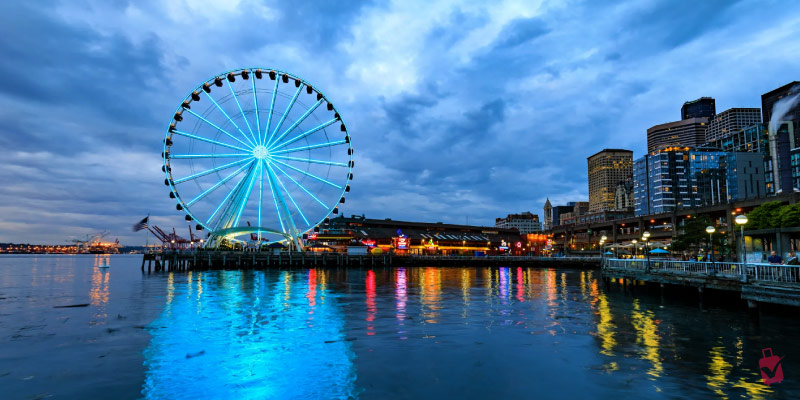
The Seattle Great Wheel represents a recent but important shift in how the city treats its central waterfront. It opened in 2012 at Pier 57, an area that once focused almost entirely on maritime trade, storage, and transport. For much of the twentieth century, public access to this stretch of Elliott Bay was limited by working port infrastructure.
The wheel’s placement signaled a change in direction. Seattle began treating the waterfront as shared civic space rather than a purely industrial zone. From the cabins, visitors can see ferries entering and leaving terminals, cargo operations further along the bay, and newer pedestrian areas developing nearby. That combination explains why the wheel belongs on a Seattle landmarks list even without a deep age behind it.
People return because the wheel shows how the city’s priorities have evolved without hiding its working harbor. It offers a clear view of Seattle’s ongoing balance between commerce and public access, which is a recurring theme across the city’s historical development. The surrounding waterfront often hosts seasonal events and gatherings, many of which rank among the best festivals in Seattle during warmer months.
Seattle Great Wheel
Things to do in Seattle Great Wheel
Take a full rotation ride during daylight to understand the waterfront layout
Ride again after sunset to see the city lights and harbor activity
Observe ferry routes and working piers from above
Walk along Pier 57 and nearby waterfront paths
Stop at nearby public seating areas to watch boats and pedestrian traffic
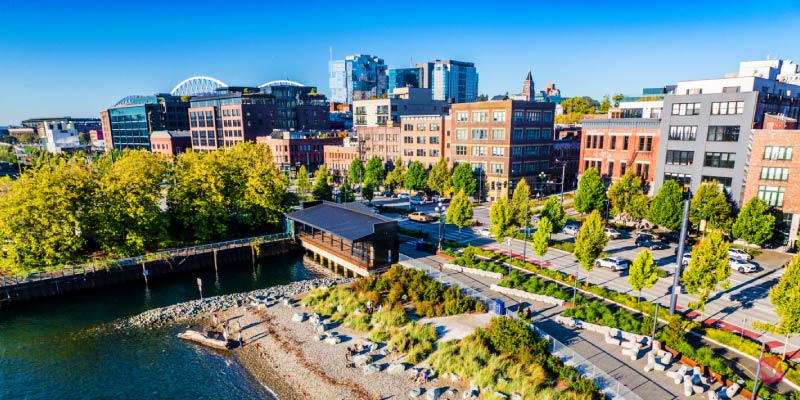
6. Olympic Sculpture Park
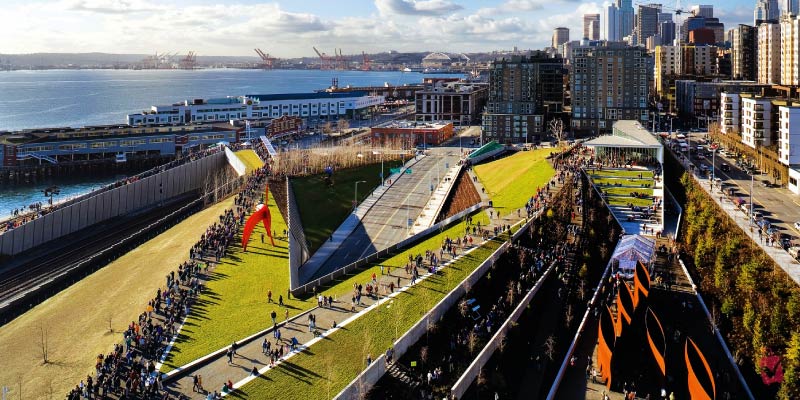
Olympic Sculpture Park occupies land that once supported fuel storage facilities and rail lines. Before its transformation, this area formed a barrier between downtown Seattle and the shoreline. The park opened in 2007 after extensive cleanup efforts that addressed long-standing environmental damage.
Its historical importance lies in reuse. Rather than erasing the site’s past, the park follows the land’s existing slope and industrial footprint. Pathways trace former infrastructure routes, and elevation changes reflect how the area once functioned as a working zone rather than a leisure space.
Visitors often return because the park explains how Seattle approached post-industrial recovery. It shows how damaged land was reclaimed and made accessible without pretending its earlier use never happened. Among historical landmarks in Seattle, it represents a modern chapter rooted in environmental responsibility and urban planning decisions.
Olympic Sculpture Park
Things to do in Olympic Sculpture Park
Walk the entire zigzag path from downtown to the shoreline
View each large-scale sculpture up close and from different angles
Sit on open lawn areas facing Puget Sound
Photograph the contrast between art, water, and the city skyline
Use the park as a walking link between downtown and the waterfront
5. Smith Tower
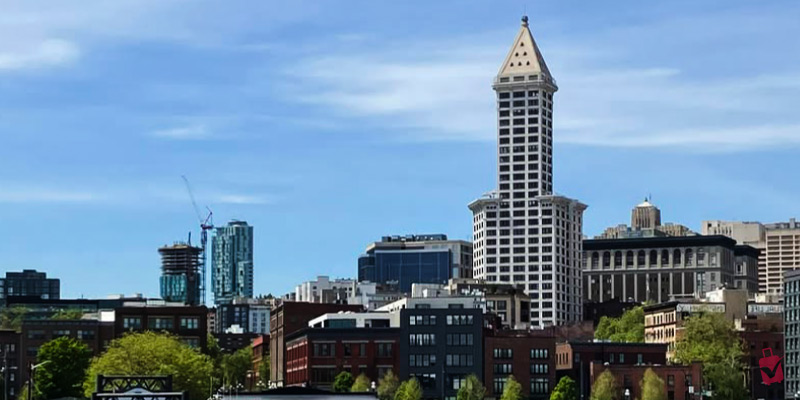
Completed in 1914, Smith Tower reflects Seattle’s ambitions during the early twentieth century. Built after the economic momentum of the Klondike Gold Rush, it stood as the tallest building west of the Mississippi River at the time. The tower signaled that Seattle saw itself as more than a regional port city.
The building’s design reflects durability and permanence rather than speed or scale. Its observation level provides views that stay close to the city, showing streets, rooftops, and harbor activity in detail. This perspective helps explain how Seattle expanded vertically before spreading outward across surrounding neighborhoods.
Smith Tower continues to draw repeat visitors because it offers historical scale. It shows what progress looked like before the modern skyline competition and why early confidence shaped the city’s physical form. That clarity keeps it relevant among Seattle’s major attractions.
Smith Tower
Things to do in Smith Tower
Visit the observation deck for a close-range city view
Identify historic neighborhoods and waterfront areas from above
Explore interior exhibits that explain early skyscraper construction
Spend time in the upper-floor seating areas
Combine the visit with a walk through nearby historic streets
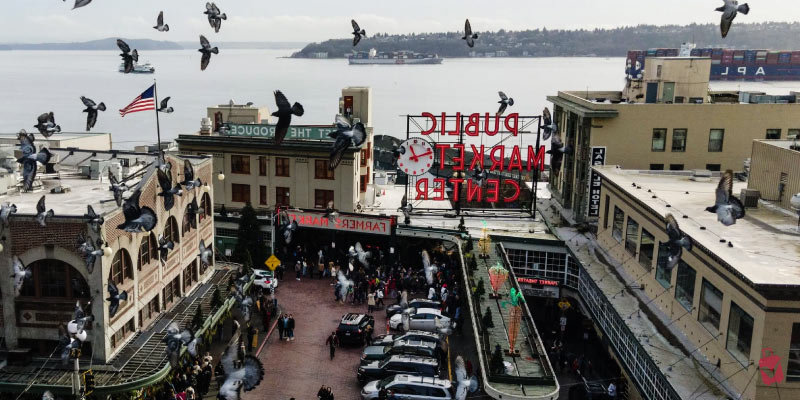
4. Pike Place Market
Pike Place Market opened in 1907 as a response to unfair pricing practices that affected farmers and consumers. The market was designed to allow producers to sell directly to buyers, reducing dependence on middlemen and stabilizing food access for the city.
That purpose continues today. Pike Place remains one of the oldest continuously operating public markets in the country. Its layout reflects practicality rather than decoration, with narrow corridors and stacked levels shaped by the hillside location.
Visitors return because the market still functions as intended. Vendors change, seasonal goods rotate, and daily routines guide how the space operates. This continuity explains why it is often considered the most famous historical landmark in Seattle and why it remains central to daily life rather than preserved apart from it.
Pike Place Market
Things to do in Pike Place Market
Walk the full length of the main arcade
Browse fresh produce, seafood, and baked goods
Watch fish handling at the primary stalls
Explore lower levels for lesser-known shops
Observe the daily routines of vendors and regular shoppers
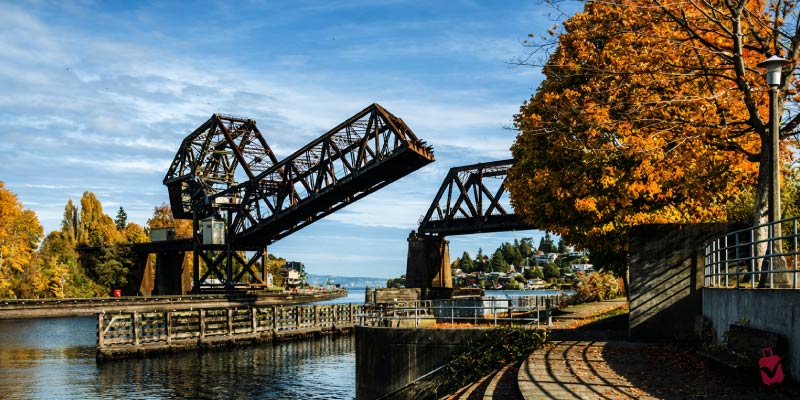
3. Ballard (Hiram M. Chittenden) Locks
The Ballard Locks opened in 1917 to solve a practical challenge. Seattle needed a controlled connection between Puget Sound and its freshwater lakes while managing different water levels and protecting shoreline development. The solution reshaped how the region handled navigation and water management.
The locks made large-scale ship movement possible between saltwater and freshwater routes, supporting industrial growth and residential expansion around Lake Union and Lake Washington. Their construction altered local waterways in ways that still define the region’s layout today.
Visitors return because the locks remain fully operational. Boats continue to pass through daily, demonstrating early twentieth-century engineering in action. On any Seattle landmarks list, this site stands out because it continues to perform the role it was built for rather than serving as a historical display.
Ballard (Hiram M. Chittenden) Locks
Things to do in Ballard (Hiram M. Chittenden) Locks
Watch boats pass through the lock chambers
Observe water level changes between saltwater and freshwater
View the fish ladder during migration seasons
Walk across the lock gates for different vantage points
Spend time in the surrounding public gardens and viewing areas
2. Pioneer Square
Pioneer Square marks Seattle’s original settlement area and its response to catastrophe. After the Great Fire of 1889 destroyed much of the district, city leaders chose to rebuild on the same site rather than relocate. Brick and stone replaced wood, and street levels were raised to improve drainage and reduce fire risk.
These decisions remain visible. Sidewalks sit above original ground levels, and underground spaces reveal former street fronts and entrances. The neighborhood’s layout reflects adaptation rather than replacement, showing how Seattle learned from failure and adjusted its infrastructure.
Visitors return to Pioneer Square because it provides physical evidence of early urban problem-solving. Among historical landmarks in Seattle, it offers one of the clearest records of how disaster shaped long-term planning and construction standards.
Pioneer Square
Things to do in Pioneer Square
Join an underground walking tour
Compare sidewalk height with the original street levels
Walk the full district to observe rebuilding patterns
Visit public squares and open plazas
Explore small shops and galleries housed in historic buildings
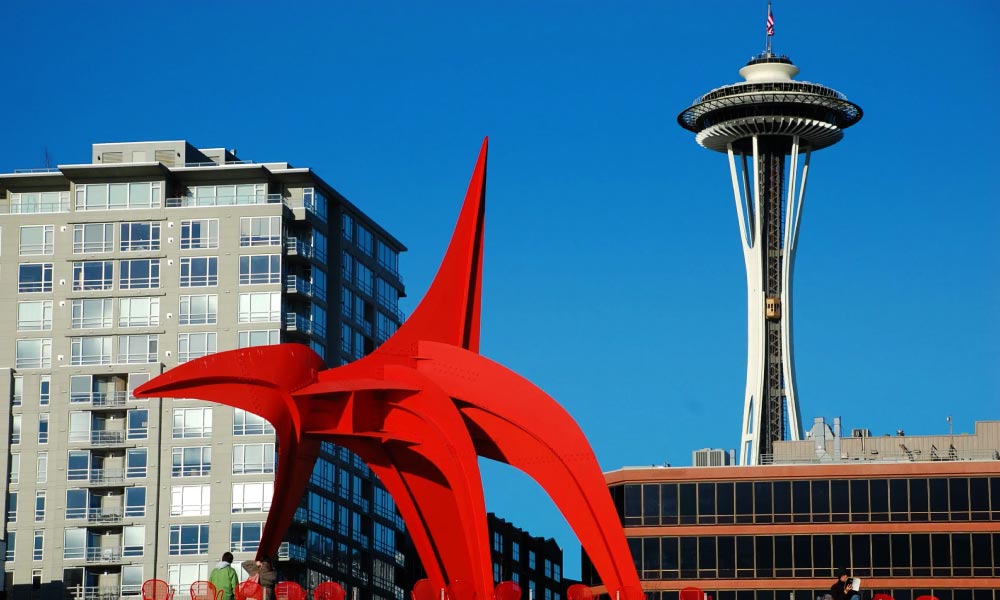
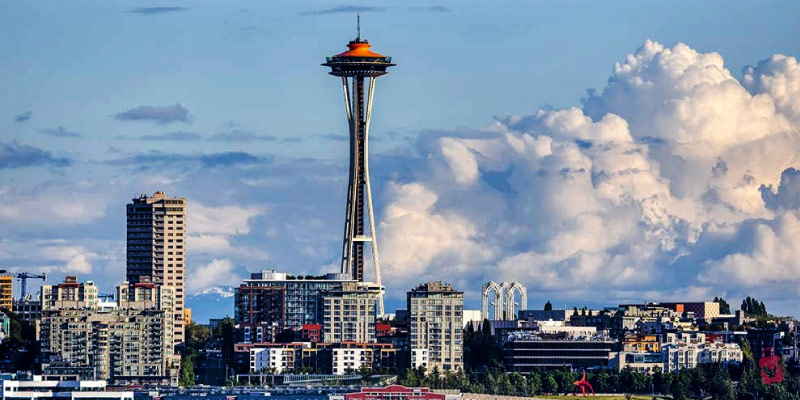
1. The Space Needle
The Space Needle was built for the 1962 World’s Fair, an event intended to present Seattle as a city focused on science, technology, and global connection. Its design reflected confidence in progress and a desire to stand out visually on the national stage.
Historically, the fair marked a shift in how Seattle positioned itself beyond its industrial roots. The Space Needle became a permanent reminder of that moment. Its height and form established a visual reference point that still defines the city’s skyline.
Visitors return because the structure continues to serve as a geographic anchor. From its observation areas, the relationship between water, mountains, and neighborhoods becomes immediately clear. It remains central to Seattle’s major attractions because it helps orient the entire region.
The Space Needle
Things to do in The Space Needle
Ride the elevator to the observation levels
Use panoramic views to understand Seattle’s geography
Identify surrounding neighborhoods, waterways, and mountains
Walk the base area to view the structure from below
Pair the visit with nearby public spaces and attractions
Wrap - up
The reason these Seattle landmarks continue to attract repeat visitors is simple: clarity. Each site clearly shows a stage of Seattle’s growth, from early settlement and rebuilding to industrial expansion and modern reinvention.
For travelers looking for orientation, these historical landmarks in Seattle naturally provide a readable timeline. For those returning, they gradually reveal deeper details, quietly adding layers of understanding with each visit. That steady, unfolding experience is why these places remain relevant and interesting, rather than just decorative.
Seattle’s key historic landmarks include Pike Place Market, the Space Needle, Pioneer Square, Ballard Locks, Smith Tower, Olympic Sculpture Park, and the Seattle Great Wheel. Each site highlights a unique chapter of the city’s growth.
Some landmarks like the Space Needle, Smith Tower, and Seattle Great Wheel require tickets, while places like Pioneer Square and Olympic Sculpture Park are free to visit in the USA.
They’re still functional. Markets, observation towers, and locks continue to operate as intended, letting visitors experience history actively rather than just observing it passively.
Pike Place Market, the Space Needle, and Smith Tower are top choices. They each highlight different eras of Seattle’s history, from early commerce to mid-century innovation.
Margaret C. Jones, a passionate explorer of North America, captivates readers with her vivid tales on Travelarii’s blog. With a keen eye for hidden gems and local culture, Margaret offers expert advice and unique insights to enhance your travel experience. Her stories bring the diverse landscapes and vibrant cities of North America to life, inspiring readers to embark on their own adventures.






 Stay Near
MetLife Stadium
Stay Near
MetLife Stadium