In Boston, time moves sideways. You can cross a street and step from the 21st century into an earlier chapter without leaving the neighborhood. Historical Landmarks in Boston opens the deeper side of the city to us. This is where people, decisions, and time have naturally touched each other.
This cover story is for travelers who look for meaning in the journey, not just what fills the view. Walking through them, you follow the footsteps of those who shaped Boston long before the skyline looked like it does today.
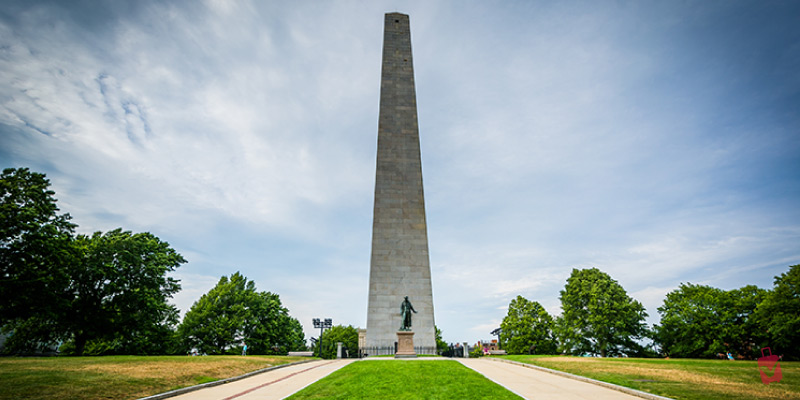
In the early hours of June 17, 1775, the slopes of Breed’s Hill were alive with the clash of muskets and the cries of soldiers. Though called the Battle of Bunker Hill, most of the fighting unfolded here, where colonial militias made a stand against the British.
Decades later, a granite obelisk rose from the hilltop, a quiet sentinel of those early struggles, built stone by stone with granite from nearby Quincy. Today, the 221-foot monument commands the skyline of Charlestown, a reminder of courage etched in granite.
Things to Do in Bunker Hill Monument
- Climb the 294 steps to the top for a sweeping view of Boston Harbor
- Visit the statue of Col. William Prescott and reflect on the soldiers who fought here.
- Stop by the Bunker Hill Museum across Monument Square for exhibits about the battle and Joseph Warren.
- Take a moment to walk the surrounding grounds, where plaques tell the story of this pivotal Revolutionary War moment.
2. Freedom Trail
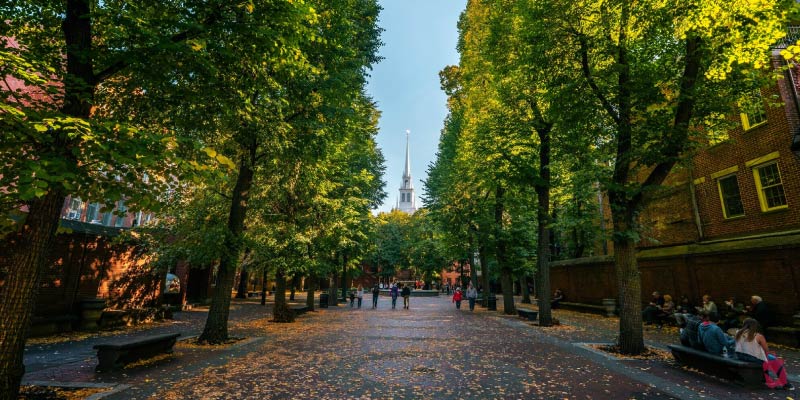
In 1951, a Boston journalist named William Schofield imagined a simple line that could connect the city’s scattered historic sites. By marking a path through the streets, he created a living timeline, guiding walkers past colonial churches, cobblestone alleys, graveyards, and old government buildings.
Over time, the trail grew into 2.5 miles linking sixteen locations, ending at the Bunker Hill Monument in Charlestown. Each brick in the path tells a story of rebellion, governance, and life in early America, letting history be seen as something walked through rather than read about.
Things to Do in Freedom Trail
- Start at Boston Common and follow the red-brick trail, stopping at landmarks like the State House or Park Street Church.
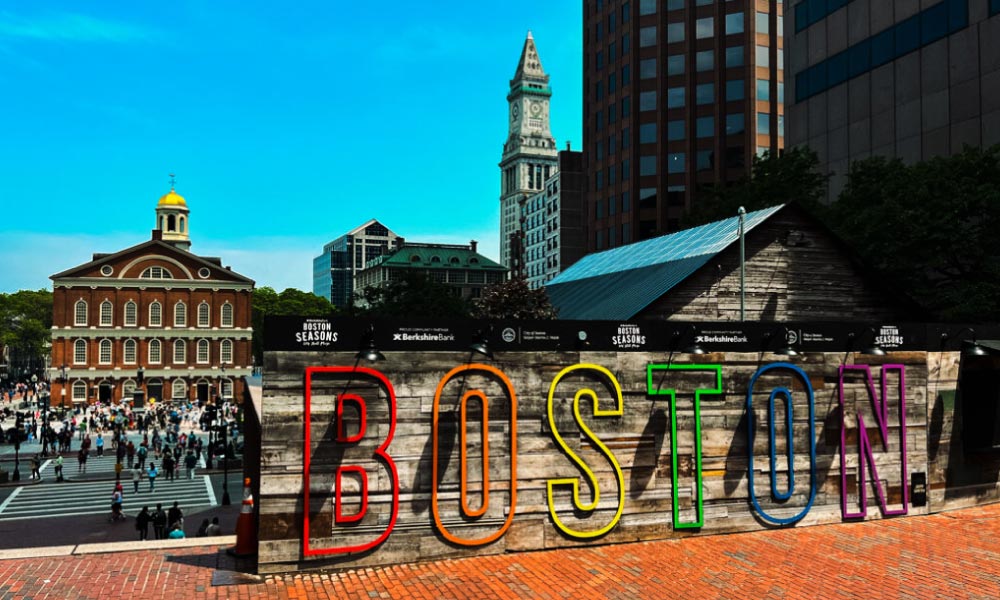
- Visit Faneuil Hall’s visitor center for maps, tips, and historical info.
- Step inside the Paul Revere House or Old South Meeting House to see original artifacts.
- Wander through Granary Burying Ground to read the headstones of revolutionary figures.
- Notice plaques and statues along the way that reveal hidden stories.
3. Trinity Church
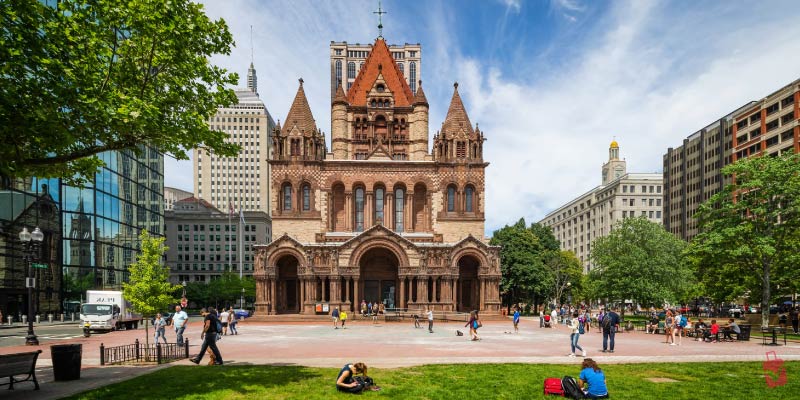
After the Great Boston Fire of 1872 destroyed its old building, Trinity Church rose in Back Bay as a bold statement of resilience. Designed by Henry Hobson Richardson, the new church was completed in 1877 and became the model for Richardsonian Romanesque architecture across the U.S.
Its rough stone walls, heavy arches, and massive tower draw the eye, while inside, intricate woodwork and stained glass quietly tell stories of faith and craftsmanship. The church has long been more than a building – it’s a hub for the community, music, and learning.
Things to Do in Trinity Church
- Attend a Sunday service or weekday worship to experience the space in use.
- Take a guided tour to learn about Richardson’s architecture and the design of the main tower by Stanford White.
- Listen to one of the church’s choirs performing in the sanctuary.
- Examine the stained glass and woodwork that reflect Boston’s 19th-century artistry.
- Walk around Copley Square to see how Trinity Church fits into the city’s historic landscape.
4. Boston Haymarket
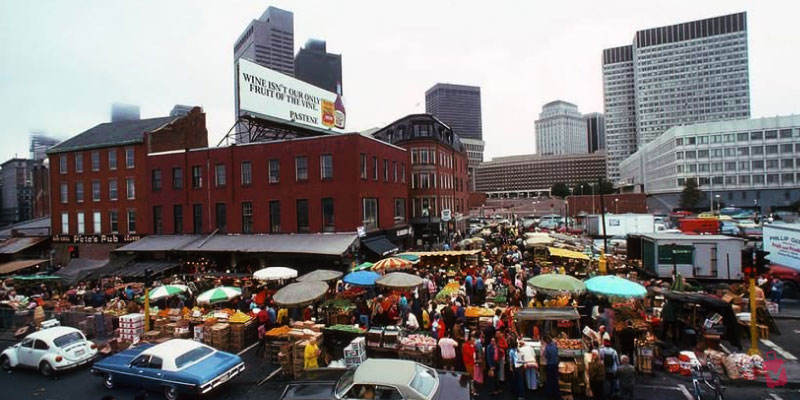
Boston Haymarket has been a hub of city life for over 200 years. Every Friday and Saturday, vendors set up along Blackstone, Hanover, and North Streets, offering fresh fruits, vegetables, and seafood at low prices. Its roots go back to the 1600s, and the market has always been a gathering place for Boston’s diverse communities.
Today, you’ll see a mix of cultures, just like in the city’s past, where Italian, Irish, and now many other immigrant groups have sold and shopped here. The market is lively, full of chatter, and a little chaotic in the best way.
Things to Do in Boston Haymarket
- Browse for fresh produce, seafood, and local specialties.
- Snap photos of the colorful stalls and busy vendors.
- Watch vendors bargain and sell leftover goods before closing – sometimes for just pennies.
- Combine your visit with a walk along the Freedom Trail or a stop at the nearby Blackstone Block Historic District.
- Enjoy the energy of a historic market that still plays an important role in Boston’s food scene.
5. Gibson House
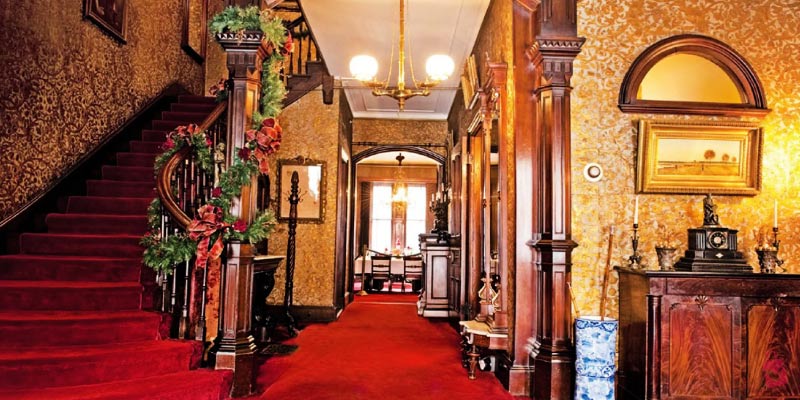
On Beacon Street in Boston’s Back Bay, the Gibson House Museum quietly preserves life in the 1860s. Built by Catherine Hammond Gibson, this Victorian rowhouse stayed in the family for three generations, carefully keeping its original charm intact.
Walking slowly through the rooms, visitors can see delicate Japanese wallpapers, original furnishings, textiles, and family artifacts that subtly bring the past vividly to life. Both public and service areas remain remarkably preserved, offering an authentic glimpse into 19th-century Boston living.
Things to Do in Gibson House
- Take a guided tour to notice the detailed furnishings and decorative touches.
- Attend special events, like lectures or the Repeal Day Celebration, which features period cocktails.
- Observe quietly the wallpapers, woodwork, and everyday objects that reveal family life in the 19th century.
6. Paul Revere House
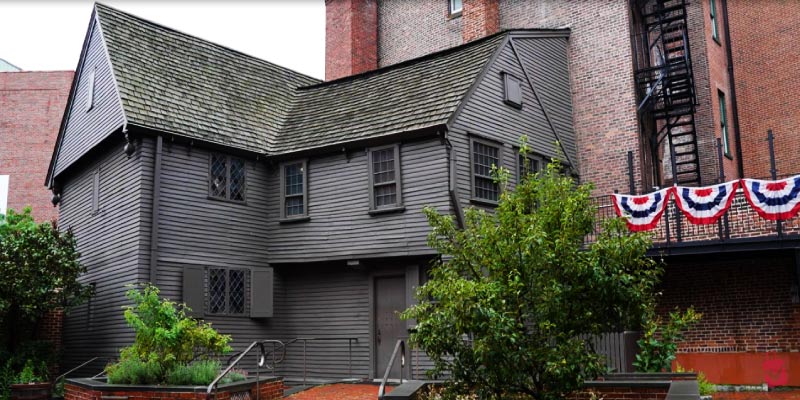
Step into Boston’s North End and you’ll find the Paul Revere House, the city’s oldest surviving downtown home, built around 1680. This was the residence of Paul Revere, a key figure in the American Revolution, from 1770 to 1800.
Over the years, the house went from a family home to a tenement and even a candy store, but it was restored in the early 20th century to reflect its colonial roots. Today, the museum preserves original beams, fireplaces, and furniture, giving a tangible feel of early Boston life.
Things to Do in the Paul Revere House
- Tour the historic rooms and absorb the atmosphere, imagining life in Revere’s time.
- Explore the visitor and education center to learn about Revere’s Midnight Ride, his silversmith craft, and his industrial contributions.
- Walk across to the Pierce – Hichborn House to see another 18th-century home.
- Observe the surrounding streets, noticing the architecture and layout from Revere’s time.
7. The Black Heritage Trail
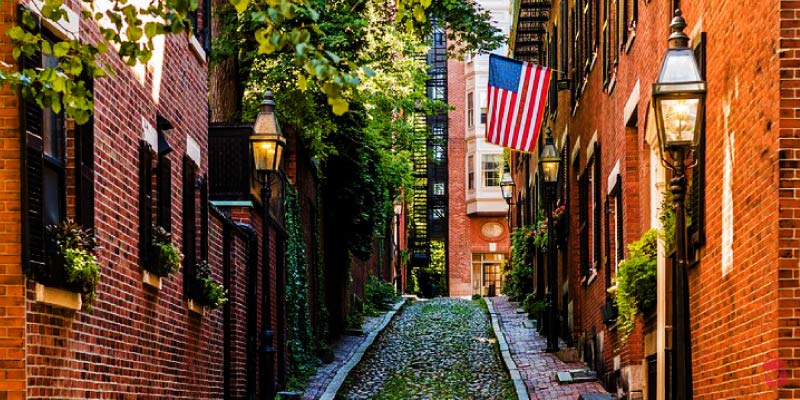
The Black Heritage Trail threads through Boston neighborhoods, highlighting homes, schools, and memorials significant to the city’s 19th-century African American community. The trail celebrates resilience and courage.
It features the Robert Gould Shaw & 54th Regiment Memorial, which honors the first African American regiment. It also includes the George Middleton House, the oldest home built by African Americans on Beacon Hill, and the Phillips School, one of Boston’s first integrated schools.
Things to Do on the Black Heritage Trail
- Walk along the trail and stop at each historic site to reflect on Boston’s African American history.
- Pause thoughtfully at the 54th Regiment Memorial to honor the bravery of the first black regiment in the U.S. military.
- Visit the George Middleton House to see the oldest surviving home built by African Americans in Beacon Hill.
- Take in the historic streetscapes, noticing quietly the details that bring the city’s past alive.
Final Words
Boston’s history quietly comes alive in its streets, buildings, and neighborhoods, clearly showing the people and moments that shaped the city. Revolutionary times, everyday life in past centuries, remarkable architecture, and stories of community resilience all naturally add pieces to its bigger story.
For any history lover, visiting these places lets you fully appreciate the city’s past, thoughtfully seeing how daily life and social efforts gradually built the Boston we know today. Take your time here, and you’ll quickly feel the layers of history waiting to be noticed at every turn.
FAQs
The best time to visit Boston’s historical landmarks is spring (April–June) and fall (September–October). These seasons offer comfortable walking weather, fewer crowds, and beautiful scenery, making it ideal for outdoor trails like the Freedom Trail and Beacon Hill walks.
Many Boston historical landmarks are free or low-cost. Sites like the Freedom Trail, Bunker Hill Monument grounds, Boston Common, and the Black Heritage Trail are free to explore. Museums such as the Paul Revere House or Gibson House charge modest admission fees.
Boston’s most important historical landmarks include the Freedom Trail, Bunker Hill Monument, Paul Revere House, Trinity Church, and the Black Heritage Trail. These sites reflect key moments from the American Revolution, 19th-century architecture, and African American history, making Boston one of the most historically rich cities in the United States.

The Paul Revere House is Boston’s oldest surviving downtown home, built around 1680. It offers an authentic look into colonial life and preserves original architectural features from Paul Revere’s era, making it a must-see landmark for American history enthusiasts.
Boston Haymarket offers a living historical experience rather than a traditional museum visit. Operating for over 200 years, the market showcases Boston’s immigrant history through lively open-air stalls selling fresh produce, seafood, and local goods every Friday and Saturday.
More Related Blogs From Trending Destinations
Iconic Historical Landmarks in Houston
Top 10 Historical Landmarks in Kansas City
Margaret C. Jones
Margaret C. Jones, a passionate explorer of North America, captivates readers with her vivid tales on Travelarii’s blog. With a keen eye for hidden gems and local culture, Margaret offers expert advice and unique insights to enhance your travel experience. Her stories bring the diverse landscapes and vibrant cities of North America to life, inspiring readers to embark on their own adventures.