Monterrey is one of Mexico’s most historically significant cities, attracting international visitors who want to see more than coastal resorts. The city welcomes around 2 to 2.5 million visitors each year, with international tourism growing steadily year over year.
Fundidora Park alone sees more than 8.5 million visits annually. For international tourists, it ranks as the top destination in the city, recognized worldwide as a premier “Industrial Heritage” site.
The historical landmarks in Monterrey span over 300 years, covering early Spanish colonial rule, 19th-century industrial expansion, and modern urban development.
Monterrey will host 2026 FIFA World Cup matches at Estadio BBVA. FIFA visitors already searching for Monterrey hotels near the stadium can use the free days between matches to visit these landmark sites. Both Macroplaza and Obispado sit within the city center, roughly 10 to 15 kilometers from the stadium.
For anyone building a list of things to do in Monterrey, historic landmarks are the most concentrated and accessible starting point. This article covers the most famous ones, with specific details on location, historical period, and visitor access.
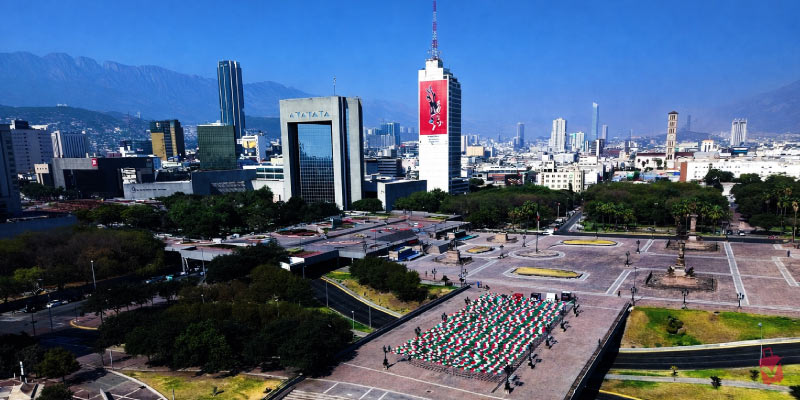
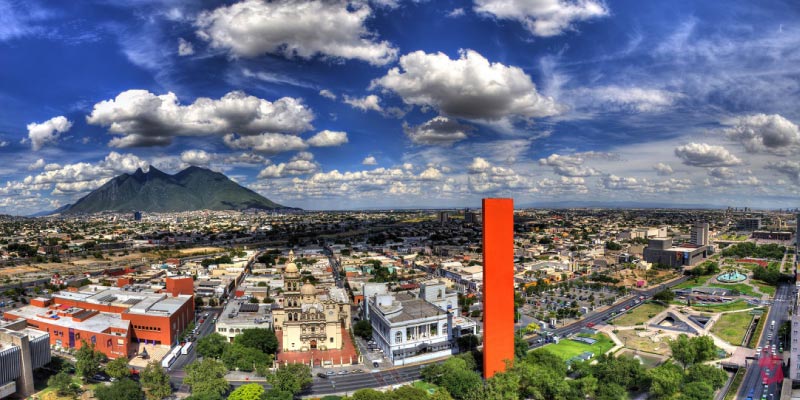
Spanning 40 hectares, the Macroplaza was completed in 1984 as a monumental urban renewal project. It serves as the civic heart of Monterrey, connecting the Government Palace with the city’s modern museums. Its construction was a transformative moment that shifted Monterrey from a strictly industrial city to one with a prominent public and cultural landscape.
Macroplaza
Things to Do in Macroplaza
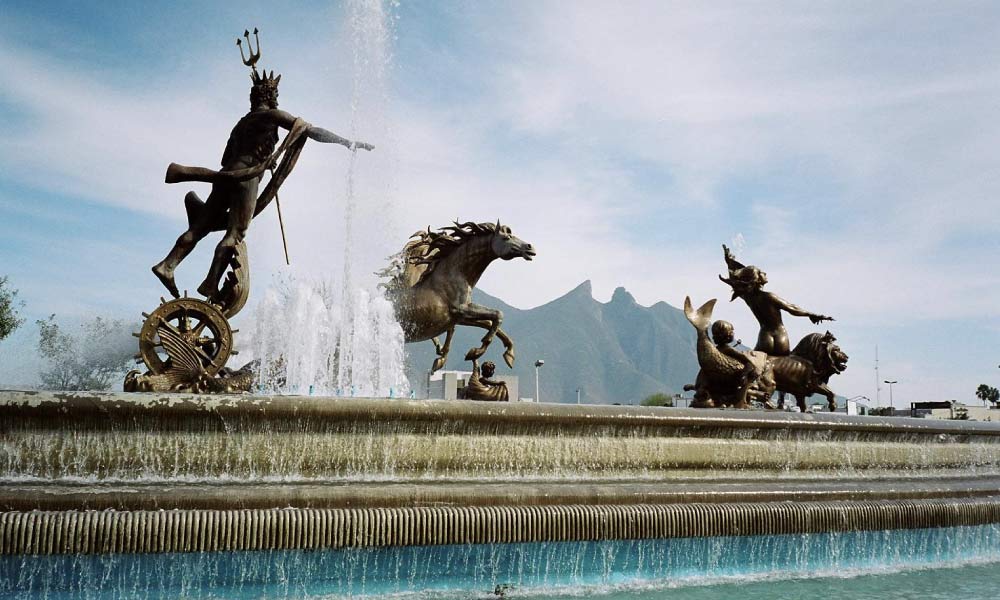
Visit the Neptune Fountain: The neptune fountain, a massive bronze sculpture, is a central meeting point and serves as a great orientation marker when navigating the square.
Check out the Government Palace: Walk inside the Palacio de Gobierno. It houses a free museum where you can see historical artifacts, including the clothes worn by the soldiers who executed Emperor Maximilian.
View the Faro de Comercio at night: Look up to see the green laser beam sweeping across the city. It’s a functional piece of art that signals the city’s commercial focus.
Try local snacks: Grab an elote (corn with cream, cheese, and chili) or a nieve (traditional sorbet) from the street vendors scattered throughout the plaza.
2. Barrio Antiguo (Old Quarter)
Location: East of the Macroplaza (centered around Calle Morelos and José Ma. Coss).
Visiting Hours: Streets are open 24/7; restaurants/bars typically 1:00 PM – 2:00 AM.
Entry Cost: Free to walk.
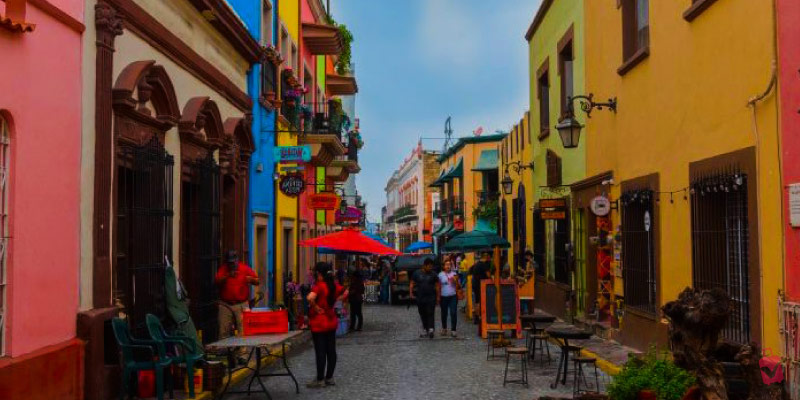
Barrio Antiguo is the historic heart of Monterrey, dating back to the city’s final foundation in 1596. It features cobblestone streets and architecture primarily from the 18th and 19th centuries. While it was once the city’s commercial core, it shifted into a residential area and then into a bohemian arts and nightlife district. In the 1980s, it narrowly avoided total demolition during the building of the Macroplaza and has since been protected as a cultural heritage zone.
Barrio Antiguo
Things to Do in Barrio Antiguo (Old Quarter)
Hunt for antiques on Sundays: Visit the Callejón Cultural on Mina Street. It’s a weekly flea market where you can find vintage Mexican memorabilia, old coins, and local crafts.
Coffee and records: Spend time at Black Café, a hybrid coffee shop and record store that represents the neighborhood’s creative side.
Sample craft beer: Head to Almacén 42. They feature 42 different Mexican craft beers on tap, showcasing the region’s growing brewing scene.
Live music at Café Iguana: This venue has been a staple of the local rock and alternative scene since 1991. Check their calendar for live bands.
3. Museum of Contemporary Art (MARCO)
Location: Zuazua y Jardón S/N, Centro, 64000 Monterrey.
Visiting Hours: Tue, Thu–Sun: 10:00 AM – 6:00 PM; Wed: 10:00 AM – 8:00 PM. (Closed Mondays).
Entry Cost: ~$90 MXN (General); Free on Wednesdays.
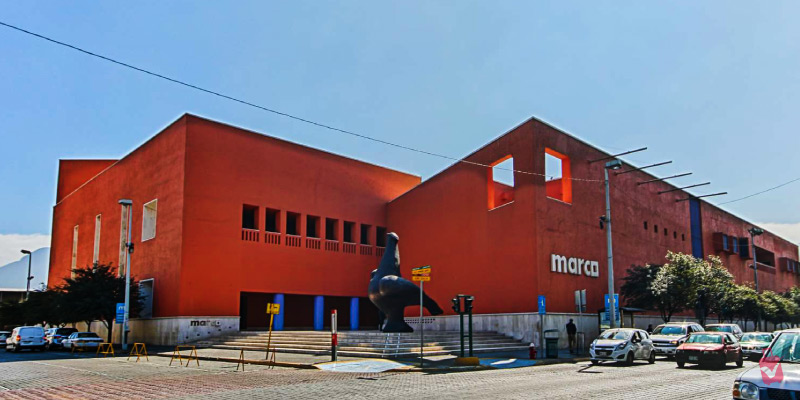
Opened in June 1991, MARCO was designed by the Pritzker-recognized architect Ricardo Legorreta. The building is a landmark of postmodern minimalist architecture, utilizing vibrant Mexican colors and geometric shadows. It was established to showcase Latin American contemporary art and features the iconic “La Paloma,” a 4-ton bronze dove sculpture by Juan Soriano at its entrance.
Museum of Contemporary Art of Monterrey
Things to Do in the Museum of Contemporary Art
Pose with the Dove: Take a photo with “La Paloma,” the 4-ton bronze sculpture at the entrance created by Juan Soriano.
Visit on Wednesdays: Entry is free every Wednesday. It’s the best time to see the rotating exhibits without paying the typical admission fee.
Central Patio: Don’t miss the water mirror fountain in the central courtyard. The building’s geometry creates interesting light patterns throughout the day.
Artist workshops: Check for temporary “interactive halls” where local artists often host public creation spaces or performance art.
4. Palacio del Obispado
Location: Rafael José Verger S/N, Obispado, 64060 Monterrey.
Visiting Hours: Tue–Sun: 10:00 AM – 6:00 PM.
Entry Cost: ~$95 MXN; Free on Sundays.
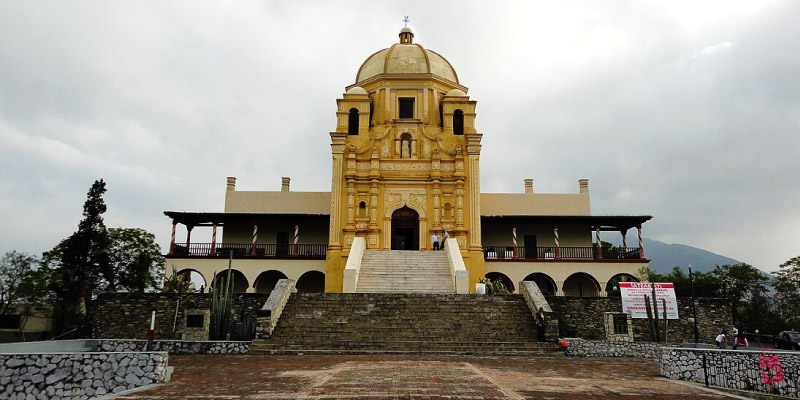
Completed in 1788, this Baroque structure was originally built as a retirement house for Bishop Rafael José Verger. Due to its strategic location atop Chepevera Hill, it became a military fortress during major conflicts, including the Mexican-American War (1846), the French Intervention, and the Mexican Revolution. It now houses the Regional Museum of Nuevo León.
Palacio del Obispado
Things to Do in Palacio del Obispado
Climb to the Mirador: Walk up to the Mirador del Obispado (the lookout) to see one of the largest Mexican flags in the country and get a 360-degree view of the Sierra Madre mountains.
Regional Museum of Nuevo León: Go inside the palace to see the colonial-era artillery and learn about the Battle of Monterrey (1846). The building still shows scars from its time as a fortress.
Sunset photography: This is widely considered the best spot in the city for golden hour photos of the skyline and the Cerro de la Silla.
5. Fundidora Park
Location: Avenida Fundidora y Adolfo Prieto S/N, Obrera, 64010 Monterrey.
Visiting Hours: Daily, 6:00 AM – 10:00 PM.
Entry Cost: Free (specific attractions/museums inside have fees).
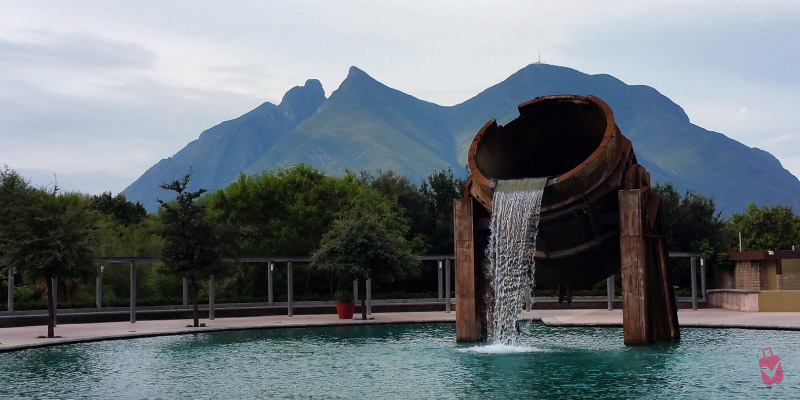
This site was formerly the Compañía Fundidora de Fierro y Acero de Monterrey (established 1900), the first steel foundry in Latin America. It was the epicenter of Monterrey’s industrial revolution. After the company went bankrupt in 1986, the state transformed the industrial ruins into a world-class “Industrial Archaeological Museum Park.”
It preserves massive blast furnaces, such as Horno 3, which now functions as a high-tech science museum. Today, the park also hosts large-scale concerts and public events, including the most famous festival in Monterrey, drawing thousands of visitors into this historic industrial setting each year.
Fundidora Park
Things to Do in Fundidora Park
Horno 3 Steel Museum: This is the park’s centerpiece. You can take an elevator to the top of a massive blast furnace for a high-altitude view of the industrial structures.
Rent a bike: Use the Bici-Renta stations to ride the 2.1-mile loop (Acero Boulevard). It’s the most efficient way to see the various sculptures and old machinery.
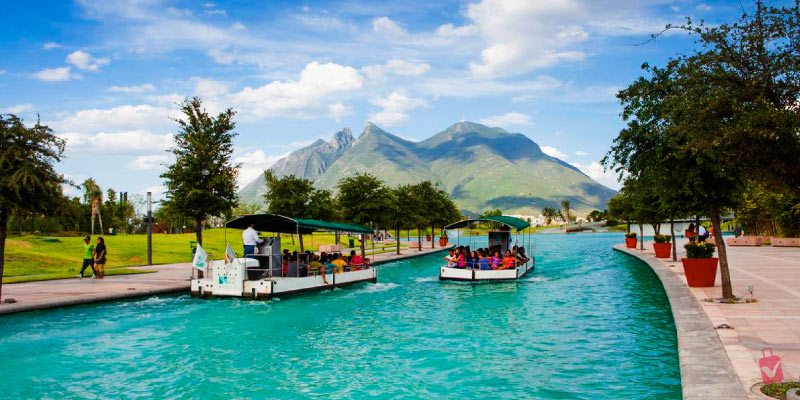
Paseo de Santa Lucía Boat Ride: Start or end your park visit with a boat tour on the artificial canal. It links the park directly back to the Macroplaza.
Ice Skating: Visit the Ice Complex inside the park, a rare chance to go skating in a city known for its intense heat.
6. Mexican History Museum
Location: Dr. Coss 445 Sur, Centro, 64000 Monterrey.
Visiting Hours: Tue & Sun: 10:00 AM – 8:00 PM; Wed–Sat: 10:00 AM – 6:00 PM.
Entry Cost: ~$40–90 MXN (includes MUNE museum); Free on Tuesdays and Sundays.
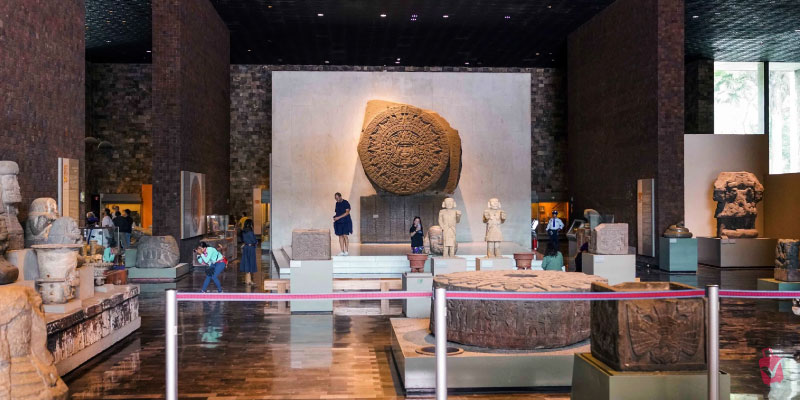
Inaugurated in 1994, this museum is built on the symbolic “Plaza 400 Años,” the exact location where the city of Monterrey was founded for the third and final time in 1596. It serves as the most significant historical repository in Northern Mexico. Its architecture is avant-garde, featuring a series of ramps and levels designed to represent the “layers” of history. The museum’s collection includes over 1,200 pieces, notably a real steam locomotive that played a role in the Mexican Revolution.
Mexican History Museum
Things to Do in the Mexican History Museum
Get close to the steam engine: Go to the section on the Mexican Revolution to see a full-sized 19th-century locomotive. It helps you grasp the scale of the machinery that physically moved the country’s history forward.
Walk the timeline: The building uses a series of ramps that lead you from the top floor down to the ground. This layout forces you to follow Mexico’s story chronologically, starting with ancient artifacts and ending with modern industry.
Find the original foundation spot: Just outside the entrance, look for the plaque marking the “Ojos de Agua de Santa Lucía.” This is the exact location where the city was established in 1596 because of the natural springs.
7. Palace Museum (Museo del Palacio)
Location: Inside the Government Palace (North end of Macroplaza).
Visiting Hours: Tue–Sun: 10:00 AM – 6:00 PM.
Entry Cost: Free.
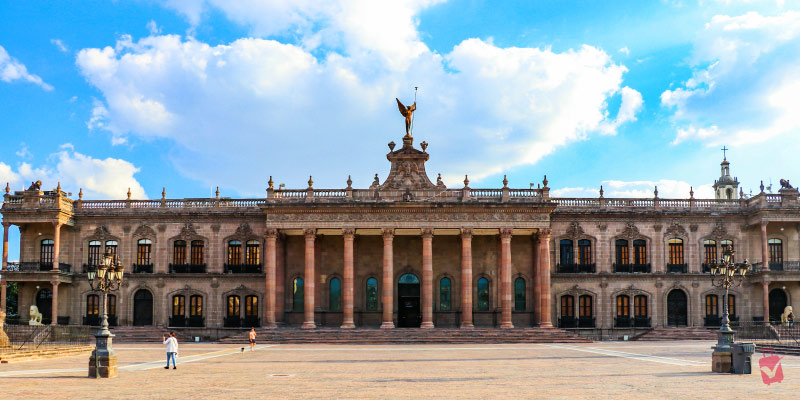
This museum is located on the ground floor of the Government Palace, a Neoclassical masterpiece completed in 1908. While the building has served as the seat of state power for over a century, the specific museum was established to celebrate the 200th anniversary of Mexican Independence. It focuses on the legal and social history of the state of Nuevo León, detailing how the region transformed from a remote frontier to Mexico’s industrial capital.
Palace Museum
Things to Do in Palace Museum
Inspect the stained glass: Inside the Government Palace, look for the tall windows featuring national figures like Benito Juárez. The way the light hits the floor through the glass is a highlight for anyone interested in 1900s craftsmanship.
Locate the execution relics: In one of the side rooms, you can find clothing and items related to the execution of Emperor Maximilian. It’s a very specific, somewhat grim piece of history tucked inside a building that still functions as the state’s political center.
Check out the pink masonry: The palace is made of pink quarry stone. Standing in the courtyard gives you a good look at the hand-carved details that define the city’s old-world power structures.
8. Cerro de la Silla
Location: Access primarily via Calle Peñon, Contry, Guadalupe (Trailhead).
Visiting Hours: Open 24 hours
Entry Cost: Free.
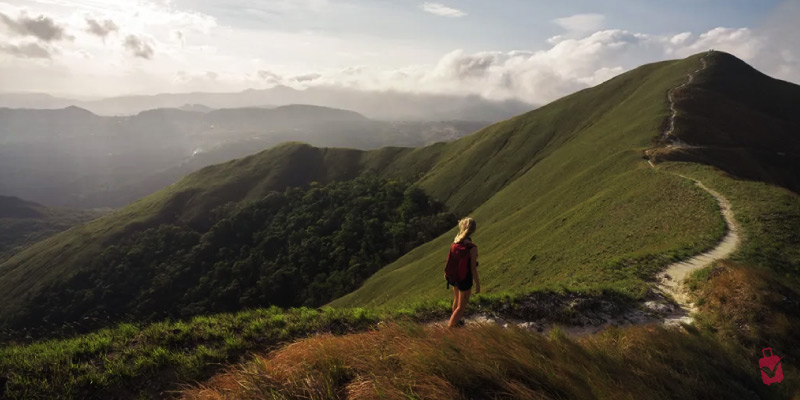
Named in 1596 by Captain Alberto del Canto for its resemblance to a horse’s saddle, Cerro de la Silla is the geographic icon of Monterrey and was declared a Natural Monument in 1991. It has four distinct peaks: Antena, Norte, Sur, and La Virgen. A haunting part of its modern history is the 1961 Teleférico accident; a cable car system was built to take tourists to the top, but on its inauguration day, a mechanical failure caused a car to fall, killing five people. The project was abandoned, and the ruins of the “Teleférico” station remain visible on the north side today.
Cerro de la Silla
Things to Do in Cerro de la Silla
Hike to the Teleférico station: This is the most popular trail. It’s about a 2.5-mile trek up a steep, paved path to the ruins of a 1960s cable car station. From here, you get a clear view of the entire southern half of the city.
Watch for coatimundis: You’ll likely see these long-tailed mammals (related to raccoons) along the trail. They are used to people, but they are wild animals, so keep your distance while you watch them forage.
Start before dawn: Local hikers hit the trail around 5:00 AM. Doing this lets you catch the sunrise and helps you avoid the intense heat that hits the mountain by mid-morning.
9. Paseo de Santa Lucía
Location: Starts at the Mexican History Museum and ends at Fundidora Park.
Visiting Hours: Walkway is open 24/7; Boat tours: 10:00 AM – 9:00 PM.
Entry Cost: Walking is free; Boat tours: ~$120 MXN.
Opened to the public in 2007 for the Universal Forum of Cultures, Paseo de Santa Lucía is a 2.5 km artificial river and a tribute to the city’s origins. It follows the exact geological path of the Santa Lucía springs, which provided the water source that made the founding of Monterrey possible in the 16th century. Historically, these springs were the lifeblood of the early settlement, and the modern “Paseo” was designed to reconnect the historic Macroplaza with the industrial Fundidora Park.
Paseo de Santa Lucía
Things to Do in Paseo de Santa Lucía
Board the canal boat: Catch a boat near the Mexican History Museum for a ride to Fundidora Park. It’s the easiest way to see the 1.5-mile stretch of fountains and murals without having to walk the whole distance in the sun.
Eat “cabrito” by the water: Stop at Tenerías, a restaurant right on the canal. Order the roasted kid goat, which is the region’s most famous dish, and watch the boats pass by while you eat.
Visit after dark: The canal is lit from beneath the water at night. It’s the best time for a walk because the temperature drops and the lighting makes the industrial artifacts along the path stand out.
10. Faro de Comercio (Lighthouse of Commerce)
Location: Macroplaza (near the Cathedral), Centro, Monterrey.
Visiting Hours: Visible 24/7; Lasers usually turn on after dusk.
Entry Cost: Free (Exterior viewing only).
Designed by the Pritzker Prize-winning architect Luis Barragán and commissioned in 1984, this 70-meter-tall orange tower was built by the Monterrey Chamber of Commerce to celebrate its 100th anniversary. It was built during a time when Monterrey was pivoting from a manufacturing-heavy economy to a modern service-based city. The “lighthouse” symbolizes this new era of commerce, famously using a green laser at night – a technology that was considered highly futuristic when it was first activated in the 1980s.
Faro de Comercio
Things to Do in Faro de Comercio
Track the laser: The main draw is the rotating green laser that comes on after sunset. The best place to view the beam is from the center of the Macroplaza, right at the base of the tower.
Examine the Barragán design: This tower was designed by Luis Barragán, the only Mexican to win the Pritzker Architecture Prize. Notice how the flat, orange surfaces play with shadows as the sun moves throughout the day.
Closure
Monterrey’s landmarks show that the city’s identity is built on more than just industry. From colonial forts to modern art hubs, these sites offer a direct glimpse into Northern Mexico’s evolution. Whether you’re hiking the peaks or touring the plazas, you’re experiencing the backbone of Mexican progress. Now, make a list of the places you want to explore during your vacation in Monterrey.
Top landmarks include Macroplaza, Barrio Antiguo, MARCO, Palacio del Obispado, Fundidora Park, Mexican History Museum, Cerro de la Silla, Paseo de Santa Lucía, Palace Museum, and Faro de Comercio.
The cooler months from November to March are ideal for sightseeing, hiking Cerro de la Silla, and exploring outdoor plazas like Macroplaza and Fundidora Park.
Cerro de la Silla and the Mirador del Obispado provide panoramic city views and photo opportunities of the Macroplaza, Cerro de la Silla, and the downtown skyline.
Margaret C. Jones, a passionate explorer of North America, captivates readers with her vivid tales on Travelarii’s blog. With a keen eye for hidden gems and local culture, Margaret offers expert advice and unique insights to enhance your travel experience. Her stories bring the diverse landscapes and vibrant cities of North America to life, inspiring readers to embark on their own adventures.