The best quiet vacation spots in Florida right now are Amelia Island, Cedar Key, Yankeetown, Cape San Blas, St. George Island, Apalachicola, Fort Clinch State Park, Boca Grande, and Seaside/Grayton Beach. Florida pulled in a record 143 million visitors in 2024, and that number keeps climbing every quarter, which is exactly why these nine hold up. 

QUIET FLORIDA GETAWAYS

Florida Trips Feel Better When You Stay Somewhere Quiet

BROWSE RENTALS→

Each one is kept quiet by something structural – a height cap, a causeway, a park boundary – rather than by luck, and that’s the first thing worth knowing. One more thing: compare hotels and vacation rentals before you book.

9 Relaxing Quiet Vacation Spots in Florida

Florida has quiet coastal towns and beach communities where life moves at a slower pace. Amelia Island, Cedar Key, Cape San Blas, and the other spots on this list are known for low-rise buildings, uncrowded beaches, nature trails, and small-town settings. Let’s take a look at some of the most relaxing places in Florida to consider for a quieter vacation.

1. Amelia Island

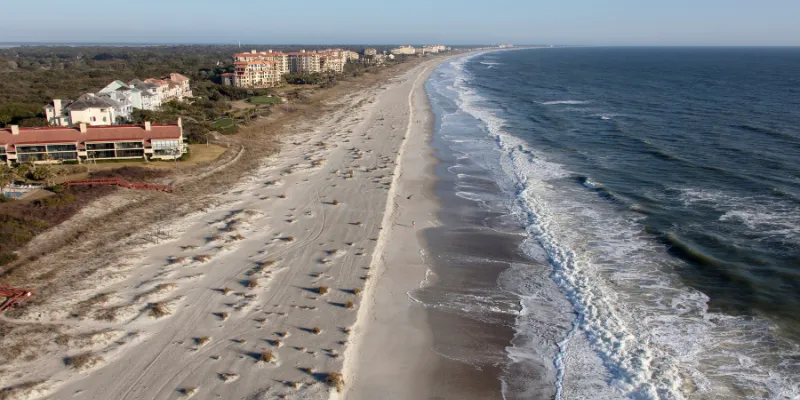
Aerial view of Amelia Island beach with oceanfront resorts along Florida's Atlantic coast

Amelia Island ( Photo Credit: @gettyimages )

Best for: Beach walks and a walkable historic downtown, without a resort skyline

Amelia Island sits at Florida’s northeastern tip near Fernandina Beach, with 13 miles of beach backed by a historic downtown that’s stayed low-rise by choice. Winter (November–February) pairs mild temperatures with the year’s lowest room rates.

Things to do: Walk Amelia Island Beach or the trails inside Fort Clinch State Park; tour the Amelia Island Museum of History; browse Historic Downtown Fernandina Beach on foot.

2. Cedar Key

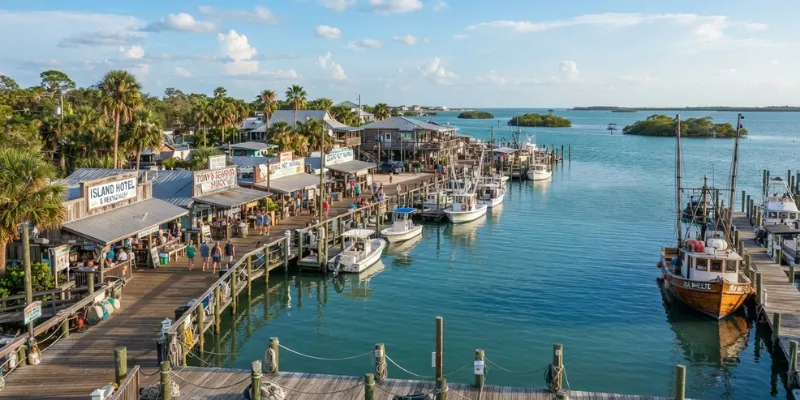
Cedar Key waterfront dock with fishing boats and the Island Hotel, Florida

Cedar key – AI Image

Best for: The single most relaxing pick on this list, no traffic lights on the island

If you only have time for one stop, Cedar Key answers “what’s the most relaxing place to vacation in Florida” most directly. Local zoning caps building height, which is why the skyline is still fishing boats and clapboard houses rather than condo towers. From Amelia Island, it’s roughly 153 miles (about 2.5 hours) south. Arrive by early evening and the working waterfront quiets down fast, with the fishing fleet tied up and most of the island dark by nine.

Things to do: Kayak the Cedar Key Aquatic Preserve’s mangrove channels; walk the Waterfront Park at low tide for dolphin sightings; visit the Cedar Key Historical Society Museum, housed in the town’s 1900s-era former school.

3. Yankeetown

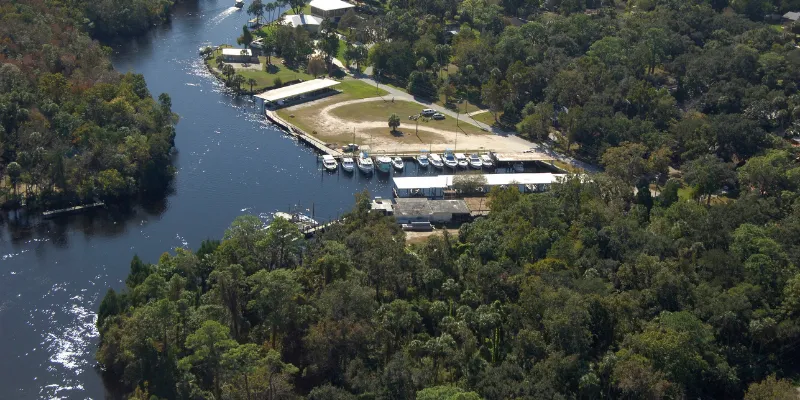
Aerial view of Yankeetown marina on the Withlacoochee River, Florida

Yankeetown ( Photo Credit: marinas )

Best for: River paddling and birdwatching over beach time

Yankeetown sits on the Withlacoochee River, about 40 miles (roughly 1 hour) from Cedar Key, and anchors the western end of the Nature Coast State Trail. Paddle far enough upriver and the modern world drops away – no boat traffic, no docks, just cypress trees and the occasional heron lifting off ahead of the kayak.

Things to do: Bike or walk the Nature Coast State Trail; paddle the Withlacoochee River from the town’s public launch; stop at the Yankeetown Historical Society Museum.

4. Cape San Blas

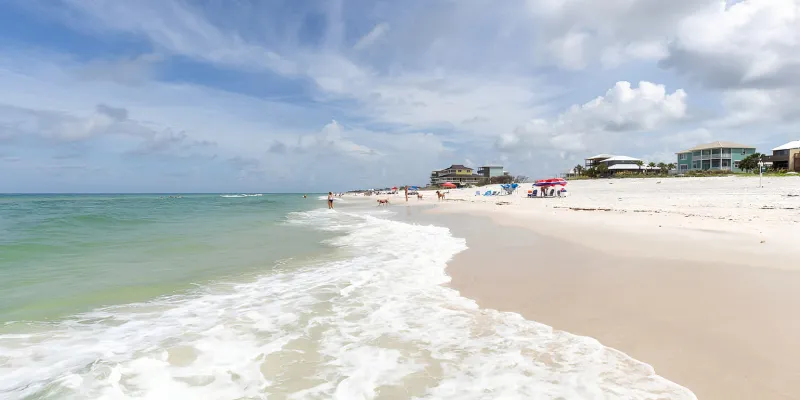
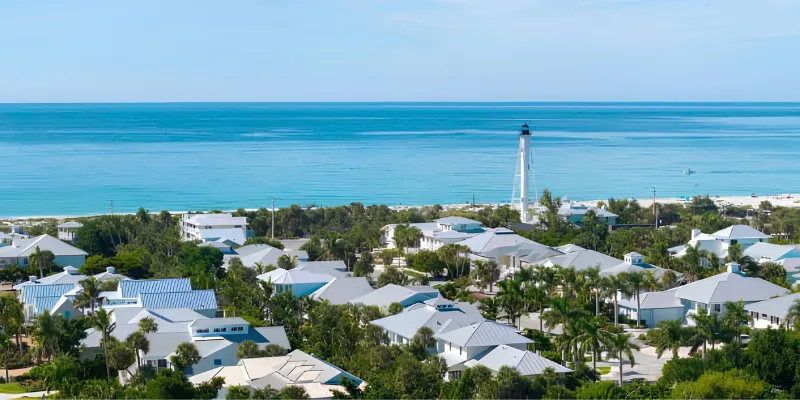
Cape San Blas beach with turquoise Gulf water and beachfront homes in Florida

Cape San Blas ( Photo Credit: floridapanhandle )

Best for: Undeveloped beach protected by state park land

Cape San Blas sits on a narrow Gulf County peninsula. Most of its beachfront falls inside or beside St. Joseph Peninsula State Park, which limits development by law rather than market pressure. From Yankeetown, it’s about 165 miles (roughly 2.5 hours). On a weekday, it’s possible to cover the length of the beach without passing another group.

Things to do: Climb the Cape San Blas Lighthouse at George Core Park; hike the pine-and-scrub trails inside St. Joseph Peninsula State Park; fish from the pier at sunset.

5. St. George Island

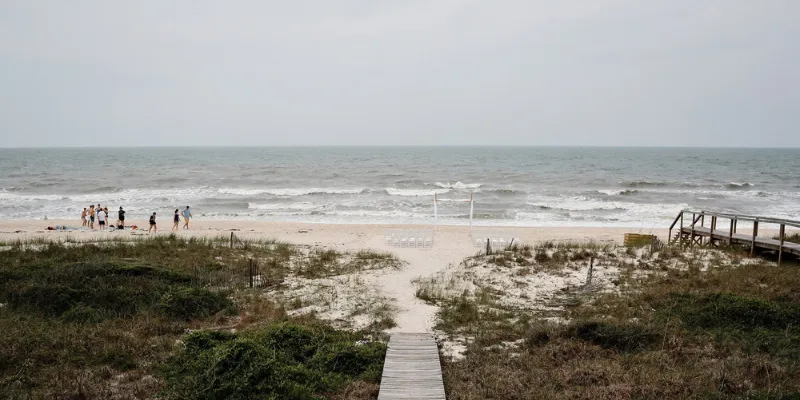
St. George Island beach boardwalk and dunes on Florida's Gulf Coast

St. George Island ( Photo Credit: amylittlephotography )

Best for: A barrier island with two-thirds of its land inside a state park

St. George Island is located in Franklin County along the Florida Panhandle, United States. It is a 28-mile barrier island reached by a single causeway bridge, which limits daily visitor volume compared to drive-up beach towns. It’s 45 miles (about 1 hour) from Cape San Blas, and once across the causeway, golf carts outnumber cars on the side streets.

Things to do: Walk the undeveloped shoreline inside St. George Island State Park; visit the Apalachicola National Estuarine Research Reserve; watch sunset from the island’s west end.

6. Apalachicola

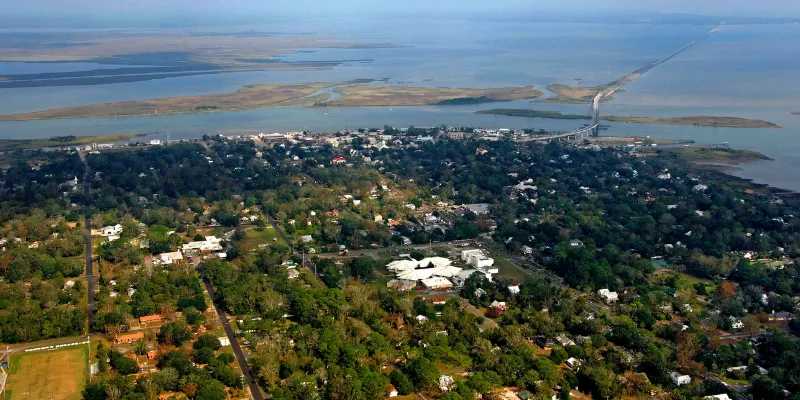
Aerial view of Apalachicola, Florida with the bridge over Apalachicola Bay

Apalachicola ( Photo Credit: marinas )

Best for: A working waterfront town with real history, not a resort front

Apalachicola is a 10-mile (about 20-minute) drive from St. George Island, built around a bay that once supplied most of Florida’s oysters – the commercial harvest has been closed since 2020 after a stock collapse, so local oysters now come mostly from Gulf farms. Working shrimp boats still outnumber pleasure craft at the docks.

Things to do: Walk the historic downtown’s 19th-century commercial buildings; visit the Apalachicola Maritime Museum; sample fresh Gulf seafood at the town’s independent restaurants

7. Fort Clinch State Park

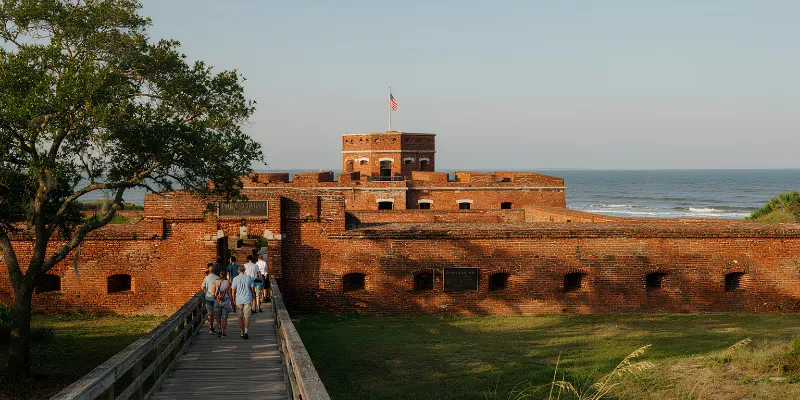
Fort Clinch State Park brick fortress walls on Amelia Island, Florida

Fort Clinch State Park – AI Image

Best for: A preserved 1847 fort plus beach and hammock trails in one stop

Fort Clinch State Park sits on the northern tip of Amelia Island, combining a fully preserved 1847 masonry fort with beachfront and maritime hammock trails. From Apalachicola, it’s about 215 miles (roughly 4 hours).

Things to do: Tour the fort’s restored 1864 Union garrison rooms; walk the beach or dune-and-forest nature trails; fish from the pier at the St. Marys River inlet.

8. Boca Grande

Boca Grande ( Photo Credit: Bilanol )

Best for: An island held to a 35-foot height limit

Boca Grande sits on Gasparilla Island off Florida’s southwest Gulf Coast, reached by a toll causeway. Local codes cap structure height at 35 feet, keeping the island free of the high-rise condo towers common along much of Florida’s southwest coast.

Things to do: Walk or bike the Boca Grande Bike Path, which runs the length of the town; visit the Boca Grande Lighthouse and Museum; fish the Boca Grande Pass, historically the “Tarpon Capital of the World.”

9. Seaside and Grayton Beach

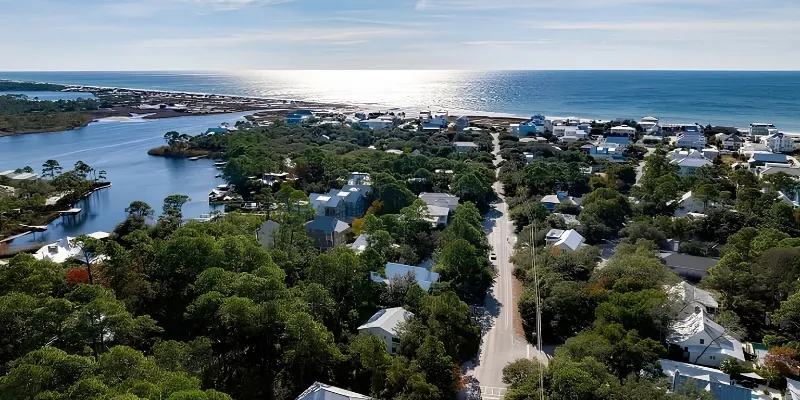
Aerial view of Grayton Beach homes along Western Lake on Florida's 30A

Grayton Beach ( Photo Credit: GraytonBeach )

Best for: A planned town where nothing is built over four stories

Seaside, on Scenic Highway 30A in Walton County, was Florida’s first New Urbanist planned town – built deliberately at low density, with no building taller than four stories permitted anywhere in the plan. Neighboring Grayton Beach borders Grayton Beach State Park, which limits development along that stretch of coastline.

Things to do: Walk Seaside’s town square and pedestrian streets, closed to through traffic by design; hike or swim at Grayton Beach State Park, including its coastal dune lake; bike the 30A shared-use path connecting both communities to nearby beach towns.

Florida's Top Vacation Rental Picks

Best Time to Visit Florida, Season by Season

Spring (March–May): The lowest crowds of the year, with mild temperatures for beach walks and paddling. Book Cedar Key and St. George Island rentals early – spring inventory moves fast despite the low visitor count.

Summer (June–August): The warmest Gulf water, best for swimming at Cape San Blas, St. George Island, and Grayton Beach. Rates peak in Seaside and Amelia Island; the smaller Panhandle towns stay comparatively affordable.

Fall (September–November): A second low-crowd window, since summer traffic has cleared but the Gulf hasn’t cooled. Watch storm forecasts for the Panhandle during hurricane season (August–October).

Winter (December–February): The Panhandle towns hold up well even though the water’s too cool to swim; daytime temperatures still suit beach walks, and rates drop from summer peaks. Amelia Island’s mild winters make it the strongest year-round pick here.

Planning the Florida Trip

Pair any of these stops with a Florida vacation rental search for a full-kitchen property instead of a standard hotel room. For a longer route, see North Florida vacation spots, or family-friendly vacation spots for a livelier stop. Whichever you start with, a bridge, a height limit, or a park boundary is usually doing the quiet work.

Explore Famous Places Near Your Florida Stay

FAQs

Spring and fall are ideal due to mild weather and fewer tourists, although peak seasons may vary by location.

Activities include beach walks, hiking, kayaking, exploring historic sites, and enjoying local shopping and dining options.

Options include beachfront cottages, cozy bed-and-breakfasts, historic inns, and riverside cabins.

Cape San Blas, St. George Island, Apalachicola, and Seaside/Grayton Beach all hold up well – daytime temperatures stay comfortable for beach walks even when the water is too cool to swim, and room rates are lower than summer peak.

Cedar Key, St. George Island, Cape San Blas, and Boca Grande, each shaped by barrier-island geography, building-height limits, or protected state park land bordering the developed area.

Yes, Florida is generally safe for tourists; millions visit every year without incident, and popular areas like Orlando, Miami Beach, and the Keys have strong tourism infrastructure. As with any destination, stay aware in crowded areas, watch for rip currents and hurricanes (June–November), and avoid isolated areas at night.

For a solid trip, plan on 5–7 days if you want to cover one region well (e.g., Orlando theme parks or Miami/Keys). If you want to see multiple regions (Orlando + Miami + Keys, for example), 10–14 days gives you enough time without rushing.

More Blogs From Trending Destinations