

Jacksonville is the largest city by land area in the continental United States, covering more than 840 square miles. That size gives a trip here a different shape than a typical Florida city break, with downtown attractions, riverfront neighborhoods, and a string of Atlantic beaches spread across the area. For travelers building a northeast Florida getaway, that means there is plenty to combine without staying in one part of town.

Find the Right Vacation Rental

Traveling with family, friends, or as a couple? Compare verified rentals that fit your budget and travel style. Choose a place that feels right before you book.

This guide covers the things to do in Jacksonville, Florida, from city attractions and Jacksonville beaches to the practical differences between the city and Jacksonville Beach. Those names are related, but they refer to distinct destinations, and knowing the difference makes planning much easier. You’ll also find an Amelia Island travel guide section for adding a coastal day or overnight stay, plus nearby places worth considering if you have extra time or want to explore cities within 3 hours of Jacksonville, Florida.

Worldwide Most Popular Travel Destinations

Best Things to Do in Jacksonville

Some of the best things to do in Jacksonville, Florida are concentrated around the St. Johns River and the city’s central neighborhoods. Start with the Southbank Riverwalk for river views and a straightforward introduction to downtown, then add the Cummer Museum of Art & Gardens for its art collection and gardens. Families can head to the Jacksonville Zoo and Gardens, while history and architecture fans can spend time exploring the Riverside and Avondale area. Here are several fun things to do in Jacksonville, FL to put on your itinerary:

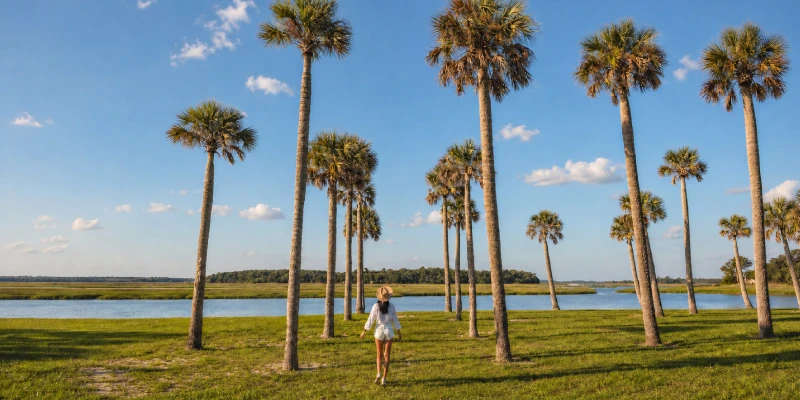
A woman walking through a serene field of tall palm trees by the water, one of the Best Things to Do in Jacksonville.
  • Walk the Southbank Riverwalk: The Riverwalk follows the St. Johns River near downtown and provides access to waterfront views, public art, restaurants, and nearby attractions. It is an easy stop to pair with a downtown afternoon.

  • Visit the Cummer Museum of Art & Gardens: Located along the river in Riverside, the museum houses European and American art collections and landscaped gardens overlooking the St. Johns River. Allow a couple of hours if you want to see both the galleries and outdoor spaces.

  • Explore the Jacksonville Zoo and Gardens: This is one of the strongest family-oriented attractions in the city, with animal exhibits, gardens, and walking paths spread across a large property. Plan extra time here if you are visiting with younger children.
  • Tour the Museum of Science & History (MOSH): MOSH focuses on science, regional history, and hands-on exhibits. Its location near the Southbank makes it convenient to combine with the Riverwalk on the same day.
  • Browse Riverside and Avondale: These neighboring districts west of downtown are worth visiting for their historic homes, independent shops, restaurants, and local parks. Five Points is a useful starting point for exploring Riverside on foot.
  • See the Friendship Fountain area: The fountain sits along the Southbank and is one of the recognizable waterfront stops in central Jacksonville. Its location makes it an easy addition before or after visiting nearby attractions.
  • Spend time at Memorial Park: This Riverside park sits beside the St. Johns River and has open lawn areas, walking paths, and a prominent memorial. It works well as a quieter stop between museum visits and meals.
  • Catch a Jaguars game at EverBank Stadium: For sports fans, checking the Jacksonville Jaguars schedule can add a distinctly local event to a city itinerary. The stadium is near downtown and the river, making it easy to combine with other central attractions.

For a first visit, a practical route is to group the Southbank Riverwalk, MOSH, Friendship Fountain, and nearby downtown sights into one outing, then use another half-day for the Cummer Museum and Riverside. The Jacksonville Zoo deserves a longer block of time, particularly for families. This approach keeps the urban attractions together and leaves the next part of the trip for Jacksonville beaches, which are separate from the downtown experience.

Jacksonville Beaches Guide

Collage of scenic coastal spots, surfing at sunset, and paddleboarding, as part of a comprehensive Jacksonville Beaches Guide.

The term Jacksonville beaches can refer to the broader Atlantic shoreline east of the city, while Jacksonville Beach, Florida is also the name of a specific beach city. For trip planning, it helps to separate the main beach communities: Jacksonville Beach, Neptune Beach, Atlantic Beach, and Ponte Vedra Beach. They sit close together along the coast, but each has a slightly different feel and set of public access points.

Florida Beaches Guide - Jacksonville Area
Beach Best for Public access notes
Jacksonville Beach Families, swimming, surfing Multiple public beach access points, with parking and facilities available in several areas
Neptune Beach Quieter beach days, couples, walking Public access points are spread along the shoreline, with nearby streets and local businesses
Atlantic Beach Families, relaxed outings, local restaurants Public beach access is available at several points, including areas with nearby parking
Ponte Vedra Beach Golf, quieter outings, upscale stays Public beach access exists, although some access points have more limited parking and facilities
Jacksonville Area Beaches
Jacksonville Beach Family
Best For Families, swimming, surfing
Public Access Multiple public beach access points, with parking and facilities available in several areas
Neptune Beach Quiet
Best For Quieter beach days, couples, walking
Public Access Public access points are spread along the shoreline, with nearby streets and local businesses
Atlantic Beach Relaxed
Best For Families, relaxed outings, local restaurants
Public Access Public beach access is available at several points, including areas with nearby parking
Ponte Vedra Beach Upscale
Best For Golf, quieter outings, upscale stays
Public Access Public beach access exists, although some access points have more limited parking and facilities

Jacksonville Beach

For many visitors, Jacksonville Beach is the easiest choice for a traditional beach day. The city has a long stretch of sand, a fishing pier, places to eat, and access points throughout the shoreline. The Jacksonville Beach Pier is a recognizable landmark and a useful reference point when arranging a meeting spot with family or friends.

Neptune Beach

Just north of Jacksonville Beach, Neptune Beach has a smaller-town setting and is convenient for visitors who want to spend time at the coast without making the beach the only activity. Local restaurants and shops are close to the shoreline, making it easy to combine a few hours on the sand with lunch or an early dinner.

Atlantic Beach

Atlantic Beach continues north from Neptune Beach and has several public access points. It can work particularly well for families who want a beach day followed by time around the nearby dining and shopping areas. Check local parking and beach-access signs before settling in, as rules can vary by location.

Ponte Vedra Beach

South of Jacksonville Beach, Ponte Vedra Beach has a different character, with golf resorts, private communities, and higher-end accommodations nearby. Public beach access is available, but visitors should check parking arrangements and access rules for the specific location they plan to use.

For anyone looking specifically for public beaches in Jacksonville, FL, the key point is that access is not limited to Jacksonville Beach itself. The wider coastal area has multiple public entry points, so choosing where to park and enter the beach can make a noticeable difference, particularly on weekends and during peak travel periods.

Planning a Family Trip to Jacksonville Beach

To plan a family trip to Jacksonville Beach, start with the beach area that best matches your children’s ages and your preferred pace. Jacksonville Beach is a practical choice for families because it has broad stretches of sand, public access points, nearby restaurants, and services within a short drive. Atlantic Beach and Neptune Beach are also worth considering if you prefer a quieter setting away from the busiest parts of Jacksonville Beach.

A happy family sitting on their car roof looking at the ocean while Planning a Family Trip to Jacksonville Beach.

Parking and beach access deserve some advance thought, particularly during weekends and school holidays. Public parking is available in various areas, but availability can change with demand. Families bringing a stroller should also check the specific access point before arriving, since paths from parking areas to the sand are not identical everywhere. A lightweight beach setup can make the transition easier, especially if you have younger children.

For a full-day family itinerary, avoid spending the entire day at the coast. Pair a morning at the beach with one of Jacksonville’s inland attractions. The Jacksonville Zoo and Gardens is a strong option for families with children, while the Museum of Science & History (MOSH) works well when the weather is less suitable for extended outdoor time.

A simple schedule could be breakfast near the coast, several hours at the beach, lunch, then an afternoon attraction in the city. That keeps the day varied without requiring multiple long drives and gives families a practical way to experience both Jacksonville’s coastline and its urban attractions.

Cities Within 3 Hours of Jacksonville

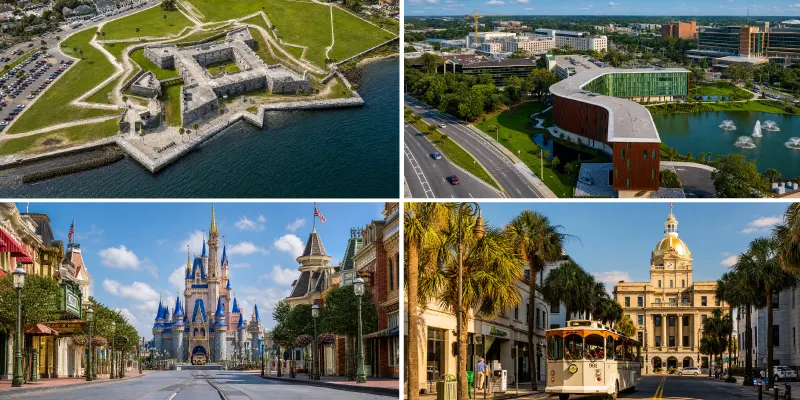
Collage featuring historic forts, modern architecture, and theme parks found in Cities Within 3 Hours of Jacksonville.

Jacksonville’s location makes it a useful base for extending a short stay into a broader Florida or Southeast road trip. Several notable destinations are within roughly three hours by car, although actual drive times depend on traffic, road conditions, and your starting point in the Jacksonville area.

Florida & Georgia City Guide - Drive Times & Highlights
City Approx. drive time What it's known for
St. Augustine, FL ~45 minutes Historic district, Castillo de San Marcos, waterfront, and beaches
Gainesville, FL ~1.5 hours University of Florida, museums, parks, and nearby natural areas
Savannah, GA ~2 hours Historic squares, architecture, riverfront, and Southern food
Orlando, FL ~2.5 hours Theme parks, entertainment, shopping, and major attractions
Daytona Beach, FL ~1.5 hours Atlantic beaches, motorsports, and Daytona International Speedway
Tallahassee, FL ~2.5 hours Florida's state capital, museums, parks, and university campuses
Florida & Georgia City Guide
St. Augustine, FL Historic
Drive Time ~45 minutes
Known For Historic district, Castillo de San Marcos, waterfront, and beaches
Gainesville, FL College Town
Drive Time ~1.5 hours
Known For University of Florida, museums, parks, and nearby natural areas
Savannah, GA Southern Charm
Drive Time ~2 hours
Known For Historic squares, architecture, riverfront, and Southern food
Orlando, FL Theme Parks
Drive Time ~2.5 hours
Known For Theme parks, entertainment, shopping, and major attractions
Daytona Beach, FL Beach & Speed
Drive Time ~1.5 hours
Known For Atlantic beaches, motorsports, and Daytona International Speedway
Tallahassee, FL Capital
Drive Time ~2.5 hours
Known For Florida's state capital, museums, parks, and university campuses

St. Augustine is the easiest addition for most Jacksonville visitors. Its compact historic district makes it well suited to a day trip, and the coastal drive can be part of the experience. For travelers interested in a longer coastal route, an A1A road trip can connect several Atlantic communities while keeping the journey focused on Northeast Florida’s shoreline.

Savannah is an option for travelers willing to cross into Georgia, while Gainesville provides a shorter inland alternative. Orlando requires more driving but can make sense for families combining Jacksonville with Florida’s major theme-park destinations.

For a broader Northeast Florida getaway, St. Augustine is the most natural extension of a Jacksonville itinerary. Pairing the two gives you a useful contrast between Jacksonville’s larger urban area and St. Augustine’s historic core. See the dedicated St. Augustine travel guide for ideas on attractions, beaches, and planning a day or overnight visit.

Where to Stay in Jacksonville and Amelia Island

Where you stay can make a noticeable difference to a Jacksonville and Amelia Island itinerary. For a city-focused trip, downtown Jacksonville and the riverfront are convenient for museums, restaurants, sports venues, and central attractions. This area works well when most activities are inland.

For a beach-focused stay, consider Jacksonville Beach, Neptune Beach, or Atlantic Beach. Staying close to the coast reduces driving time on days built around the beach, and Jacksonville Beach has plenty of nearby dining and everyday conveniences.

For a quieter coastal base, Amelia Island offers accommodations around historic Fernandina Beach as well as resort-style properties farther south. It can be a good fit for travelers who want more time on the island and less time commuting.

Travelarii features vacation rentals and stays across Northeast Florida, including options in Jacksonville Beach and Amelia Island. Browse the Travelarii Northeast Florida listings to compare properties by location, accommodation type, and trip needs.

More Related Blogs From Travel Recommendations