
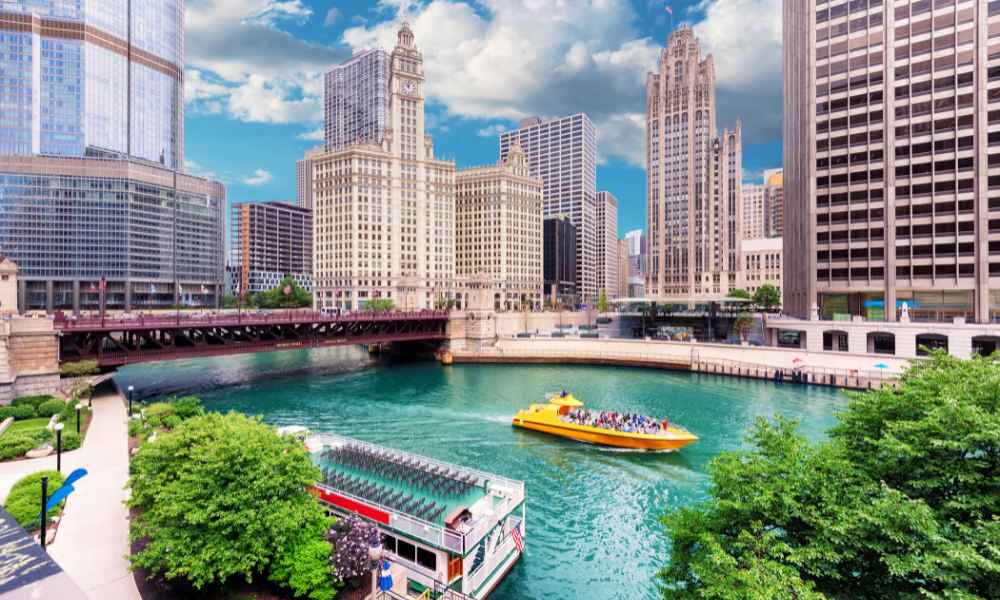
Chicago rewards visitors who come prepared. The city is walkable, transit-friendly, and cheaper than New York or Los Angeles- but only if you know how to use it.
This guide covers Chicago travel tips that actually matter – how to get from the airport for $5 instead of $60, which neighborhoods to stay in and why, what locals eat beyond deep dish, what to skip, and how to keep your daily budget under control. Prices and dates are verified for 2026.

Whether this is your first visit or your first in a few years, these tips will save you time, money, and a few regrettable tourist experiences.
If you’re looking for a vacation rental in Chicago that puts you in the right neighborhood from day one, that’s worth sorting before you book anything else.
| Book Hotels Near FIFA WC ’26 Stadiums |
|---|
Table of Content
- 1. Take the L Train from the Airport - Every Time
- 2. Understand the Ventra Card and What Transit Costs
- 3. Learn the Grid - Chicago's Streets Make More Sense Than You Think
- 4. Best Time to Visit Chicago
- 5. Where to Stay in Chicago
- 6. What to Eat in Chicago
- 7. Top Things to Do in Chicago
- 8. Chicago Neighborhoods Worth a Half-Day
- 9. Tourist Traps to Skip or Approach Carefully
- 10. Safety Tips for Chicago Visitors
- 11. What to Pack for Chicago's Weather
- 12. Local Etiquette Worth Knowing
- 13. Money-Saving Tips for Chicago
- Final Word
- FAQs
- More Related Blogs From Travel Tips and Tricks
1. Take the L Train from the Airport - Every Time
Chicago has two airports. Getting downtown is straightforward and inexpensive from either one.
From O’Hare International Airport: Take the Blue Line. The ride to The Loop takes about 45 minutes and costs $5. Trains run 24 hours, every 10 minutes during peak hours.
From Midway International Airport: Take the Orange Line. The ride downtown takes about 30 minutes and costs $2.50. Service runs daily from early morning until late at night.
A rideshare or taxi from O’Hare runs $40 to $60 in normal conditions, often $70 to $90 with surge pricing, and can take 90 minutes in traffic. The train is faster, cheaper, and runs on a fixed schedule.
Buy a Ventra card at any station kiosk the moment you land. The card costs $5, and that fee is refunded when you register it online. It works on both trains and buses for the entire trip.
2. Understand the Ventra Card and What Transit Costs
The Ventra card is how you pay for all CTA transit in Chicago.
Current fares (2026):
- L train: $2.50 per ride
- City bus: $2.25 per ride
- 1-day unlimited pass: $5
- 3-day unlimited pass: $15
- 7-day unlimited pass: $20
Transfers within two hours are free for up to two additional rides. If you’re staying three days or more, the 3-day or 7-day pass is a better value than paying per ride.
Download the Transit app before you land. It gives real-time train and bus arrival times across the CTA network.

3. Learn the Grid - Chicago's Streets Make More Sense Than You Think
State Street and Madison Street in The Loop are the zero point. Numbers increase as you move north, south, east, or west from that intersection. Every 800 numbers equals one mile.
East always means toward Lake Michigan. That never changes. If you get turned around, face the lake and reorient.
The grid breaks at a few diagonal streets- Milwaukee Avenue, Clark Street, and Lincoln Avenue- that create confusing six-corner intersections. Use your maps app at those points.
4. Best Time to Visit Chicago
June is the best all-around month. Temperatures reach 65 to 80 degrees Fahrenheit, crowds are below peak, and hotel prices haven’t hit their July/August ceiling.
January to February: Brutally cold, often below 0°F with wind chill. The cheapest time to visit. Chicago Restaurant Week runs in January and February with prix-fixe menus at $25 to $55 per person.
March to April: Still cold, warming gradually. Low crowds and reasonable hotel rates. Rain is common in April.
May to June: The best shoulder season. Parks and the Riverwalk come alive. Festival season begins.
July to August: Peak season. Lollapalooza occupies Grant Park in early August- hotel prices spike for that weekend. Book accommodation well in advance.
September to October: Excellent. Comfortable temperatures in the 50 to 70 degree Fahrenheit range. Taste of Chicago and Chicago Gourmet run in September. Fall color along the lakefront is worth seeing.
November to December: Shoulder season. Holiday markets in Millennium Park. Cold sets in by late November.
5. Where to Stay in Chicago
The Loop and River North: Central and close to major attractions. Mostly business hotels. Dining thins out after 10 pm. Highest prices in the city.
Lincoln Park: Best for families. Free zoo, lakefront access, solid restaurants. A short Red or Brown Line ride puts you downtown in 15 minutes.
Wicker Park: Best for travelers who want local character. Independent restaurants, vintage shops, strong bar scene along Division Street and Milwaukee Avenue. More affordable than downtown. Blue Line to The Loop in about 15 minutes.
West Loop and Fulton Market: Chicago’s food capital. James Beard Award-winning restaurants at high concentration. Worth choosing if dining is the priority.
Lakeview: Wrigley Field is here. Active nightlife. Well-connected by the Red and Brown Lines. More affordable than the Near North Side.
Moving one or two neighborhoods away from The Loop typically drops hotel rates by 20 to 40 percent. Vacation rentals in Wicker Park or Logan Square often cut accommodation costs further while putting you in more interesting areas.
6. What to Eat in Chicago
Deep-dish pizza is real and worth trying. But locals don’t eat it every week. Here’s what Chicago actually eats:
Tavern-style pizza: Thin, crispy crust, cut into squares. This is the daily pizza of Chicago. Vito and Nick’s on Pulaski has been serving it since 1946. Pat’s Pizza in Lincoln Park is another reliable option.
Deep dish pizza: Pequod’s Pizza in Lincoln Park uses caramelized cheese along the crust and is consistently one of the best versions. Expect a wait. Worth doing once.
Chicago-style hot dog: Vienna Beef dog on a poppy seed bun, with yellow mustard, neon green relish, diced white onion, tomato wedges, sport peppers, a dill pickle spear, and celery salt. No ketchup. Portillo’s and Gene and Jude’s are the standard references.
Italian beef sandwich: Thin-sliced, seasoned roast beef piled into an Italian roll. Order it “wet” (dipped in the meat juice) with hot giardiniera. Al’s Beef and Portillo’s are the standard versions.
Michelin-starred dining: Girl and the Goat, Alinea, and Temporis lead the top end. Reservations at Alinea and Girl and the Goat need to be made four to six weeks in advance via Tock or Resy. Peak dining times are 6 to 8 pm.
Budget eating: Pilsen has some of the best and most affordable Mexican food in the Midwest. Chinatown, accessible by the Red and Orange Lines, has excellent dim sum along Cermak Road.
7. Top Things to Do in Chicago
Architecture Boat Cruise: The single best use of two hours in this city. The Chicago River gives unobstructed views of more than 50 landmark buildings with expert commentary. Tours run 75 to 90 minutes and cost $40 to $60. The Chicago Architecture Center runs the most comprehensive tours. Book in advance on weekends.
Art Institute of Chicago: One of the top art museums in the world. Adult admission is $25. Illinois residents get free entry on Thursdays from 5 to 8 pm.
Lincoln Park Zoo: Free admission, always. One of the last free urban zoos in the US. Good for families and worth a half-day.
Chicago Cultural Center: Free. Tiffany glass dome ceilings in two galleries: regular art exhibitions and concerts with no admission charge.
Second City: The comedy club that trained Bill Murray, Tina Fey, Steve Carell, and Stephen Colbert. Evening shows run $25 to $40. Book ahead on weekends.
The 606 Trail: A 2.7-mile elevated trail through Wicker Park, Bucktown, Logan Square, and Humboldt Park. Free. Best in the early morning.
Garfield Park Conservatory: Free. One of the largest botanical conservatories in the US. Accessible via the Green Line.
Wrigley Field: A day game at Wrigley is worth it regardless of your interest in baseball. The stadium opened in 1914. Tickets run $15 to $80, depending on seat and opponent. Check the Cubs schedule for home dates during your visit.
8. Chicago Neighborhoods Worth a Half-Day
Pilsen: Mexican-American neighborhood on the Lower West Side. Excellent and affordable food. The National Museum of Mexican Art is free. Street murals throughout. Take the Pink Line to 18th Street.
Hyde Park: University of Chicago neighborhood on the South Side. Museum of Science and Industry admission is $23. The Obama Presidential Center is also here.
Logan Square: Cocktail bars, independent coffee shops, and affordable restaurants. Blue Line from downtown takes 20 minutes.
Andersonville: North Side neighborhood with a strong LGBTQ+ community and Scandinavian heritage. Excellent restaurants. Less crowded than Boystown.
Chinatown: Compact and authentic. Centered on Cermak Road. Red and Orange Lines stop here. Good for dim sum and Chinese bakeries.
Boystown (North Lakeview): LGBTQ+-friendly neighborhood along North Halsted Street. Active bar scene. Particularly lively during Chicago Pride in June. Red Line access.
9. Tourist Traps to Skip or Approach Carefully
Navy Pier: Overpriced food, carnival-style attractions. The waterfront walk is free. The Ferris wheel is $15. Skip the dining entirely.
The Magnificent Mile: Chain stores you can find anywhere. The architecture is worth a look. The shopping is not.
Big bus tours: $40 to $65 and surface-level. Chicago Architecture Center walking tours are better for $25. The L does the rest for $2.50.
The World’s Largest Starbucks Reserve Roastery: Architecturally interesting. Coffee-wise, Intelligentsia Coffee and Big Shoulders Coffee are better representations of Chicago’s actual coffee scene.
10. Safety Tips for Chicago Visitors
Chicago is a safe destination for tourists who use common sense.
The Loop, Gold Coast, Lincoln Park, Lakeview, River North, and Streeterville are heavily trafficked and low-risk for visitors. Wicker Park and Logan Square are also safe and well-populated.
Keep your phone in your front or inner jacket pocket on the L, particularly on the Red Line at night. Stick to well-lit streets after midnight. Use Uber or Lyft rather than walking alone through unfamiliar areas at night.
Research neighborhoods before visiting. The Citizen app provides real-time incident data by location.
Emergency: 911. Chicago Police non-emergency: 312-744-4000.
Travel insurance is strongly recommended for any US trip.
11. What to Pack for Chicago's Weather
Summer (June to August): Bring a light jacket even in July. Lake breezes drop waterfront temperatures 10 to 15 degrees below inland temperatures. Light layers work best.
Fall (September to October): A medium-weight waterproof jacket handles most conditions. Add a sweater for evenings in October.
Winter (November to March): A proper down parka, thermal underlayers, waterproof boots, gloves, and a hat that covers your ears. Wind chill off Lake Michigan regularly reaches below 0°F. This is not optional.
Spring (April to May): Bring a collapsible umbrella and a light waterproof layer. A 30-degree temperature swing in a single April day is not unusual.
12. Local Etiquette Worth Knowing
Escalators: Stand right, walk left. People will let you know if you block the left side.
Boarding the L: Let passengers off before you board. Step to the side of the door, not in front of it.
Tipping: 20 percent is standard at sit-down restaurants. 15 percent is considered low. At bars, $1 to $2 per drink is expected, hotel housekeepers, $2 to $5 per day.
Hot dog rule: Never put ketchup on a Chicago-style hot dog. Order it as specified.
Cannabis: Legal for adults 21 and over in Illinois. Non-residents may purchase up to 15 grams at licensed dispensaries. Consumption in public spaces and vehicles is illegal.
Malört: A deeply bitter Chicago liqueur by Jeppson’s. Locals often offer it to visitors. Trying it is optional. It is a legitimate piece of Chicago food culture.
13. Money-Saving Tips for Chicago
Permanently free attractions:
- Lincoln Park Zoo
- Chicago Cultural Center
- Garfield Park Conservatory
- The 606 Trail
- Millennium Park (including The Bean and Crown Fountain)
- The entire lakefront path
Discounted admission:
- Art Institute of Chicago: Illinois residents are free on Thursday evenings, 5 to 8 pm. Full details at artic.edu.
- Field Museum: Illinois residents are free on Thursdays. Verify at fieldmuseum.org.
- Museum of Science and Industry: Chicago residents receive discounted rates. Check msichicago.org.
Bundled passes: CityPASS covers four to five major attractions for around $100. GoCity offers a flexible alternative if your itinerary is less fixed.
Hotel timing: Midweek stays cost less than weekends. May, September, and October rates run 25 to 40 percent below peak July and August prices.
Final Word
Chicago works best when you move through it like someone who has been there before. Take the train instead of taxis. Eat tavern pizza at least once alongside the deep dish. Spend an afternoon in Pilsen instead of queuing for the Skydeck.
The L costs $2.50. The zoo is free. The architecture boat tour is $50, and the best two hours you’ll spend in the city. None of that requires a big budget- just knowing where to go.
For a comfortable base in the right neighborhood, browse Chicago vacation rental options that put you close to the L and away from the hotel corridor on Michigan Avenue.
FAQs
Three to four days cover the main attractions comfortably. Four days lets you explore two or three neighborhoods beyond downtown and fit in a day game at Wrigley or a full architecture tour. Anything under three days will feel rushed.
Yes, in the areas tourists typically visit. The Loop, River North, Gold Coast, Lincoln Park, Lakeview, and Wicker Park are well-traveled and low-risk for visitors. Use common sense at night, keep valuables secured on the L, and research any unfamiliar neighborhood before visiting.
The L train at $2.50 per ride or a $15 three-day unlimited pass. The city bus costs $2.25 per ride. You do not need a car. Downtown parking runs $30 to $60 per day, and rideshare costs add up quickly over a multi-day trip.
The Loop puts you nearest to the main attractions. Lincoln Park is the best choice for families. Wicker Park offers more local character and lower hotel prices. All three have strong L train access to the rest of the city.
June is the sweet spot: good weather, manageable crowds, and hotel prices below peak. September and October are excellent for smaller crowds, fall color, and major food festivals. Avoid February for outdoor comfort.
No. The L and buses reach virtually every destination tourists want to see. Renting a car adds $30 to $60 per day in parking fees and navigation complexity that isn’t worth it for a city visit.
Less expensive than New York or San Francisco. Budget $60 to $100 per day for food and activities at mid-range spending. Several major attractions are permanently free, and the transit system keeps transport costs low.
More Related Blogs From Travel Tips and Tricks




Margaret C. Jones
Margaret C. Jones, a passionate explorer of North America, captivates readers with her vivid tales on Travelarii’s blog. With a keen eye for hidden gems and local culture, Margaret offers expert advice and unique insights to enhance your travel experience. Her stories bring the diverse landscapes and vibrant cities of North America to life, inspiring readers to embark on their own adventures.