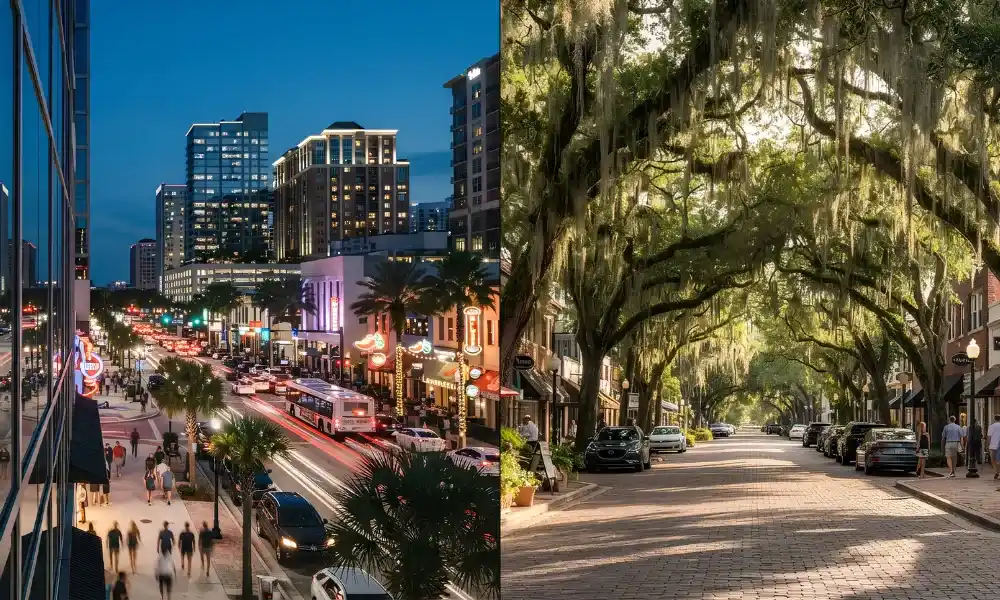

Downtown Orlando vs Winter Park is a choice between a busy city center and a smaller, slower town roughly 15 to 20 minutes north by car. If you want a quieter, more local stay, Winter Park usually wins, with tree-lined Park Avenue, lakes, museums, and evenings that wind down early. 

Find the Right Vacation Rental

Traveling with family, friends, or as a couple? Compare verified rentals that fit your budget and travel style. Choose a place that feels right before you book.

The city center suits you better if you want concerts, late dinners, and nightlife within walking distance of your door. This comparison is written for visitors rather than homebuyers, covering how each area feels after dark, how to get around, and which streets make a calm base. 

If you lean toward the city side, start with the best things to do in downtown Orlando and the brick-lined blocks covered in things to do in Thornton Park. 

Quick Verdict for a Quieter, More Local Stay

Winter Park is the better pick for most travelers who want quiet. It’s a separate city of about 29,795 residents as of the 2020 census, and its center is compact enough to walk from morning coffee to a museum to dinner without moving the car. 

Shops and restaurants cluster along Park Avenue and around Central Park, an 11-acre green space the City of Winter Park calls the crown jewel of its parks.

Downtown makes more sense when your trip centers on a show, a game, a conference, or nightlife. Lake Eola Park, the Dr. Phillips Center for the Performing Arts, and the Kia Center, home of the Orlando Magic, are all within a short ride of each other on the free LYMMO bus. The trade-off is noise, because weekend nights near the Orange Avenue and Church Street bar blocks run late and loud.

Thornton Park and the residential streets east of Lake Eola offer a middle ground, a short walk from the city’s restaurants but much calmer than the core.

How Each Area Feels During the Day

During the day, Downtown Orlando operates as an active urban core centered around business offices and Lake Eola, whereas Winter Park moves at an unhurried, small-town pace anchored by historic brick streets, lakeside parks, and independent storefronts.

Downtown Orlando Centers on Lake Eola and the Business District

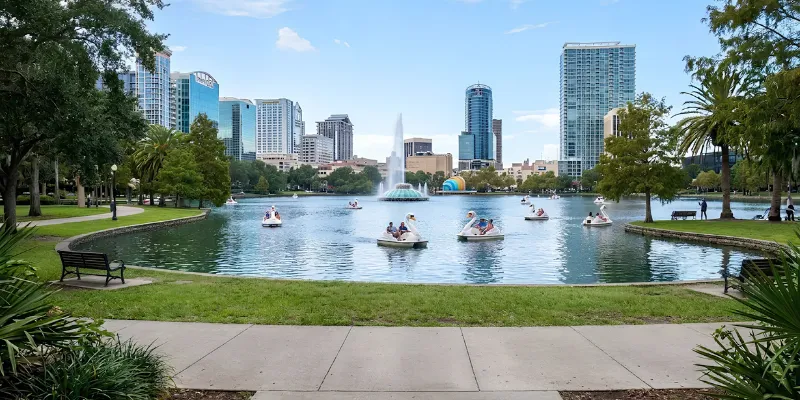
People riding swan boats on a lake with a fountain and city skyline, showing Lake Eola Park.

Lake Eola Park (Photo Credit: Author’s Own Contribution)

Downtown Orlando is a working city center, so weekday mornings bring office crowds and traffic on Orange Avenue, softened by Lake Eola Park. The lake has a looped walking path of about 0.85 mile, swan-shaped pedal boats, the Walt Disney Amphitheater, and a central fountain that puts on evening water shows.

The historic streets around the lake, including Thornton Park and Lake Eola Heights, change the mood quickly. Brick roads, older homes, and small cafes make this the most neighborhood-like part of the city center.

Winter Park Feels Like a Small Town Built Around Park Avenue

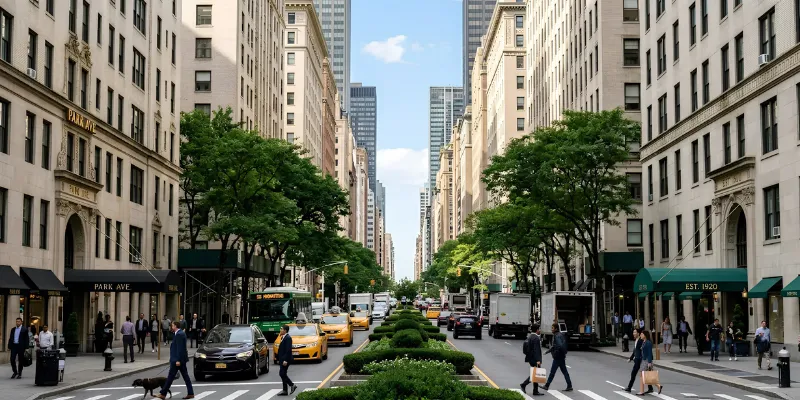
A wide street with tall buildings, trees, and yellow taxis, showing Park Avenue.

Park Avenue (Photo Credit: Author’s Own Contribution)

Winter Park has a long history of its own. The town was incorporated in 1887, and Rollins College, founded in 1885, still anchors the south end of Park Avenue. The main shopping stretch runs between Fairbanks and Webster avenues, with boutiques, sidewalk cafes, and galleries facing Central Park and the SunRail and Amtrak station.

Days here move slowly. People walk dogs around Central Park, browse the Saturday farmers’ market, and take boat rides through the town’s chain of lakes. Once you step off the main shopping street, much of the city is quiet residential streets, older homes, and green spaces such as Mead Botanical Garden and Lake Baldwin Park.

Noise and Nightlife After Dark

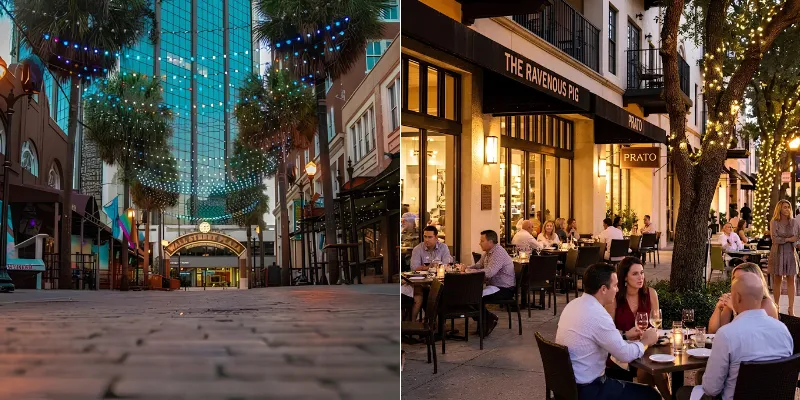
Split image of a lively street at night with string lights and outdoor dining, showing Noise and Nightlife After Dark.

Noise and Nightlife After Dark (Photo Credit: Author’s Own Contribution)

Nighttime is the biggest difference between the two areas. Downtown Orlando has the city’s densest cluster of bars and clubs, especially around Orange Avenue, Wall Street Plaza, and Church Street. The city introduced an after-midnight alcohol sales permit for downtown venues in May 2023, along with extra police staffing on weekend nights, which shows how busy these blocks get.

If you book a room or rental directly on those bar blocks, expect music, crowds, and street noise late into Friday and Saturday nights. A few blocks east, around Lake Eola and Thornton Park, nights are noticeably calmer.

Winter Park offers a gentler evening. Restaurants and wine bars on Park Avenue and in Hannibal Square stay busy through dinner and drinks, but there’s no real late-night club scene. Visitors on travel forums often point out that a big night out usually means a rideshare into Orlando and back.

Walkability and Getting Around Without a Car

Both areas are easy on foot within their own core, but neither replaces a car for a full Orlando trip. The downtown grid is larger, and the free bus helps you cover it. According to LYNX’s LYMMO service details, the Orange and Grapefruit lines run Monday through Friday from 6 a.m. to 8:25 p.m. and on weekends from 8 a.m. to 8:25 p.m., with stops at Lake Eola, Thornton Park, the Kia Center, and the Dr. Phillips Center.

The town’s walkable center is smaller and simpler. From Park Avenue you can reach Central Park, the Morse Museum, Rollins College, and the boat tour dock on foot. Beyond that core, you’ll want a car, a bike, or a rideshare.

Traveling Between Winter Park and Downtown

The drive usually takes 15 to 20 minutes, depending on traffic on I-4 or US 17-92. SunRail commuter trains also connect the Winter Park/Amtrak station with the Church Street and LYNX Central stations downtown, and a one-way trip within one zone costs $2.00, based on SunRail’s current fares.

SunRail runs Monday through Friday only, so it suits a weekday museum visit but won’t help with a Saturday night out.

Airport and Theme Park Access

Neither area has a direct train to Orlando International Airport. SunRail riders transfer to LYNX buses at the Sand Lake Road station, so most visitors use a rideshare or a rental car instead. Downtown sits closer to the airport than Winter Park does, which makes arrival and departure days a little shorter.

Theme park days are long from either base. Universal, SeaWorld, and Walt Disney World all lie southwest of downtown, and starting farther north adds more time on top. If parks fill most of your days, staying in vacation rentals near Universal Studios or around Lake Buena Vista will save you hours on the road. 

Food, Culture, and Local Things to Do

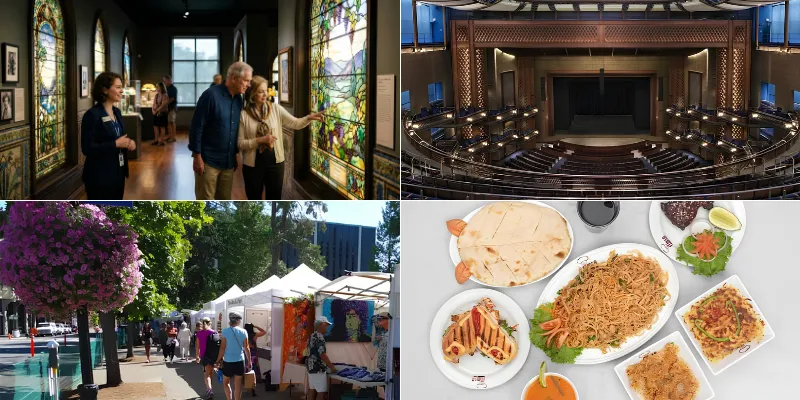
A collage of a stained glass museum tour, a theater interior, an art festival, and a tree-lined street, showing Local Things to Do.

Food, Culture, and Local Things to Do (Photo Credit: Author’s Own Contribution)

Winter Park's Museums, Lakes, and Saturday Market

The Charles Hosmer Morse Museum of American Art holds what it describes as the world’s most comprehensive collection of works by Louis Comfort Tiffany, including the chapel interior he designed for the 1893 World’s Columbian Exposition. The Rollins Museum of Art on campus offers free admission, and the Albin Polasek Museum & Sculpture Gardens sits on the shore of Lake Osceola.

The Winter Park Scenic Boat Tour is the town’s classic outing. Narrated one-hour tours leave every hour from 10 a.m. to 4 p.m. from the dock at 312 East Morse Boulevard, and adult tickets cost $20 including tax.

On Saturdays from 8 a.m. to 1 p.m., the Winter Park Farmers’ Market sets up in Central Park’s West Meadow. The city sometimes moves it to Seven Oaks Park during large events, so check the location before you go. In March, the long-running Sidewalk Art Festival fills Central Park with outdoor art displays.

Downtown's Performing Arts, Sports, and Lakeside Dining

Downtown is where the big events happen. The Dr. Phillips Center has five venues, including Steinmetz Hall and the Walt Disney Theater, and hosts more than 300 shows a year, according to Visit Orlando. Orlando Magic games and major concerts fill the Kia Center, and the Orange County Regional History Center sits a few blocks away.

For food, the city side gives you more variety and later hours. The streets around Lake Eola work well for slow weekend mornings, and the brunch spots in Thornton Park sit a short walk from the water. On Sundays, the Orlando Farmers Market sets up along the lake’s edge.

Where to Stay for a Quieter Base

A sweeping aerial view of Central Park during autumn, showcasing vibrant orange and yellow foliage, winding lakes, green lawns, and the surrounding Manhattan skyline.

Central Park (Photo Credit: Author’s Own Contribution)

Travelarii Marquee – Orlando stays

In Winter Park, the most convenient stays sit within walking distance of Park Avenue, Central Park, and Hannibal Square. Hotels here tend to be small and boutique, such as the Alfond Inn near Rollins College, so rooms can fill quickly around graduation and the spring art festival. If you’re considering vacation rentals in Winter Park, confirm the listing follows the city’s short-term rental rules, since many residential areas limit short stays.

Downtown, choose your block carefully. Thornton Park, Lake Eola Heights, and South Eola give you a calmer base with easy access to the lake and restaurants. If you want to walk to the water each morning, start with South Eola vacation rentals. 

Hotels and rentals right on Orange Avenue or near Wall Street Plaza put you closest to nightlife, but also closest to weekend noise. When you compare Downtown Orlando rentals, check the exact street before you book.

If several people are sharing the trip, large group vacation rentals in Orlando can make shared meals and downtime easier. For a house with a yard or a pool, widen the search to vacation homes across Orlando.

Other Quiet Neighborhoods Worth Comparing

If neither area feels right, a few nearby neighborhoods split the difference. College Park, northwest of downtown, has a stretch of local restaurants along Edgewater Drive and quiet residential streets around its lakes. 

Farther west, Winter Garden has a small historic downtown on Plant Street that suits travelers who want small-town evenings closer to the Disney side of Central Florida. Choosing one of the Winter Garden vacation rentals makes sense if you want park days and quiet evenings on the same trip.

Which Area Fits Your Trip Style

Couples looking for a slow weekend will likely prefer Winter Park. A morning at the market, an afternoon boat tour, and dinner on Park Avenue make an easy two-day plan, and a day trip to the Florida natural springs adds time outdoors.

Travelers coming for a concert, a Magic game, or a conference should stay downtown, ideally near Lake Eola so the venue is a walk or short bus ride away.

Families can make either area work. Winter Park’s parks and quiet streets are easy with kids, while a downtown base puts the Orlando Science Center and other Loch Haven Park museums a short drive away. 

If theme parks fill most of the trip, Kissimmee vacation rentals keep you close to Walt Disney World while both areas stay within reach for an evening out. For ideas that reach beyond the city limits, look through the best things to do in Central Florida.

FAQs

Yes, the center of Winter Park around Park Avenue and Central Park is easy to walk, with shops, restaurants, museums, and the boat tour dock close together. You’ll still need a car or rideshare for most trips beyond that core.

Winter Park is roughly 15 to 20 minutes north of downtown Orlando by car, depending on traffic. On weekdays, SunRail also connects the two.

Parts of it are. The bar blocks around Orange Avenue, Wall Street Plaza, and Church Street stay busy late on weekends, while Thornton Park and the streets around Lake Eola are much quieter.

No, regular SunRail service runs Monday through Friday. Plan on driving or using a rideshare between Winter Park and downtown on Saturdays and Sundays.

No, Winter Park is its own city, incorporated in 1887, though it sits within the Orlando metro area in Orange County. Many visitors treat it as part of Orlando because it borders the city.

More Related Blogs From Travel Recommendations