

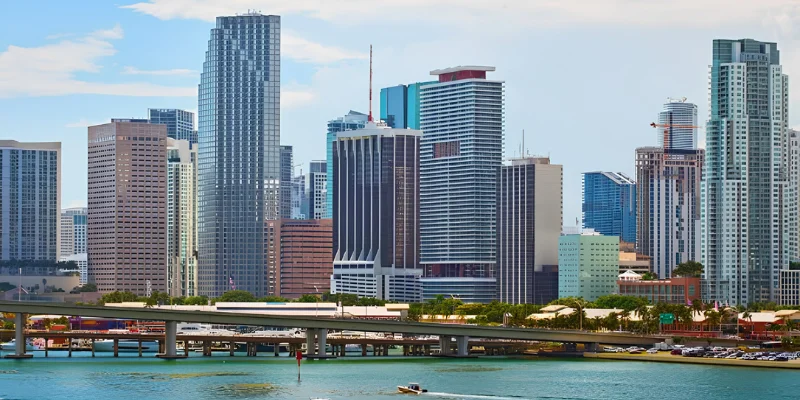

Vacation rentals in Miami can vary dramatically in location, price, and overall experience even when properties are only a few miles apart. Greater Miami and Miami Beach welcomed 28.3 million visitors in 2025, according to the Greater Miami Convention & Visitors Bureau, continuing a record-setting period for local tourism.

With that level of demand spread across Miami Beach, downtown districts, residential neighborhoods, and areas near Miami International Airport, choosing the right part of the city can have as much impact on a stay as choosing the property itself.

MIAMI VACATION RENTALS

Find the Right Place to Stay in Miami

BROWSE RENTALS→

South Beach puts visitors close to the ocean, Ocean Drive, restaurants, and Miami Beach nightlife, while Brickell places them farther inland among high-rise residences, offices, restaurants, and easy access to downtown. Areas such as Coconut Grove, Coral Gables, and Key Biscayne offer a different setting, while neighborhoods around the airport can make more sense for short stays or early departures.

This guide breaks down the best neighborhoods to stay in Miami based on what matters most during a trip. It covers South Beach vacation rentals, Brickell, family-oriented areas, vacation rentals near Miami Airport, beach-focused locations, and neighborhoods worth considering when safety and convenience are priorities.

Rather than treating Miami as one single destination, the guide looks at what each area actually puts within reach, how the neighborhoods differ, and which types of travelers are likely to get the most value from staying there. That makes it easier to narrow down vacation rentals in Miami by location before comparing individual properties.

Best Neighborhoods to Stay in Miami: Quick Overview

The main areas to consider for vacation rentals in Miami are South Beach, Brickell, Coconut Grove, Wynwood, Coral Gables, and Downtown Miami. Each has a different location, pace, and reason to stay there.

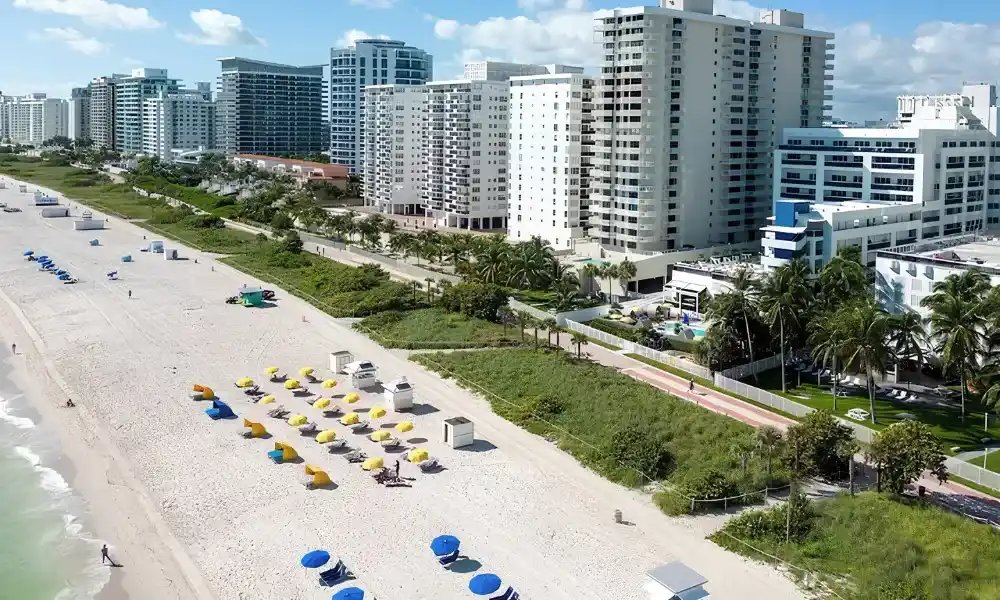
South Beach is a beachfront, energetic, and visitor-focused area about 12–13 miles from Miami International Airport. It suits travelers who prioritize direct beach access, Ocean Drive, nightlife, and Miami Beach’s main entertainment areas.

Brickell has a high-rise, urban, and dining-focused atmosphere and is approximately 7–9 miles from Miami International Airport. Its vacation rentals are particularly practical for business trips, dining, and travelers who prefer high-rise city living with convenient access to Downtown.

Coconut Grove offers a more residential setting with waterfront areas and green spaces. Located about 8–10 miles from the airport, it can work well for families and travelers looking for a quieter, more relaxed stay.

Wynwood, around 6–8 miles from Miami International Airport, has an arts-focused, creative, and urban feel. It is a natural fit for visitors interested in galleries, murals, restaurants, food, and nightlife.

Coral Gables is a residential, upscale, and established area approximately 6–8 miles from the airport. Its quieter setting can suit families and travelers planning longer stays.

Downtown Miami is a central, urban, and transit-connected area about 7–9 miles from Miami International Airport. It can be a practical choice for business travelers and visitors who want access to major attractions and public transportation.

Distances are approximate driving distances and can vary by the exact property and route.

For travelers prioritizing the ocean, South Beach vacation rentals keep the beach, Ocean Drive, and Miami Beach’s main entertainment areas close at hand. Brickell is inland but offers a large selection of high-rise residences and convenient access to Downtown, making Brickell vacation rentals particularly practical for business-focused stays.

Families may find Coconut Grove or Coral Gables easier to navigate than the busiest parts of Miami Beach, particularly when a quieter residential setting matters. Wynwood is better suited to visitors who want galleries, murals, restaurants, and nightlife nearby. Downtown is a practical middle ground for travelers who value central positioning and public transportation.

For airport convenience, the neighborhoods on the mainland generally have an advantage over Miami Beach. Vacation rentals near Miami Airport can also make sense for short visits, late arrivals, or early departures, although airport proximity should be weighed against the attractions and activities on the rest of the itinerary.

Safety also deserves a neighborhood-specific look. Rather than labeling an entire district as universally safe or unsafe, travelers should compare the property’s exact location, surrounding streets, building access, parking arrangements, and recent local conditions before booking.

South Beach Vacation Rentals

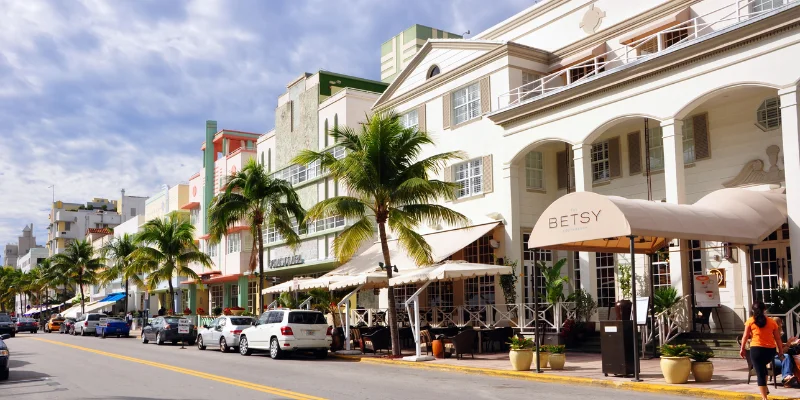
White art deco hotels and palm trees line the street in front of South Beach vacation rentals.

South Beach (Photo Credit: wikipedia)

South Beach vacation rentals are the clearest choice for travelers who want the beach to be a central part of the stay. The neighborhood occupies the southern end of Miami Beach, with the Atlantic Ocean along its eastern edge and a dense concentration of restaurants, bars, shops, and attractions around Ocean Drive and Collins Avenue. Its Art Deco buildings are one of the area’s defining features, particularly around the historic district, while Ocean Drive becomes one of Miami’s busiest entertainment corridors after dark.

That location also affects rental pricing. South Beach is among Miami’s most sought-after visitor areas, and properties close to the sand generally command a premium over comparable accommodations farther inland. Rates can vary considerably by season, property size, building amenities, and distance from the ocean, so comparing properties by exact location is more useful than treating South Beach as a single price category.

What to expect from the rental stock

Condominiums make up much of the vacation-rental inventory in South Beach. Options range from compact units suited to short stays to larger residences with kitchens, multiple bedrooms, balconies, pools, and building amenities. A condo can be particularly useful for travelers who want more living space than a traditional hotel room while remaining close to the beach.

Parking deserves attention before booking. Some buildings have limited parking, charge separate parking fees, or rely on nearby garages rather than providing a dedicated space. Travelers bringing a car should check the property’s parking arrangements, rather than assuming that a beachfront address includes convenient parking.

Location within South Beach matters just as much. The area around Ocean Drive, Lummus Park, and 5th Street puts visitors close to the highest concentration of nightlife and late-night activity. It can work well for travelers who expect to spend evenings around the entertainment district but may feel too busy for guests looking for quieter nights.

For a more residential atmosphere, consider properties farther north around Collins Park and the northern part of the South Beach area. These locations still provide access to the beach and major attractions while putting some distance between the rental and the busiest sections of Ocean Drive. The trade-off is that reaching the southern entertainment district may require a longer walk or a short ride.

South Beach is also a useful reference point when comparing beachfront and waterfront rentals. Beachfront means direct or immediate access to the oceanfront, while waterfront can describe properties beside canals, bays, or other waterways without direct beach access. For a detailed comparison of what those terms mean for location, views, access, and rental value, see the guide to beachfront vs. waterfront vacation rentals in Florida.

Brickell Vacation Rentals

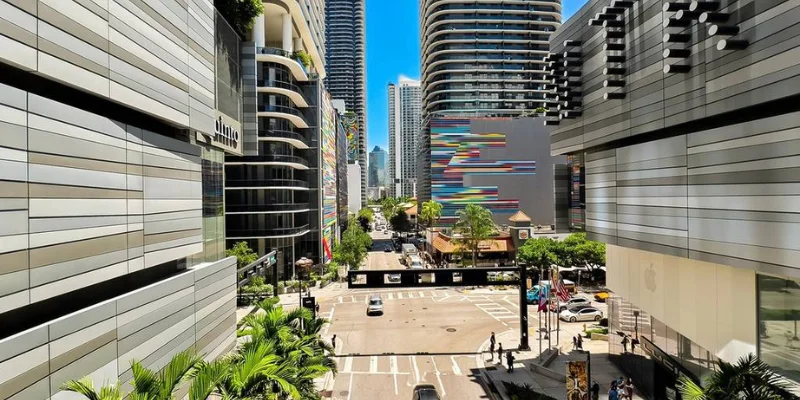
Modern high-rise buildings and colorful street art define the Brickell vacation rentals district.

Brickell (Photo Credit: miamitake.com)

Brickell vacation rentals offer a very different base from the beachfront districts of Miami Beach. Once primarily associated with Miami’s financial and business activity, Brickell has developed into a dense residential high-rise neighborhood with offices, restaurants, shopping, hotels, and residential towers concentrated around the Miami River and Biscayne Bay. The setting is waterfront, but it is not a beach neighborhood. That distinction matters when comparing properties across Miami.

For travelers who prefer an urban environment, Brickell can be more practical than staying on the barrier island. Many buildings are within walking distance of restaurants, cafes, shops, offices, and public transportation. The neighborhood’s concentration of high-rise residences also means vacation rentals commonly feature balconies, upper-floor views, pools, fitness facilities, and views toward the bay, river, or Miami skyline.

Who should stay in Brickell?

Brickell is particularly well suited to business travelers who need convenient access to offices in the financial district and Downtown Miami. It can also appeal to visitors who want a city-based stay with restaurants and entertainment within walking distance rather than making beach access the main priority.

The trade-off is straightforward: staying in Brickell does not put the Atlantic beach outside the front door. Reaching South Beach requires crossing the causeway to Miami Beach, so travelers expecting to spend most of their days on the sand may find a South Beach rental more convenient.

For others, the waterfront setting can be a stronger selling point than direct beach access. Higher-floor rentals may provide expansive city or water views, while buildings along the eastern and southern edges of the neighborhood offer particularly strong positioning for visitors interested in Biscayne Bay.

Brickell vs. South Beach

Brickell’s location also gives it a practical advantage for travelers dividing their time between the airport, Downtown Miami, and Miami Beach. Miami International Airport is generally closer to Brickell by road than South Beach, although actual travel times depend heavily on traffic. Downtown attractions and transportation connections are also nearby.

That makes Brickell worth considering for shorter city breaks, work-related stays, and itineraries that include Downtown as well as Miami Beach. Travelers who want the beach within a short walk should still prioritize South Beach or another Miami Beach neighborhood.

The waterfront distinction is important when comparing rental listings. A Brickell property described as waterfront may overlook the Miami River or Biscayne Bay without offering direct access to an ocean beach. For a closer look at how waterfront and beachfront properties differ in location, access, views, and rental considerations, see the guide to beachfront vs. waterfront vacation rentals in Florida.

Other Notable Miami Neighborhoods

Beyond South Beach and Brickell, several Miami neighborhoods can make sense depending on the pace, setting, and location preferred for a stay. Coconut Grove, Wynwood, Coral Gables, and Downtown Miami each have a distinct character and serve a different type of visitor.

Coconut Grove

Lush tropical trees and plants surround a modern home in the Coconut Grove neighborhood.

Coconut Grove (Photo Credit: wsj.com)

Coconut Grove sits along Biscayne Bay south of Brickell and has a more residential feel than Miami’s high-rise core. Tree-lined streets, waterfront parks, marinas, and a long-standing boating community shape the area.

Vacation rentals here can be a good fit for families and travelers who want more space and a quieter base while remaining within reach of central Miami. The neighborhood also has restaurants, shops, and outdoor areas that can be reached without relying on a car for every outing.

Wynwood

A colorful painted staircase with blue and green patterns in the Wynwood arts district.

Wynwood (Photo Credit: independent.co.uk)

Wynwood is best known for its murals, galleries, independent shops, restaurants, and creative scene. The Wynwood Walls area is the neighborhood’s most recognizable attraction, while bars and restaurants draw a younger crowd into the evening.

Vacation rentals in and around Wynwood suit visitors who want art, food, and nightlife close to their accommodation. It is less appropriate for travelers whose main priority is walking to the beach, since Miami Beach is across Biscayne Bay.

Coral Gables

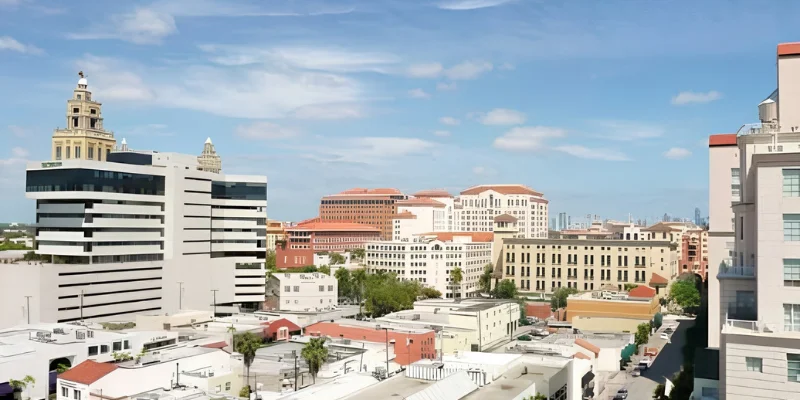
Aerial view of historic Mediterranean-style buildings in the Coral Gables neighborhood.

Coral Gables ( Photo Credit: wikipedia.org)

Coral Gables has an established residential character, Mediterranean-inspired architecture, landscaped streets, and a concentration of upscale homes and businesses. Its location southwest of Downtown makes it convenient for travelers who want a quieter setting while remaining connected to Miami’s central districts.

Families may find Coral Gables appealing because of its residential environment and access to parks, restaurants, and cultural attractions. Rental availability can vary considerably by property type, so checking whether a listing is in a dedicated vacation-rental building or a residential home is important.

Downtown Miami

The Miami skyline rises above the water, featuring tall skyscrapers in Downtown Miami.

Downtown Miami ( Photo Credit: timeout.com)

Downtown sits at the center of Miami’s urban core, close to offices, convention facilities, cultural venues, and major transit connections. It can be particularly useful for business travelers attending events or visitors who want to combine Downtown attractions with Brickell and other central neighborhoods.

Rentals range from high-rise apartments to larger residential units, with many properties offering skyline or bay views. Beach access is less immediate than in South Beach, but the central location can reduce travel time for an itinerary focused on the mainland.

Vacation Rentals Near Miami Airport

Vacation rentals near Miami Airport make the most sense when airport access is a priority rather than an afterthought. Miami International Airport (MIA) is west of the city’s central districts, so the neighborhoods closest to the airport are generally on the mainland. Brickell and Downtown Miami typically offer a shorter drive to MIA than South Beach, although traffic can make actual journey times unpredictable.

That distinction matters because South Beach is one of Miami’s most searched visitor areas, but it sits across Biscayne Bay on Miami Beach. A rental there may put the ocean and Ocean Drive within walking distance, yet getting to MIA requires additional road travel. For a trip built around beach time, that trade-off may be reasonable. For an early-morning flight, it can add unnecessary logistics.

Where should you stay for airport convenience?

Brickell is a strong choice for travelers who need to balance airport access with a central Miami location. The neighborhood has extensive high-rise rental inventory, restaurants, offices, and transit connections, while Downtown is nearby. It can work particularly well for business trips where meetings are split between the financial district, Downtown, and the airport.

Downtown Miami is another practical option. Its central position makes it useful for convention attendees, business travelers, and visitors with plans across the mainland. Depending on the exact property, getting to MIA can be relatively straightforward compared with staying on Miami Beach.

For travelers arriving on a late flight, departing on an early flight, or spending only a night or two in Miami, proximity can be more valuable than staying in the city’s most recognizable tourist district. A property closer to MIA can reduce the amount of time spent crossing the city before or after a flight.

South Beach remains the better choice when direct beach access is the main purpose of the trip. But for early flights, red-eye arrivals, or business itineraries centered around the airport and mainland Miami, choosing Brickell or Downtown is generally the more practical decision. Check the property’s exact location and estimated driving time to MIA before booking, since airport distance alone does not account for Miami traffic.

Miami's Top Vacation Rental Picks

Best Areas to Stay in Miami for Families

The best areas to stay in Miami for families are generally Coral Gables and Coconut Grove, particularly for households that value quieter streets, nearby parks, residential surroundings, and easier day-to-day logistics. South Beach can still work for families who want the beach close by, but its busiest areas around Ocean Drive are more heavily oriented toward nightlife and late-night activity.

Stay in Coral Gables with Family

Coral Gables is a strong family option for travelers who want a residential setting while staying within reach of central Miami. The neighborhood has parks, restaurants, shops, and grocery options, making it easier to handle the practical parts of a longer stay. Larger vacation homes and apartment-style rentals can also provide more space than a typical hotel room.

For families, the property’s immediate surroundings matter as much as the neighborhood name. Check how far the rental is from a supermarket, pharmacy, restaurants, and parks, especially when traveling with younger children. A kitchen can also be useful for preparing breakfast, storing snacks, or handling meals around a family’s schedule.

Stay in Coconut Grove with Family

Coconut Grove offers another strong combination of residential streets, outdoor spaces, waterfront areas, restaurants, and access to family-oriented activities. Its location south of Brickell also provides a useful base for exploring central Miami without staying directly in the busiest urban districts.

Vacation rentals with kitchens, separate bedrooms, laundry facilities, and outdoor or pool access can be particularly practical for families staying several nights. Before booking a condo, review the building’s pool rules and supervision requirements. Some properties may have specific rules concerning children, pool access, or permitted hours.

Things to prioritize in a family rental

Location should be evaluated at the property level rather than by neighborhood reputation alone. A rental several blocks away from a busy nightlife strip can offer a very different stay from one directly above restaurants and bars.

For families considering South Beach, properties farther from the densest sections of Ocean Drive may provide a better balance between beach access and nighttime quiet. In Coral Gables and Coconut Grove, look for rentals within convenient reach of grocery stores and parks.

Other useful features include a full kitchen, multiple bedrooms, laundry facilities, reliable parking, and a pool with clearly stated safety rules. These details can have a bigger effect on the practical quality of a family stay than decorative amenities. For families comparing several vacation rentals in Miami, checking these details alongside the exact address can narrow the options considerably.

Safest Neighborhoods to Stay in Miami

Choosing among the safest neighborhoods to stay in Miami is less about finding a single area with a universal safety label and more about selecting a well-established location, checking the property’s immediate surroundings, and using sensible precautions throughout the trip. Conditions can vary from one street or block to another, as they do in most large cities.

For visitors, the main tourist corridor in South Beach, Brickell, and Coral Gables are established areas with substantial tourism, residential, dining, and commercial activity. Their developed infrastructure and regular foot traffic can make them practical starting points for travelers who want a familiar visitor environment. That does not mean safety is guaranteed, so normal awareness still matters.

Practical safety considerations

At any Miami rental, check the immediate area around the property before booking. Well-lit streets, active businesses, clear building entrances, and convenient access to transportation can make getting around easier, particularly after dark. Reviews can also provide useful context about the building, its surroundings, parking arrangements, and noise levels.

Beach days require a few additional precautions. Avoid leaving phones, wallets, cameras, or other valuables unattended while swimming or moving away from your belongings. Use the property’s available storage or other secure options when appropriate.

Nightlife areas require similar awareness. South Beach’s busiest entertainment corridors can have substantial pedestrian activity late into the evening, but visitors should still keep personal belongings secure, stay with their group when possible, and use reputable transportation when returning to a rental.

For families, reviewing the property’s building access, parking, elevators, and pool rules can be worthwhile before confirming a booking. Solo travelers may also prefer rentals close to frequently used routes, restaurants, and transportation rather than properties that require isolated walks at night.

Safety should therefore be one part of the rental comparison rather than the sole deciding factor. Consider the exact property location, transportation needs, building arrangements, and planned activities alongside price and amenities. This approach gives a more useful picture than relying on a broad neighborhood label when comparing vacation rentals in Miami.

Condo vs. Private Home in Miami

Miami’s vacation-rental market leans heavily toward condominiums and high-rise residences, particularly in neighborhoods such as South Beach and Brickell. This is especially noticeable in areas where residential towers occupy much of the available visitor accommodation. Condo rentals can put guests close to beaches, restaurants, offices, public transportation, and building amenities such as pools, fitness centers, parking, and shared outdoor spaces.

Private homes are more concentrated in residential areas such as Coral Gables and Coconut Grove. These rentals can provide more living space, separate bedrooms, private outdoor areas, kitchens, and greater privacy, which can be useful for families or groups staying for several nights.

The right property type depends largely on where the trip is centered. A traveler prioritizing beach access may find a South Beach condo more practical, while a family looking for additional space may prefer a private home in a residential neighborhood. Building rules, parking arrangements, minimum-stay requirements, and permitted rental practices should also be checked before booking, particularly with condominium properties.

The broader advantages and trade-offs of condos versus private houses, including space, amenities, privacy, costs, and practical considerations, are covered in the full Condo vs. House Rentals in Florida guide. That comparison provides the statewide context, while the Miami market has its own clear geographic pattern: high-rise condos dominate the most visitor-focused districts, while private homes become more common as you move into established residential neighborhoods.

Explore Famous Places Near Your Miami Stay​

More Related Blogs From Travel Recommendations