
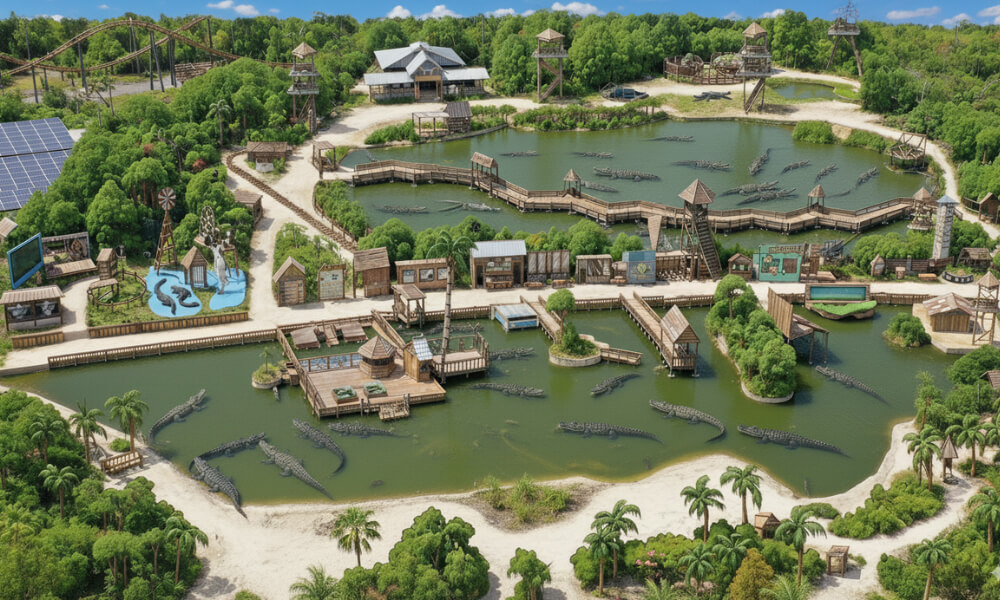
The best time to visit Gatorland in Orlando is on a weekday morning between October and February, when temperatures sit in the 60s and 70s, crowds thin out, and alligators stay active well past opening. Arrive at 10 AM on a Tuesday or Wednesday in January and you’ll move through the park, the shows, and the animal encounters with almost no waiting.
Find Your Ideal Stay in Gatorland Orlando on Vrbo
Search extensive private home inventory, review verified guest feedback, and book your trip
with complete confidence.

If you’re mapping out the rest of your Florida trip, this guide covers exactly when to go and what changes by season.Here’s exactly how to time it, month by month, plus what changes if you’re chasing breeding season, dodging summer heat, or working around a specific weekend.
Table of Content
Gatorland at a Glance
| Info | Details |
|---|---|
| Hours | 10:00 AM – 5:00 PM daily, rain or shine, including holidays |
| Admission | Adults $34.99 · Kids (3–12) $24.99 · Seniors (60+) $31.98 · Ages 2 and under free |
| Greater Gator Package | $41.99 adult / $33.99 child (admission + 3 top experiences) |
| Address | 14501 S. Orange Blossom Trail, Orlando, FL 32837 |
| Phone | 407-855-5496 |
| Parking | Free |
| Stroller rental | $11 single / $16 double |
| Wheelchair rental | $11 push / $30 electric |
Buying tickets online saves a few dollars per person versus paying at the gate, and includes a digital park map to help you plan your route between shows.
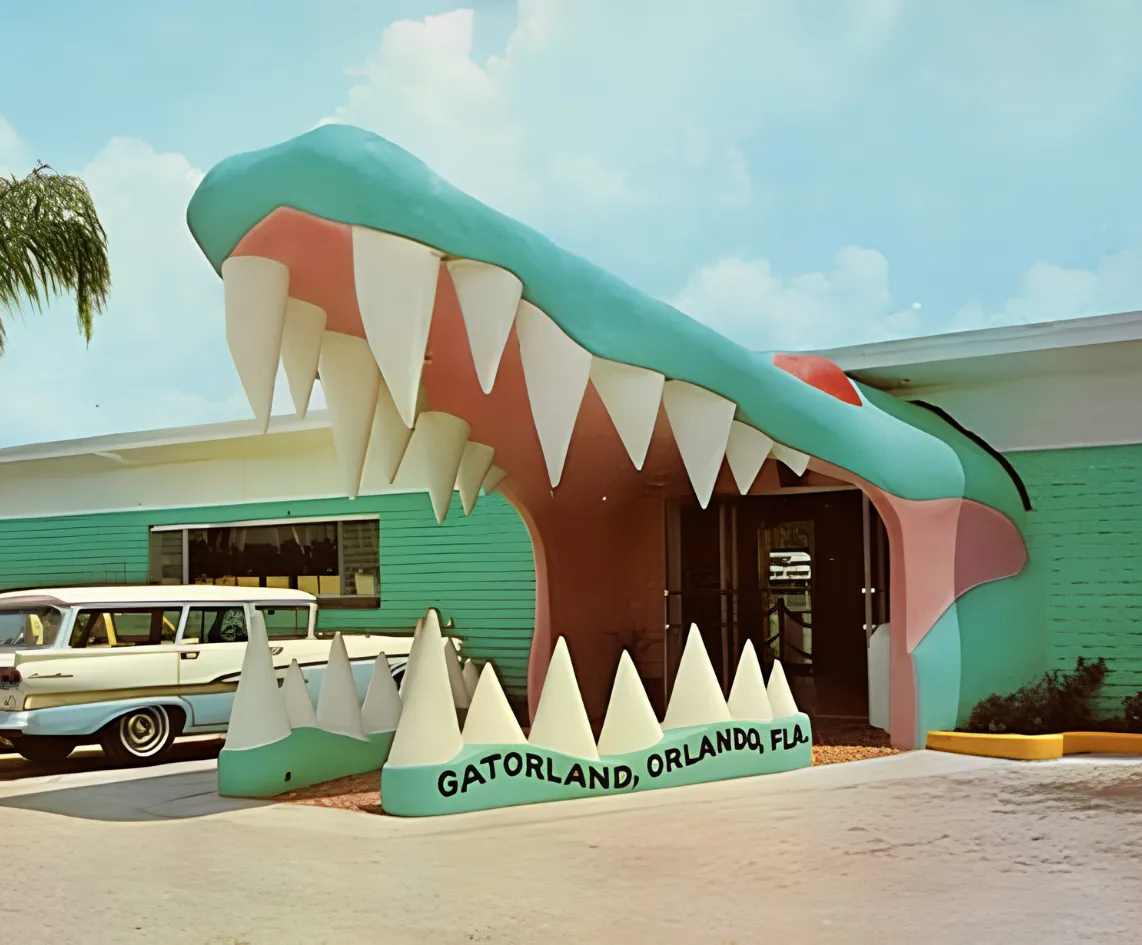
Gatorland has operated continuously since 1949, making it one of Central Florida’s oldest attractions and predating the region’s major theme parks by decades. Beyond the shows, the park is an active participant in Florida alligator rescue and conservation work, which is part of why its keepers are able to speak in such specific detail about breeding behavior, hatching patterns, and individual animals.

Best Months to Visit in Gatorland
October through February is Gatorland’s best stretch of weather, and April through May is its most underrated. Here’s how each part of the year actually plays out on the ground.
October to February ( Coolest Weather, Smallest Crowds )
This is peak comfort season. Daytime highs run from the upper 60s in January up to the mid-70s in October and February, with humidity at its lowest point of the year. Alligators are most visibly active during these cooler months, since Florida’s summer heat actually pushes them toward stillness during the hottest parts of the day.
Walking the boardwalks is genuinely pleasant instead of sweaty, and you’ll have more patience left over for the shows and animal encounters after a full day on your feet.This window also avoids the worst of hurricane season, which typically tapers off by late October.
April to May ( Alligator Breeding Season )
Most visitors skip straight from winter to summer in their planning, which means they miss the single most interesting biological window at the park. April and May is alligator breeding season, when courtship displays, bellowing, and territorial activity spike across the Breeding Marsh.
You’ll see behavior that simply doesn’t happen the rest of the year, and the weather is still comfortable before summer humidity takes over. Gatorland’s own naturalists run public education around this season, since it’s one of the more dramatic natural events on site.
May also brings Gatorpalooza, Gatorland’s annual two-day festival with live music, vendors, and the Florida Man Challenge, included with regular admission. It’s a fun add-on if your dates line up, but expect heavier weekend crowds during the festival itself.
June to September ( Hot, Humid, and Best Tackled Early )
Summer in Orlando means highs near 90°F, heavy humidity, and near-daily afternoon thunderstorms. It’s not a reason to rule out a summer trip, but it does change how you should structure the day: arrive right at 10 AM, plan to be at your most active in the first few hours, and treat early afternoon as a break for the air-conditioned gift shop or Pearl’s Restaurant rather than another boardwalk loop. Storms tend to roll through mid-to-late afternoon, so an early start also reduces your odds of getting caught in one.
The Holiday Calendar to Build Around
A few annual events are worth knowing about when you pick your dates:
- Gatorpalooza – late May, included with admission, heavier weekend crowds
- Gators, Ghosts & Goblins – runs through October, Halloween-themed programming
- Ho, Ho, Ho-Down – weekends starting in early December, holiday-themed evening event
If you want the calm, uncrowded version of Gatorland, build your trip around avoiding these specific weekends. If you want the festive version, build your trip around hitting one.
Best Day of the Week to Visit Gatorland
Tuesday and Wednesday are consistently the quietest days at the park. Out-of-state visitors tend to follow a predictable pattern: arrive Thursday, spend the weekend at the major theme parks, and leave Monday. That leaves the middle of the week with noticeably lighter foot traffic at Gatorland, shorter waits at the Jumperoo Show and Up-Close Encounters, and more room on the boardwalks around the Breeding Marsh.
Weekends bring bigger crowds but also more live entertainment and special programming, so they’re not without their own upside if your schedule only allows a Saturday or Sunday.
Best Time of Day to Visit Gatorland
Arrive at opening, 10:00 AM, every time you can manage it. Alligators and crocodiles are noticeably more active in the cooler morning hours and tend to settle into stillness as midday heat builds, especially outside the winter months.
Arriving early also means you’ll catch the first show blocks before lines build, and you’ll have first access to the Breeding Marsh boardwalks before they fill in.
Show and feeding schedules run several times daily and shift slightly by season, so check the day’s schedule at the entrance or call (800) 393-5297 to confirm times before you go.
What to See and Do at Gatorland
A January visit makes the timing difference obvious almost immediately. The cooler air allows for a full day on the boardwalks without needing constant breaks, and the lighter winter crowds mean barely any wait for a show or encounter.
Behind-the-scenes areas that most guests never access open up during quieter winter visits, and the mild January weather makes the gear and safety setup far more comfortable than it would be in the middle of summer.
1. The Jumperoo Show
The Jumperoo Show is Gatorland’s signature gator-jumping spectacle and the first of its kind in Florida. Watching the alligators splash and coil before launching for food from just a few feet away, clipped into a safety wire the whole time, is a genuinely different experience than seeing it on video.
2. Feeding Lyall, Gatorland's Largest Crocodile
Lyall is Gatorland’s biggest animal at nearly 16 feet long. Hand-feeding him from a platform above the water, and feeling the platform shift when he moves, is one of those moments that’s hard to replicate anywhere else in Florida.
3. Baby Gator Marsh
Most gators hatch in late summer or early fall, and a single female can lay up to 50 eggs in a season. Holding a six-month-old gator here, and learning about the park’s hatching program directly from the keepers, adds a layer of context you won’t get from the shows alone.
4. Jawlene and Nellie
Jawlene, an alligator who lost her top jaw but lives confidently at the park, shares her habitat with Nellie, an albino red-eared slider. Their unlikely pairing is one of the quieter, more memorable corners of the park.
5. Handling the Snake Collection
Gatorland’s snake enclosure houses a Burmese python, a reticulated python, and an anaconda. Supervised handling sessions, when available, are a highlight for anyone comfortable getting hands-on with nonvenomous reptiles.
6. Mystic and Mayhem, the Leucistic Gators
Mystic is the world’s only baby female leucistic alligator hatched in human care, and her brother Mayhem carries the same gene without displaying it. Seeing them up close in the White Gator Swamp is one of the rarest wildlife sightings in Florida.
7. Jabari the African Serval
Jabari was rescued from illegal ownership as a three-month-old kitten. Watching him move and play today is a reminder of the park’s broader rescue and education work beyond alligators.
8. The Screamin' Gator Zip Line
This is the park’s most intense add-on: 520 feet of zip line stretched across a 10-acre breeding marsh, with an 80-foot drop from the launch tower. It runs regardless of season, but cooler months make the wait in line and the climb up noticeably more comfortable.
9. Sultan and Blondie
Sultan, an 11-foot, roughly 900-pound Nile crocodile, and Blondie, a female Nile crocodile guarding her nest nearby, round out the park’s collection of animals you won’t find at any other Central Florida attraction.
Planning Tips by Traveler Type
Families with Young Kids
Stick to the October–February window if possible. Shorter lines mean less standing around for younger kids, and cooler weather makes the petting zoo and Baby Gator Marsh areas more comfortable for a slower pace. Stroller rentals are available at the gate for $11 (single) or $16 (double).
Couples
A weekday morning visit in winter, followed by lunch at Pearl’s Restaurant, makes for an easy half-day pairing with a longer Orlando itinerary. The Screamin’ Gator Zip Line is a popular add-on for couples looking for one shared adrenaline moment.
Groups
Larger groups benefit most from weekday visits, since show seating and platform encounters (like feeding Lyall) move faster with smaller crowds ahead of you. Call ahead if your group is sizable, since some encounters have limited daily capacity.
Common Mistakes to Avoid
- Arriving in the early afternoon. You’ll hit both the heat and the busiest crowd window at once.
- Visiting on a Saturday during Gatorpalooza or the holiday event weekends without expecting bigger crowds than a typical weekend.
- Skipping the schedule check. Show times shift by season, so confirm them at the gate or by phone rather than assuming a fixed daily schedule.
- Underestimating summer heat. If summer is your only option, treat late morning as your cutoff for outdoor activity and save indoor stops for early afternoon.
Final Thought
Timing changes Gatorland more than most attractions. The right month and the right time of day are the difference between rushing past exhibits in a hot, crowded park and actually having room to take in the shows, the animals, and the small moments in between. Pick a cool-season weekday morning if your schedule allows it, and you’ll get the best version of the park with the least effort.
If you’re building out a longer Florida wildlife trip, many travelers pair a Gatorland visit with time in the Everglades. Booking affordable hotels near Everglades National Park puts you closer to airboat tours and ranger programs without the extra drive each day.
FAQs
January is the best single month to visit Gatorland. Daytime highs sit in the low-to-mid 70s°F, humidity is at its yearly low, and visitor numbers drop well below the spring break and summer peaks. Alligators are also more visibly active during cool mornings than in the heat of midday summer.
Tuesday and Wednesday are the quietest days at Gatorland. Out-of-state visitors typically arrive Thursday and depart Monday, which means the middle of the week sees the lightest foot traffic and shortest waits at shows and animal encounters.
Gatorland opens daily at 10:00 AM and closes at 5:00 PM, rain or shine, including holidays. Arriving at opening gives you the coolest temperatures and the most active alligators before midday heat sets in.
Yes. April and May mark alligator breeding season at Gatorland, when courtship displays, bellowing, and territorial activity peak in the Breeding Marsh. Weather is still comfortable before summer humidity arrives, making it one of the most underrated windows to visit.
Summer (June through August) brings Orlando’s highest heat and humidity, with highs near 90°F and frequent afternoon thunderstorms. It’s not a bad time to visit, but plan around an early arrival and expect the animals to be less active at midday.
Yes. Gatorpalooza runs each year in late May, the Gators, Ghosts & Goblins Halloween event runs through October, and the Ho, Ho, Ho-Down holiday celebration runs weekends from early December. These add festive programming but also bring heavier weekend crowds during those specific dates.
More Related Blogs From Tips & tricks



Margaret C. Jones
Margaret C. Jones, a passionate explorer of North America, captivates readers with her vivid tales on Travelarii’s blog. With a keen eye for hidden gems and local culture, Margaret offers expert advice and unique insights to enhance your travel experience. Her stories bring the diverse landscapes and vibrant cities of North America to life, inspiring readers to embark on their own adventures.