

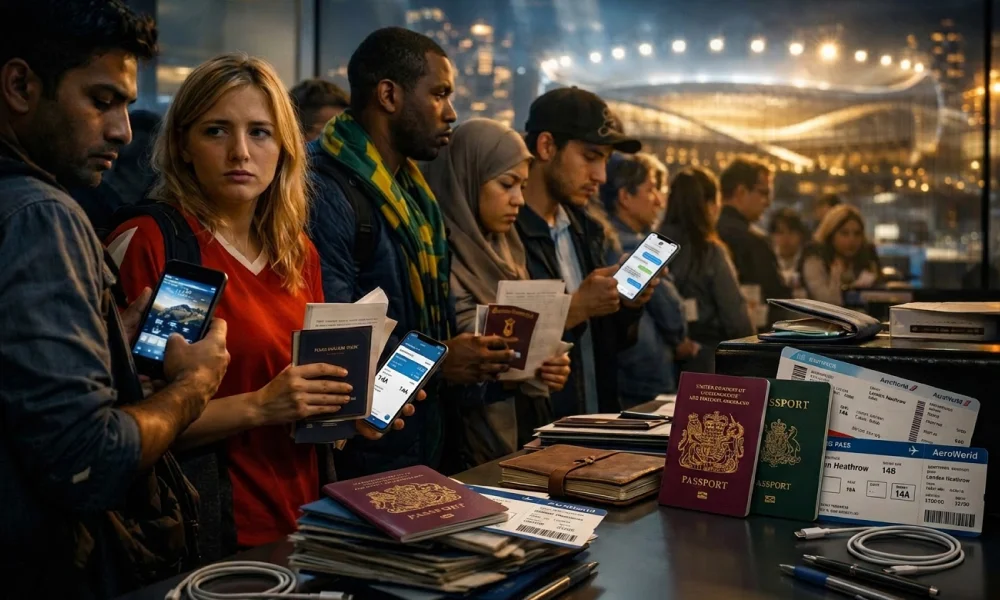
Millions of football fans want to watch the biggest World Cup in history on American soil. But a travel ban covering 39 countries and interview backlogs stretching into spring 2026 mean many will never get the chance.
Key Takeaways
- 39 countries face full or partial US travel bans as of January 1, 2026
- Fans from Iran and Haiti face a near-complete ban with no clear path to attend US matches
- The US State Department launched FIFA PASS, a priority visa appointment tool for ticket holders
- 42 Visa Waiver Program countries can use ESTA online, no embassy visit needed
- Canada and Mexico host 13 matches each and may offer easier entry for affected fans

The 2026 FIFA World Cup is the largest in history. For the first time, 48 teams will compete across three host nations: the United States, Canada, and Mexico. The US alone will host 78 of the 104 total matches across 11 cities. With that volume of games, the US is expected to draw the overwhelming majority of visiting fans from around the world.
But getting into the country has never been more complicated. A series of executive actions, new travel bans, and visa processing backlogs have created a situation where fans from dozens of countries are facing significant US visa delays for World Cup 2026, or are blocked from entering the US entirely.
By the numbers: 39 countries under travel ban, 78 US-hosted matches, 42 Visa Waiver countries, and an estimated 5 to 10 million international visitors expected to travel to the US for the tournament.
| Book Hotels Near FIFA WC ’26 Stadiums |
|---|
Table of Content
The Travel Ban Situation Explained
On January 1, 2026, the US expanded its travel restrictions from 19 to 39 countries, citing national security and public safety concerns. These restrictions operate at two levels. Nineteen countries face a full suspension of all US visas. Nationals from those countries cannot receive B1/B2 tourist visas under any circumstances and are barred from entry unless they hold dual nationality with an unrestricted country.
Twenty additional countries face partial restrictions, meaning B1/B2 issuance is severely limited or suspended.
Critically, the exemption for athletes, coaches, and official team support staff does not extend to fans or spectators. This means that even if a national team from a banned country competes in the US, their own supporters largely cannot follow them there.
Fans planning any part of their trip around US matches should review the full visa and entry guide for FIFA World Cup 2026, which covers country-by-country requirements across all three host nations in detail.
| Status | What It Means for Fans | Examples |
|---|---|---|
| Full Ban | No B1/B2 visas issued. Fans cannot attend US matches. | Iran, Haiti |
| Partial Ban | B1/B2 severely limited. Applications may be filed but denials are likely. | Senegal, Ivory Coast |
| Long Delays | Visa interviews may take months. Apply urgently and use FIFA PASS. | Brazil, India, Nigeria, Morocco |
| Visa Waiver / ESTA | No embassy visit needed. Apply online for ESTA (42 countries). | UK, Germany, Japan, South Korea, Australia |
Which World Cup Teams Are Directly Affected
Four of the 48 qualified World Cup nations are directly affected by the travel restrictions. Iran and Haiti are under the full ban, meaning their fans face a near-total block on attending US matches. Ivory Coast and Senegal are under a partial ban, creating substantial uncertainty for their supporters.
Additionally, five nations with qualified teams, including Algeria, Cape Verde, Tunisia, the Ivory Coast, and Senegal, were also subject to a separate visa bond requirement of up to $15,000 for temporary US visas. In May 2026, the US State Department announced a bond waiver for FIFA PASS-enrolled ticket holders from those countries who purchased tickets before April 15, 2026.
“Appointment wait times can range from just a few days to more than a year, depending on the consular post.” – Fragomen Immigration Law, May 2026

Who Faces the Longest Visa Wait Times
Even for countries not under a formal ban, the sheer demand for US visa appointments ahead of the tournament has pushed wait times to extreme levels. Fans in large football-mad nations, including Brazil, India, Nigeria, Egypt, Morocco, and Colombia, are among those experiencing the longest backlogs.
Depending on the consular post, appointment wait times can stretch from a few days to well over a year. This makes applying early not just advisable, but essential.
An estimated 5 to 10 million international visitors are expected to travel to the US for the World Cup. This surge of demand on an already-stretched consular system means that fans who delay their applications even into early 2026 risk missing the tournament entirely, even if they are ultimately approved.
What Is FIFA PASS and How Does It Help
The US State Department, in coordination with FIFA, launched the FIFA Priority Appointment Scheduling System, known as FIFA PASS. This is a voluntary, opt-in tool that gives World Cup ticket holders who purchased directly from FIFA priority access to US visa interview appointments. It was announced at a White House event and went live in early 2026.
Here is how the process works.
- First, log into your FIFA.com account and submit the FIFA PASS opt-in form.
- Second, complete the DS-160 visa application online, upload your photo, and pay the application fee.
- Third, schedule your interview and confirm your FIFA ticket holder status. If your FIFA PASS details match your DS-160 form, you will see priority appointment slots that other applicants cannot access.
However, FIFA PASS comes with important limitations. It does not guarantee a visa will be issued. All applicants must still pass security screening. It does not bypass travel bans, meaning fans from the 39 restricted countries cannot use it to overcome their situation. It also only works for fans who bought tickets directly from FIFA, not from the secondary market.
Beyond the visa process itself, fans should also be aware of the ICE immigration laws for World Cup 2026, which govern how enforcement operates once you are inside the United States, something every international visitor attending the tournament should understand before they travel.
Fans Eligible for ESTA
Fans holding passports from any of the 42 countries in the US Visa Waiver Program have a much simpler path. They can apply for an ESTA online, which costs around $40 and takes only minutes to complete in most cases.
ESTA-eligible nations include most of Western Europe, the United Kingdom, Japan, South Korea, Australia, New Zealand, and Qatar. Canadian and Bermudan passport holders do not require any authorization at all and can enter the US as tourists freely.
Should You Consider Watching in Canada or Mexico Instead
For fans whose US visa situation is uncertain or blocked, Canada and Mexico each host 13 matches across their respective venues. Their visa processes operate independently from the US. Many passport holders who cannot easily get a US visa may find Canadian or Mexican entry considerably more accessible.
Mexico, for example, allows entry using a valid Schengen visa or Canadian visa for nationals from many Gulf and African countries. Canada’s eTA is a simple online process for visa-exempt nationals. Attending group stage or even knockout matches in these countries may be the most practical alternative for fans from restricted or high-delay countries.
What You Should Do Right Now
If you are in a country with long interview wait times, check current appointment availability through the US State Department’s visa appointment portal immediately. If you hold a World Cup ticket purchased directly from FIFA, opt into FIFA PASS as soon as possible.
If you are from one of the 42 VWP countries, apply for your ESTA well in advance, confirm approval before booking flights, and review the US entry requirements for the World Cup 2026 before locking in plans around the matches. If your country is under a full or partial ban, consider legal advice and explore attending matches in Canada or Mexico instead.
Do not wait. The tournament opens on June 11, 2026, and the window for visa processing is closing fast.
FAQs
Ticket holders can use FIFA PASS for priority slots, while citizens of 42 specific nations can use ESTA.
They can choose to attend the World Cup matches hosted in Canada or Mexico, which have independent entry systems.
It opens exclusive, faster visa interview appointments for fans who bought tickets directly from FIFA.
Supporter groups traveling from Iran, Haiti, Ivory Coast, and Senegal face full or partial entry blocks.
While standard tourist visas are often issued for 5 to 10 years, US border agents determine your actual stay length upon arrival.
More Related Blogs From Tips & tricks




Margaret C. Jones
Margaret C. Jones, a passionate explorer of North America, captivates readers with her vivid tales on Travelarii’s blog. With a keen eye for hidden gems and local culture, Margaret offers expert advice and unique insights to enhance your travel experience. Her stories bring the diverse landscapes and vibrant cities of North America to life, inspiring readers to embark on their own adventures.