
When FIFA announced Mexico City as a host venue, the first question millions of fans typed into Google wasn’t about ticket prices. It was: *Is Mexico actually safe?* The concern is understandable. Headlines about cartel violence, organized crime, and security issues appear regularly in international media. At the same time, headlines rarely provide the context travelers need to make informed decisions.

Mexico City is assessed as a Level 2 “Exercise Increased Caution” destination by the US State Department — the same rating applied to France, Belgium, and the UK. For fans attending World Cup 2026 matches at Estadio Azteca, the risks are real but manageable with basic awareness, and Mexico City has safely hosted major international sporting events for decades.
This article draws on US State Department advisories, publicly available crime data, and historical examples from major events hosted in Mexico to answer a simple question: is attending World Cup 2026 in Mexico a reasonable decision? The goal is neither to dismiss legitimate concerns nor to exaggerate them, but to provide a clear, evidence-based assessment of the safety of FIFA World Cup 2026 in Mexico.
| Book Hotels Near FIFA WC ’26 Stadiums |
|---|
Table of Content
- Mexico City’s Security Profile During FIFA World Cup 2026
- Understanding the US State Department Advisory
- Mexico City's Specific High-Risk vs. Safe Zones
- How Safe Is Estadio Azteca for International Tourists?
- Transport Safety in Mexico City for World Cup Fans
- What Mexican Authorities and FIFA Are Doing for Fan Safety
- Mexico City vs. Other World Cup 2026 Host Cities- HONEST COMPARISON
- Practical Fan Safety Checklist for Mexico City for FIFA World Cup 2026
- Conclusion
- More Related Blogs From Tips & Tricks
Mexico City’s Security Profile During FIFA World Cup 2026
A clear, side-by-side breakdown helps separate perception from measurable risk. Mexico City’s security profile during FIFA World Cup 2026 is often discussed in absolute terms, but official advisories and historical hosting data show a more layered reality.
The table below compares key risk categories using publicly available benchmarks and travel advisory context.
| Mexico City Risk Assessment & Travel Advisory | |||
|---|---|---|---|
| Risk Category | Mexico City Assessment | Context / Comparator | Level of Advisory |
| US State Dept Advisory Level | Same as France, Germany, UK, Belgium | Level 2 — Exercise Increased Caution | Level 2 |
| Cartel Activity | Present — concentrated outside tourist zones | Not active in Estadio Azteca, Roma, Polanco | Level 2 |
| Petty Crime / Pickpocketing | Moderate — elevated in transit areas | Higher than US cities; lower than some South American capitals | Level 2 |
| Express Kidnapping | Low–Moderate — specific high-risk zones | Rare in established tourist districts | Level 2 |
| Terrorism Risk | Low | No credible public threat tied to the event | Level 2 |
| Crowd Safety at Venue | Managed — federal reinforcement planned | Estadio Azteca hosted World Cup finals in 1970 and 1986 | Level 2 |
| Transport Safety | Moderate — ride-hailing preferred over street taxis | Metro safe in daytime; caution late night | Level 2 |
| Food & Water Safety | Low–Moderate | Bottled water recommended; busy street food generally safe | Level 2 |
The single most important insight in this table is the comparator column, context transforms perception, and Mexico City’s risk profile is far closer to a Western European capital than most headlines suggest.

Understanding the US State Department Advisory
Travel advisories are often misunderstood, especially when headlines about safety in Mexico are involved. The US State Department uses a four-level system to classify risk, but these levels are not simple “safe” or “unsafe” labels. They are guidance tools meant to reflect caution, awareness, and travel conditions in specific regions.
- Level 1: Normal Precautions applies to countries like Canada, Japan, and Australia.
- Level 2: Exercise Increased Caution includes destinations such as Mexico City (CDMX), France, Germany, the UK, and Italy.
- Level 3: Reconsider Travel is issued for specific high-risk regions, including some states within Mexico.
- Level 4: Do Not Travel applies only to active conflict zones or areas with extreme instability.
A key detail often missed is that Mexico is not treated as a single-risk country. Advisory levels vary by state, and Mexico City is assessed separately from higher-risk regions like Sinaloa or Tamaulipas.
The practical takeaway is straightforward: a Level 2 advisory signals awareness, not avoidance. Millions of travelers visit Level 2 destinations each year without incident.
Fans are also encouraged to enroll in the US State Department’s STEP program before departure, which provides real-time alerts and emergency support.
Mexico City's Specific High-Risk vs. Safe Zones
Mexico City is not a uniform safety map. Risk changes sharply from one district to another, and most day-to-day issues tourists face are tied to location, timing, and transport choices rather than broad citywide danger.
The core tourist and match-relevant zones are generally considered the most stable for visitors. Areas such as Polanco, Condesa, Roma Norte, and the Historic Centre see constant police presence, heavy foot traffic, and established international tourism. These districts also connect more directly to hotels, restaurants, and transport routes that fans are likely to use during the tournament.
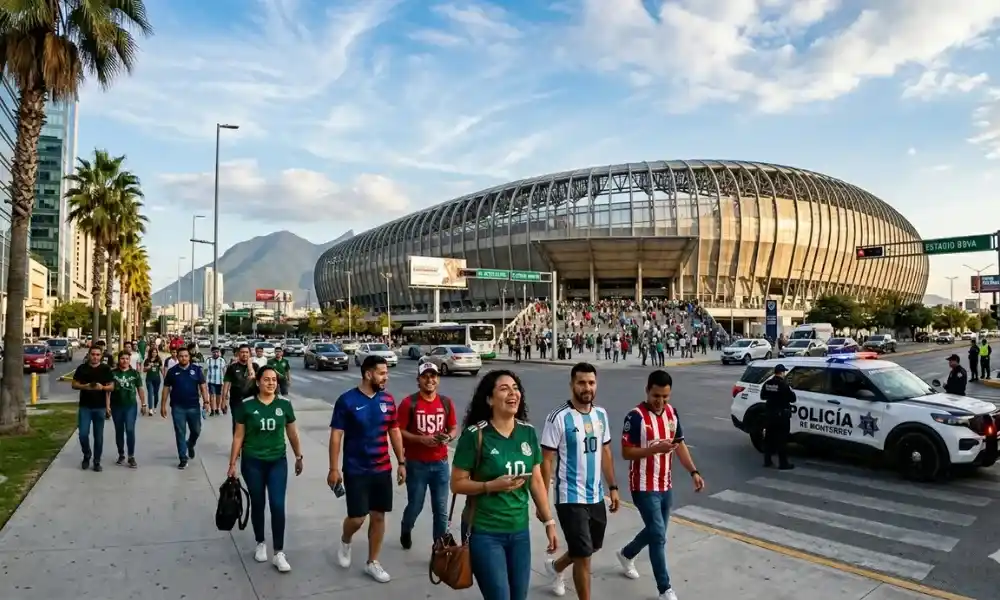
Estadio Azteca sits in the southern part of the city, and while the immediate stadium perimeter will be heavily secured during matches, surrounding neighborhoods can feel more variable depending on the street and time of day. Fans moving in and out of the venue will be within a controlled security environment, but the transition zones outside official event management areas require more awareness, especially late at night.
Higher-risk conditions are typically linked to outer boroughs and less-trafficked residential or transit-adjacent areas where petty crime can be more common. These are not places most visitors need to pass through if their itinerary is centered around matches and tourist districts.
The practical takeaway is simple: safety in Mexico City is highly zone-dependent, and most World Cup movement paths will sit within its more secure, well-patrolled corridors.
Cartel Violence in Mexico
Cartel violence in Mexico is real, widespread, and well documented in public security reports. Treating that as a serious concern is not alarmist; it is simply acknowledging the baseline reality that shapes travel advisories. The more important question for World Cup fans is where that violence actually occurs, and whether it overlaps with match-day environments.
Most high-intensity cartel activity is concentrated in specific states such as Sinaloa, Tamaulipas, Colima, and parts of Guerrero. These are not the areas hosting World Cup matches or major fan zones. Mexico City operates under a separate security structure and is geographically and operationally removed from those conflict zones.
CDMX itself is a megacity of over 20 million people, with established policing systems across its main international districts. Areas like Roma, Condesa, Polanco, and the Historic Centre are already heavily used for international tourism and large public events. Estadio Azteca has previously hosted World Cup finals in 1970 and 1986, which still shapes its security planning approach today.
That said, risk does not disappear. The more realistic concerns for visiting fans are opportunistic crimes such as pickpocketing, phone theft, and occasional express kidnapping in specific peripheral zones. These risks sit in a different category from cartel conflict, but still require basic situational awareness and planning.
How Safe Is Estadio Azteca for International Tourists?
For fans asking whether Estadio Azteca is safe during World Cup 2026, the answer depends largely on the stadium environment itself rather than the surrounding city narrative.
The venue has a long history of hosting high-profile international football, including the 1970 and 1986 World Cup finals, as well as countless major matches without any widely reported large-scale fan safety incidents.
For 2026, security planning is expected to be layered. Mexican federal security forces will handle outer perimeter control, while FIFA’s standardized stadium security protocols will apply inside the venue. This includes coordinated access control, screening procedures, and integrated oversight between local and federal authorities.
On match day, fans are advised to use official transport options such as shuttles or ride-hailing services rather than street taxis. Arriving early reduces congestion at entry points, and carrying only essential items helps speed up security checks and lowers theft risk in crowded queues.
Transport Safety in Mexico City for World Cup Fans
Transport is where most visitor risk in Mexico City tends to appear, but it is also the area where routine choices have the strongest impact on safety.
Uber is widely used by international travelers and is generally considered the safer option because trips are tracked, prepaid, and tied to verified driver profiles. Street taxis, especially those hailed directly on the road rather than booked through apps or official stands, carry higher risk for scams or rare express kidnapping cases and are best avoided by visitors unfamiliar with local routes.
The metro system is heavily used and usually safe during daytime hours on busy lines, although crowded conditions can create opportunities for pickpocketing. Late-night solo travel on the metro is not recommended.
For World Cup 2026, official shuttle services between fan zones, central districts, and Estadio Azteca are expected and should be the first choice for match-day travel. Within tourist areas like Roma, Condesa, and Polanco, walking is common during daylight, while group movement after dark is the more cautious approach.
What Mexican Authorities and FIFA Are Doing for Fan Safety
Security planning for World Cup 2026 is not being left to chance. Mexican authorities, alongside FIFA, are building a layered response that reflects the scale of the tournament and the number of international visitors expected across host cities.
Mexican Federal Police and the National Guard will be deployed in expanded numbers around stadiums, transport hubs, and official fan zones throughout the event. This presence is designed to manage both crowd control and rapid incident response if needed.
All venues must comply with FIFA’s standardized security framework, which has been used in previous tournaments in Qatar, Russia, and Brazil. These protocols cover access control, perimeter security, and coordination between private and public security teams.
Mexico is also operating joint security coordination with US and Canadian agencies for real-time intelligence sharing during the tournament period. In Mexico City specifically, tourist police units will have a stronger presence in high-traffic visitor areas.
The broader incentive is straightforward: hosting a safe, well-managed World Cup is essential for Mexico’s global reputation and future international event opportunities.
Mexico City vs. Other World Cup 2026 Host Cities- HONEST COMPARISON
Is Mexico City Actually More Dangerous Than Other World Cup 2026 Venues?
Mexico City often gets singled out in safety discussions, but a broader comparison changes the picture. When comparing gun violence across World Cup 2026 host cities, major US venues like Los Angeles, Dallas, and Houston report higher homicide rates per capita than Mexico City’s main tourist districts
At the same time, cities such as New York and Los Angeles also deal with noticeable pickpocketing and theft risks in crowded transit and event areas.
The key difference is not simple “safe vs unsafe,” but the type and distribution of risk. In Mexico City, higher-risk activity is more geographically concentrated, while in US cities it is more dispersed across neighborhoods.
| Risk Comparison of Mexico City and US Host Cities | ||
|---|---|---|
| Risk Factor | Mexico City | US Host Cities |
| Gun violence | Low in tourist zones | Higher overall |
| Petty crime | Moderate | Moderate–High |
| Risk pattern | Geographically concentrated | More widespread |
Overall, no World Cup 2026 host city is 100% risk-free. The nature of risk simply varies by location and can be avoided with proper cautions.
Practical Fan Safety Checklist for Mexico City for FIFA World Cup 2026
Here are 10 safety tips for World Cup 2026 fans attending matches in Mexico City
- Register with the STEP program at travel.state.gov before departure.
- Stay in Roma, Condesa, Polanco, or the Historic Centre for easier access to tourist infrastructure.
- Use Uber or app-based rides only; avoid street-hail taxis.
- Rely on official FIFA or tournament shuttles when traveling to Estadio Azteca.
- Keep your passport secured in your hotel safe and carry a copy when out.
- Use a hidden pouch for cash and cards in crowded areas.
- Avoid visible displays of expensive phones, cameras, or jewelry.
- Move in groups at night and avoid isolated routes.
- Drink only bottled water during your stay.
- Save emergency contacts, your hotel address in Spanish, and embassy details offline.
Conclusion
Mexico City presents a layered safety picture for World Cup 2026 visitors. The risks are real, documented in official advisories and crime data, but they are also uneven and often manageable with basic preparation. Most issues affecting travelers are linked to transport choices, crowded public spaces, and specific districts rather than stadium areas or official fan zones.
At the same time, the city remains one of the most experienced global hosts of major sporting events, with Estadio Azteca carrying decades of international match history. Attending a World Cup match here is both a logistical and cultural experience that rewards informed planning.
For deeper preparation, read companion guides on travel insurance with evacuation coverage and a full breakdown of FIFA World Cup 2026 security threats across all three host nations.
More Related Blogs From Tips & Tricks




Margaret C. Jones
Margaret C. Jones, a passionate explorer of North America, captivates readers with her vivid tales on Travelarii’s blog. With a keen eye for hidden gems and local culture, Margaret offers expert advice and unique insights to enhance your travel experience. Her stories bring the diverse landscapes and vibrant cities of North America to life, inspiring readers to embark on their own adventures.