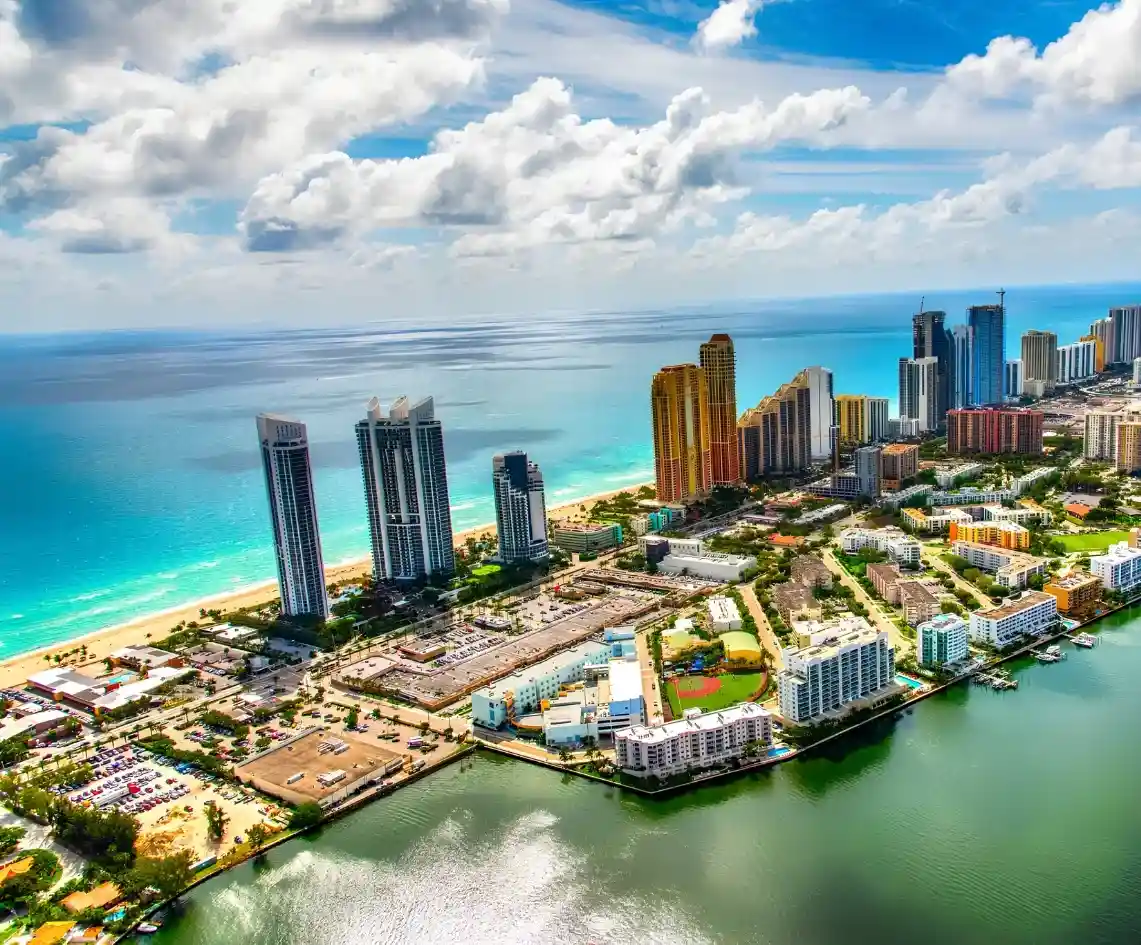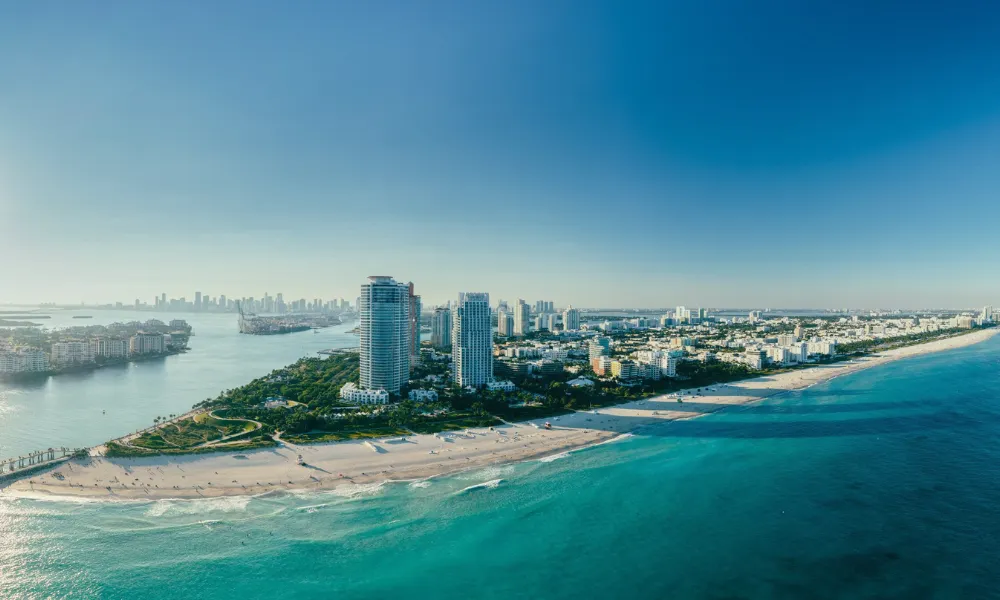
The best time to visit North Beach, Miami is early November through April, when highs run 76°F to 82°F and rain stays between 1.4 and 2.3 inches a month, according to WeatherSpark.
Prices move on a different schedule. South Florida rates peak from mid-December through early April and bottom out in September, but September sits at the peak of hurricane season.
Find Your Ideal Stay in North Beach on Vrbo
Search extensive private home inventory, review verified guest feedback, and book your trip
with complete confidence.
This guide is for travelers comparing North Beach dates by weather, storm risk, and nightly rate. Next, you’ll get the weather by month, a clear read on how storm season works, and what each stretch of the calendar costs.
Table of Content
- Pick the Best Month to Visit North Beach by Goal
- Know Where North Beach Sits in Miami Beach
- Check North Beach Miami Weather by Month
- Understand Miami Beach Hurricane Season
- Compare Nightly Rental Rates by Month
- Find the Cheapest Time to Visit North Beach Miami
- Weigh Off-Season Rental Prices in North Beach Miami
- Avoid the Worst Time to Visit North Beach Miami
- Sample Plans: Peak, Shoulder, and Value Trips
- FAQs
- More Related Blogs From Tips & Tricks
Pick the Best Month to Visit North Beach by Goal
WeatherSpark’s tourism score for Miami Beach rates early November to late April as the best overall weather window. Its beach and pool score tells a different story, peaking the first week of May. So the best time to visit North Beach depends on what you’re after.
Overall weather is strongest from early November to late April, since the tourism score favors clear, rainless days with perceived temperatures between 65°F and 80°F.
Beach and pool days are best from late March to late May, and again from mid-October to late November. April, May and November carry moderate rates, which makes those beach days cheaper than a winter week.
Rates are lowest in September, and a South Florida season guide shows October staying low to moderate. That makes those two months the cheapest time to visit North Beach Miami. Crowds thin out in September and October too.
If you want to stay outside hurricane season, book December through May. The season runs June 1 to November 30, so the worst time to visit North Beach Miami for storm risk falls inside that span.
Once you’ve picked a window, the things to do in North Beach Miami guide fills in the days. The beach and pool window and the overall weather window overlap but don’t match, so pick your goal first.
Know Where North Beach Sits in Miami Beach
North Beach runs from 63rd Street to 87th Terrace, ZIP 33141. It’s the northern neighborhood of Miami Beach, with Surfside and Bal Harbour just north.
North Beach Oceanside Park fronts the sand from 79th to 87th Streets, with about 28 acres of park behind it, according to the City of Miami Beach. The Greater Miami CVB lists North Beach among its Miami Beach neighborhoods. Everything here covers Miami Beach’s North Beach, not other cities that share the name.
Use those street numbers to check how far a North Beach Miami listing sits from the sand, then browse North Beach stays for your dates. Collins Avenue runs along the sand, and Harding Avenue sits inland.
Check North Beach Miami Weather by Month
North Beach Miami weather by month follows the Miami Beach pattern, and WeatherSpark’s averages show how wide the swing runs. January brings a 63°F average low. August brings an 89°F average high. For official normals, check the National Weather Service Miami climate page. To match those numbers to open dates, start at the Miami stays hub.
Each entry below lists the average high, the average low and rainfall, in that order. January runs 76°F, 63°F and 1.5 inches. February runs 77°F, 64°F and 1.7 inches. March runs 79°F, 67°F and 2.0 inches. April runs 82°F, 70°F and 2.3 inches. May runs 85°F, 74°F and 3.7 inches. June runs 87°F, 77°F and 6.3 inches.
July runs 89°F, 78°F and 4.7 inches. August runs 89°F, 78°F and 5.1 inches. September runs 88°F, 77°F and 5.7 inches. October runs 85°F, 74°F and 4.1 inches. November runs 81°F, 70°F and 2.1 inches. December runs 77°F, 66°F and 1.4 inches.
November Through April (Cool and Dry)
The cool season runs December 6 to March 9, with highs below 78°F. Across November through April, highs sit between 76°F and 82°F, and the rain stays light. December is the driest month at 1.4 inches. April is the wettest of the stretch at 2.3 inches, which is still modest next to summer. April also tops the stretch for heat at 82°F, and November eases back to 81°F.
February is the clearest month, with sky clear or partly cloudy 69% of the time. January is the coolest by temperature, thanks to that 63°F average low. November is the windiest month, averaging 12.8 mph, so check surf conditions before a beach morning.
Choose February if you want the best odds of clear skies. December suits you if dry days matter most. These months also carry the highest rates in South Florida, so weigh the weather against your budget.
May Through October (Hot and Wet)
The hot season runs June 6 to September 30, with highs above 87°F. From May through October, highs sit between 85°F and 89°F, and lows hold between 74°F and 78°F. Rain climbs fast. May brings 3.7 inches, and June is the wettest month at 6.3 inches. October drops back to 4.1 inches, about double November’s 2.1.
Humidity builds with the heat. July has 31 muggy days. Plan outdoor time for the morning and expect the day to feel heavy from June onward. September is the cloudiest month, with sky overcast or mostly cloudy 66% of the time.
Understand Miami Beach Hurricane Season
The Atlantic hurricane season runs June 1 to November 30, so Miami Beach spends six months of every year inside it. The peak weeks matter more than the full span. The Greater Miami CVB publishes storm guidance for visitors, and the National Hurricane Center issues the watches and warnings. Use the dates below as your booking filter, and you’ll know quickly whether a stay carries storm risk.
Know the Season Dates and the Peak
The season starts June 1 and ends November 30. The Greater Miami CVB puts the peak at mid-August to mid-October. NOAA’s NESDIS page marks September 10 as the climatological peak, based on when the most named storms occurred across the last 100 hurricane seasons.
Keep that date in mind if you’re booking September. The heaviest risk sits in a window of about two months, even though the season itself spans six. Early June sits before the CVB’s peak and November sits after it, though both still fall inside the official season.
The CVB defines a hurricane as a storm with winds of 74 mph or more and a tropical storm as one with winds of 39 to 73 mph. Those labels show up in every forecast. Storm risk is essentially zero from December through May, so those months are the safest choice if hurricane season Miami worries sit at the top of your list.
Plan for a Watch, a Warning, or an Evacuation
A watch means hurricane or tropical storm conditions are possible within 36 to 48 hours. A warning means they’re expected within 24 to 36 hours. The National Hurricane Center issues both, so check its forecast the week before you fly.
When a warning goes up, waterfront hotels are asked to evacuate temporarily until it’s lifted, and hotels relocate guests inland. Evacuation orders come only when the storm threat is significant. If the county orders an evacuation, hotels and most visitor facilities close, and the CVB advises rescheduling your trip until the storm passes.
Don’t rush back the moment the wind drops. Wait for beach access restrictions to lift. If the area took damage, hold off until electricity, roads and other infrastructure are restored.
The CVB’s guidance also lists the Florida Division of Emergency Management and the City of Miami Division of Emergency Management, alongside the National Hurricane Center. Ask your hotel before you arrive how it handles evacuations, since the hotel carries out the relocation. Save the Miami-Dade Emergency Management and City of Miami Beach emergency pages before you fly.
Compare Nightly Rental Rates by Month
Nightly rates in South Florida follow three tiers, and the season guide behind them covers the region, not North Beach alone. Use the tiers to read rental prices by month before you open a search.
Peak runs from December through early April. December, January and February all rate high, and March climbs higher as spring break arrives.
Mid-March to early April is the priciest stretch of the year, and demand holds from mid-December on as visitors leave the cold up north. Miami Music Week and Ultra Music Festival fall in March, and Art Basel Miami Beach lands in December, so event weeks can lift demand inside the tier. The season guide also suggests skipping the week before and after Easter for fewer crowds.
Shoulder covers April, May and November at moderate rates, and prices ease further in May once spring break ends. June through August runs lower than winter once the snowbirds leave, though heat and humidity climb.
Low belongs to September, the cheapest month of the year, with October close behind at low to moderate. Statewide, fall hotel prices run 40% to 60% below the winter peak. That benchmark covers Florida as a whole. Read the tiers as a ranking, not a quote. They tell you which months cost more than others, and live listings tell you by how much.
No single dollar figure holds for North Beach rental prices across a whole month, because rates update for the dates you select. If you want a beach address, start with the beachfront stays collection and price your exact dates. Compare the same stay length across two months before you decide.
Find the Cheapest Time to Visit North Beach Miami
September carries the lowest prices of the year in South Florida, and October stays low to moderate. That makes those two months the cheapest time to visit North Beach Miami. If you’re hunting the cheapest month Miami Beach offers, September wins.
Summer pricing drops too once the snowbirds head home. Crowds follow the same curve, and September and October draw the thinnest of the year. Demand surges from mid-December through early April, and that’s the stretch you’re dodging when you book in the fall.
The trade-off is real. WeatherSpark calls September the cloudiest month, with sky overcast or mostly cloudy 66% of the time. It also sits inside the storm peak, with September 10 marking the climatological high point of the season. Check the cancellation terms before you book.
Pick September only if you can live with gray skies and storm risk. October still prices low to moderate, but the CVB’s peak window runs to mid-October, so the odds don’t disappear. Either way, book with a plan for rescheduling.
-
North Bay Village
Palm Tree Club Miami Hotel★ 4.3(1,102) $142/nightView Property -
Miami Beach
Hotel Rendale Miami Beach★ 4.2(876) $47/nightView Property -
Miami Beach
Nobu Hotel Miami Beach★ 4.7(2,145) $495/nightView Property -
Miami Beach
Seacoast Suites on Miami Beach★ 4.3(1,234) $189/nightView Property -
Miami Beach
Hotel Continental Miami Beach, Tapestry Collection by Hilton★ 4.5(1,567) $229/nightView Property -
Miami Beach
Beacon Hotel South Beach★ 4.2(1,543) $169/nightView Property -
Miami
Upsun Hotel★ 4.4(654) $328/nightView Property -
Miami Beach
Eden Roc Miami Beach★ 4.6(3,876) $359/nightView Property -
Bay Harbor Islands
Grand Beach Hotel Bay Harbor★ 4.3(1,341) $199/nightView Property -
Bal Harbour
The St. Regis Bal Harbour Resort★ 4.9(1,987) $1,095/nightView Property -
Miami Beach
Clinton Hotel South Beach★ 4.1(1,988) $159/nightView Property -
Miami Beach
Hilton Cabana Miami Beach Resort★ 4.4(2,765) $239/nightView Property -
North Bay Village
Palm Tree Club Miami Hotel★ 4.3(1,102) $142/nightView Property -
Miami Beach
Hotel Rendale Miami Beach★ 4.2(876) $47/nightView Property -
Miami Beach
Nobu Hotel Miami Beach★ 4.7(2,145) $495/nightView Property -
Miami Beach
Seacoast Suites on Miami Beach★ 4.3(1,234) $189/nightView Property -
Miami Beach
Hotel Continental Miami Beach, Tapestry Collection by Hilton★ 4.5(1,567) $229/nightView Property -
Miami Beach
Beacon Hotel South Beach★ 4.2(1,543) $169/nightView Property -
Miami
Upsun Hotel★ 4.4(654) $328/nightView Property -
Miami Beach
Eden Roc Miami Beach★ 4.6(3,876) $359/nightView Property -
Bay Harbor Islands
Grand Beach Hotel Bay Harbor★ 4.3(1,341) $199/nightView Property -
Bal Harbour
The St. Regis Bal Harbour Resort★ 4.9(1,987) $1,095/nightView Property -
Miami Beach
Clinton Hotel South Beach★ 4.1(1,988) $159/nightView Property -
Miami Beach
Hilton Cabana Miami Beach Resort★ 4.4(2,765) $239/nightView Property
For the wider picture across the state, the best time to vacation in Florida guide ranks every month. Price a September week against an October week, because September is the cheapest month and October stays low to moderate.
Weigh Off-Season Rental Prices in North Beach Miami
Sample listings around Miami Beach show nightly rates from $47 at Hotel Rendale Miami Beach to $169 at Beacon Hotel South Beach and $359 at Eden Roc Miami Beach. The St. Regis Bal Harbour Resort, just north of Surfside, lists at $1,095. Those four numbers show how far property type alone can move a nightly rate.
Off-season rental prices North Beach Miami travelers see depend on what you book. North Beach vacation rentals sit beside hotels in the listings, and the stays pages cover apartments, condos, studios, suites and resorts. Filter by type first, then by date. In the sample above, the resort sits at the top of the range. Some listings sit in South Beach on Ocean Drive, so check the neighborhood on each one before you compare rates. Because rates update by date, the same stay can price very differently in September and December.
Pair a low-rate month like September or October with a smaller property type and you stack two savings. Rates update for your selected dates, so check the live listings before you set a budget. Compare property types before you compare dates, since listed nightly rates near Miami Beach span from $47 to $1,095.
Start with apartments or condos and filter to your dates.
Avoid the Worst Time to Visit North Beach Miami
August brings 18.3 wet days, an 89°F average high and a 78°F low, according to WeatherSpark. That makes it the hottest month and one of the wettest. June is the wettest at 6.3 inches, and September follows at 5.7. The hot season runs June 6 to September 30, with highs above 87°F.
The worst time to visit North Beach Miami depends on what you’re avoiding. If it’s storms, skip late August to mid-October, the span the Greater Miami CVB gives as the peak. If it’s heat, skip July and August, when highs stay at 89°F. If it’s rates, skip December through early April, since prices climb from mid-December and spring break pushes them to the top from mid-March to early April.
The worst month Miami Beach has on paper changes with your priority. August takes the heat and wet days. September takes the storm odds and cloud cover. March takes the rate spike. Spring breakers pack Miami Beach in March, and Easter weeks add crowds, so avoid the week before and after if you can. July adds 31 muggy days on top of the heat. Rank storms, heat and cost, then dodge the one that bothers you most. Skip late August to mid-October for storms, July for humidity, and mid-March to April for rate spikes.
If crowds are your main worry, the best quiet vacation spots in Florida offer other places to look.
Sample Plans: Peak, Shoulder, and Value Trips
January keeps highs at 76°F with 1.5 inches of rain. Rates sit in the high tier. The cool season, December 6 to March 9, keeps highs below 78°F, and the water bottoms out at 76°F in February. This is the best time to visit North Beach for dry weather, and the mild highs suit a walk through the Art Deco Historic District.
November is the shoulder pick. Highs reach 81°F, rates sit at moderate, and it’s the windiest month at 12.8 mph. North Beach Social at the Miami Beach Bandshell is free on third Thursdays, with November 19 and December 17, 2026 as the next two dates.
September is the value plan. The average rate is the lowest of the year, rain totals 5.7 inches, and the hurricane peak falls around September 10. Cloud cover runs highest too, at 66%, so pack for gray skies and check the forecast before you fly.
Water runs at 78°F or warmer outside December 20 to April 10, and water activities in South Beach cover your options. A North Beach Miami trip in this window rewards flexible dates and a storm plan. The Bandshell dates in the November plan cover 2026 only, so confirm 2027 dates before you plan around them.
FAQs
March. WeatherSpark’s tourism score peaks in the first week of March, and Miami Music Week runs March 22 to 28, 2027. Beach and pool scores peak later, in the first week of May. Expect higher rates then, since spring break pushes South Florida prices to their highest from mid-March to early April.
Yes, with a plan, according to the Greater Miami CVB. Storms usually leave a window to prepare, and Miami-Dade County can bus visitors without cars to shelters. Evacuation centers are a last resort for visitors who can’t find other lodging.
No. Afternoon storms usually pass within an hour, though August still averages 18.3 wet days, according to WeatherSpark. Daily afternoon thunderstorms are common from roughly May to October, so plan beach time for the morning and keep afternoons open.
Book 3 to 4 months ahead for winter trips to South Florida. For peak weeks, including spring break from mid-March to early April, that lead time is close to required. Events like Art Basel Miami Beach in December and Miami Music Week in March add demand, and rates update for the dates you pick, so run your exact stay.
February is the coolest month at 76°F. The water stays below 78°F from December 20 to April 10, according to WeatherSpark, so winter swims run cooler than the rest of the year. From mid-April on, the water sits at 78°F or warmer.
Each property sets its own policy. The Greater Miami CVB urges hotels to refund unused nights as soon as a visitor evacuation order is issued. Check the policy before you book and consider travel insurance.
More Related Blogs From Tips & Tricks
Art Deco Historic District walking guide for Tourists
Miami International Airport to South Beach
Margaret C. Jones
Margaret C. Jones, a passionate explorer of North America, captivates readers with her vivid tales on Travelarii’s blog. With a keen eye for hidden gems and local culture, Margaret offers expert advice and unique insights to enhance your travel experience. Her stories bring the diverse landscapes and vibrant cities of North America to life, inspiring readers to embark on their own adventures.