

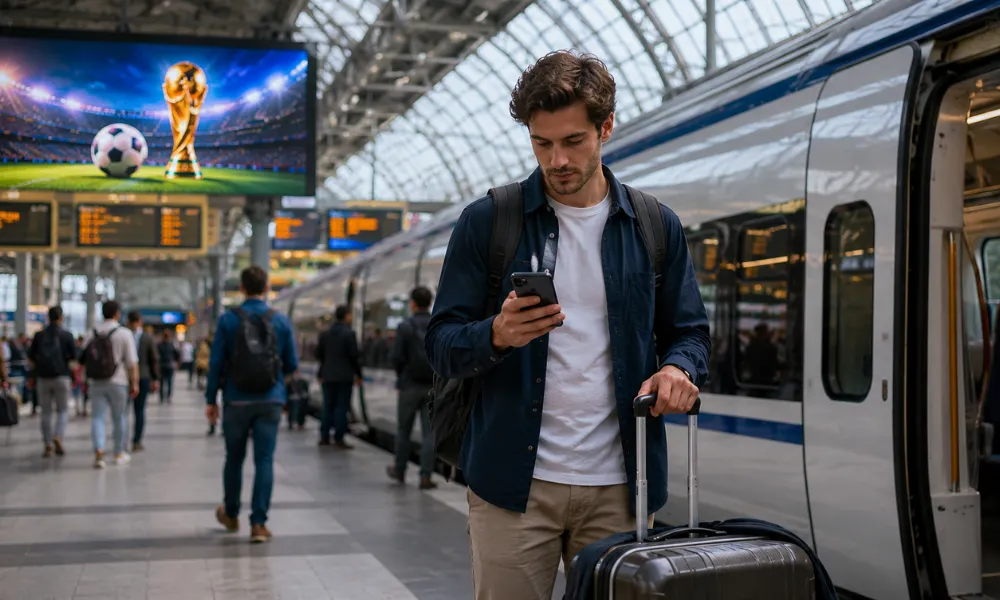
Fans have spent months arguing about FIFA World Cup 2026 ticket prices, but transport may end up draining wallets just as aggressively. The tournament stretches across the United States, Canada, and Mexico, meaning supporters could end up paying hundreds simply to move between host cities.
A last-minute Amtrak ride from New York to Philadelphia can easily climb past $150 during peak demand, which in some cases is higher than a Group Stage ticket.

FIFA World Cup 2026 transport costs vary heavily depending on timing, distance, and host city. Inter-city train fares can range from $30 to $150+, while domestic flights may sit anywhere between $80 and $300+ before baggage fees and surge pricing.
This article breaks down the real transportation costs fans should expect across all three host countries, along with practical ways to avoid overpriced flights, rail tickets, and match-day travel mistakes.
| Book Hotels Near FIFA WC ’26 Stadiums |
|---|
Table of Content
- FIFA World Cup 2026 Transport Cost Comparison
- Transport Costs Broken Down by Host Country
- The $150 Train Ride Problem And How to Avoid It
- Getting Around Inside Host Cities: What It Actually Costs
- FIFA Transport Passes, Fan Zones & Official Packages: Are They Worth It?
- Conclusion
- More Related Blogs From Tips & tricks
FIFA World Cup 2026 Transport Cost Comparison
| World Cup 2026 Route Transportation (USD per person) | ||||
|---|---|---|---|---|
| Route | Mode | Budget Cost | Mid-Range | Last-Minute |
| NYC to Philadelphia | Train (Amtrak) | $30 | $80 | $150+ |
| Dallas to Houston | Bus / Drive | $20 | $45 | $70 |
| Los Angeles to San Francisco | Flight / Train | $60 | $120 | $200+ |
| Toronto to NYC | Flight | $100 | $180 | $300+ |
| Mexico City (local) | Metro / Bus | $1 | $5 | $15 |
| Miami to Atlanta | Flight | $70 | $140 | $250+ |
Prices during the FIFA World Cup 2026 are expected to spike sharply around match dates, especially in host cities with limited hotel and transport capacity. Booking transportation three to six months in advance remains the single biggest factor in avoiding inflated fares.
Transport Costs Broken Down by Host Country
Transportation during the FIFA World Cup 2026 will look very different depending on which host country fans choose as their base. The United States presents the biggest logistical challenge because of the enormous distance between host cities, while Canada offers a more concentrated setup with only two venues.
Mexico may end up being the cheapest overall option for day-to-day movement thanks to low public transit and rideshare costs. For many supporters, transport expenses will become the second-largest tournament cost after accommodation.
Flights, rail tickets, airport transfers, and even match-day rideshares are expected to surge as demand increases closer to kickoff. Understanding how each country’s transport system works can make a major difference in total spending, especially for fans planning to attend multiple matches across different cities.

Cost Breakdown of Transports during FIFA World Cup in USA
The United States creates the largest transport headache for FIFA World Cup 2026 fans simply because of scale. With 11 host cities spread across thousands of miles, inter-city travel becomes unavoidable for supporters planning to follow multiple matches.
Routes like New York to Boston may stay manageable by train, but cross-country trips such as Seattle to Los Angeles can quickly become expensive. Domestic flights between host cities often range from $80 to $300+ depending on booking timing, while Amtrak tickets on busy Northeast Corridor routes can surge past $150 during match weekends.
Bus operators like Greyhound and FlixBus remain cheaper alternatives for shorter routes such as Dallas to Houston, usually sitting between $20 and $70. The tradeoff is longer travel time and reduced flexibility during peak tournament dates.
One overlooked issue is surge pricing around stadium zones. Flights, rideshares, and even regional rail tickets may spike sharply within 24 to 48 hours of major matches involving the United States or other high-demand teams.
A practical workaround is using secondary airports. Flying into Burbank instead of LAX, or Newark instead of JFK, can sometimes shave hundreds off total travel costs.
Cost Breakdown of Transports during FIFA World Cup in Canada
Canada’s setup is much easier to navigate because only Toronto and Vancouver will host matches. Most fans will likely stay within a single city rather than bouncing across the country.
Toronto’s TTC system keeps local transport relatively affordable, with subway and streetcar access covering much of the downtown core. Vancouver’s SkyTrain is another strong option, especially since it connects the airport directly to central areas without requiring expensive taxis.
The real cost problem appears when fans combine Canada with United States matches. Flights between Toronto and New York could easily jump past $300 during tournament peaks, particularly if knockout fixtures overlap.
Cost Breakdown of Transports during FIFA World Cup in Mexico
Mexico City may end up being the best-value host location for transport costs. Since it is the only Mexican host city, fans avoid expensive inter-city travel entirely.
The city’s metro system costs only a fraction of what travelers pay in North America, while Uber rides are typically far cheaper than comparable trips in US or Canadian cities.
For airport transfers, fans will likely compare three main choices: the metro, rideshare apps, and official shuttle services. The metro is the cheapest option by far, while Uber in Mexico will provide the best balance between convenience and price.
The biggest challenge in Mexico City is congestion. Match-day traffic around the airport and stadium corridors could dramatically increase transfer times even when fares stay relatively low.
The $150 Train Ride Problem And How to Avoid It
One of the fastest ways fans will overspend during the tournament is through last-minute rail bookings, especially in the northeastern United States.
Amtrak uses a dynamic pricing model, which means ticket prices rise as seats disappear and demand increases. During FIFA World Cup 2026 match weekends, routes connecting host cities could sell out days in advance.
A realistic example – a supporter traveling from New York City to Philadelphia might see tickets priced around $30 months ahead of the match. Wait until the week of kickoff, and that same seat can jump past $150 with little warning.
The problem is not distance. It is timing, limited inventory, and concentrated demand hitting the same travel corridors simultaneously.
Here’s how to avoid inflated transport costs:
- Book trains and flights immediately after confirming match tickets
Prices usually rise in stages as inventory shrinks.
- Use FlixBus or Megabus on shorter routes
These alternatives are slower than Amtrak but often dramatically cheaper.
- Split rental car costs with a group
For three or four fans traveling together, driving can cost less than multiple train tickets.
- Check FIFA hospitality and fan travel packages
Some bundled packages may include discounted transport options.
- Travel outside match day whenever possible
Even shifting departure by one day can reduce fares sharply.
- Use Google Flights’ calendar tool before locking dates
Small date changes sometimes save more than the ticket itself.
Transport is just one piece of the puzzle. Fans looking for the best ways to reduce expenses at the FIFA World Cup 2026 will find that combining smart transportation choices with early accommodation and ticket booking yields the greatest savings overall.
Getting Around Inside Host Cities: What It Actually Costs
Flights and inter-city trains usually get the attention, but daily movement inside host cities can quietly drain a World Cup budget. A few rides per day across two or three matchdays adds up fast, especially in North American cities where stadiums sit far from downtown cores.
- New York City: Subway fares sit at roughly $2.90 per ride, making public transit manageable for most trips. The problem starts after matches. Uber and Lyft prices around stadium areas can spike to $25–60 or more during peak demand.
- Los Angeles: Transport planning is harder here than many fans expect. SoFi Stadium lacks a direct metro connection, so most visitors end up relying on rideshares or event shuttles. Expect transportation costs around $20–50 each way on matchdays.
- Dallas: Public transport exists, though the city still leans heavily on cars. Fans staying downtown should budget roughly $20–35 each way for rideshares to stadium zones.
- Mexico City: Easily the cheapest host city for local transport. Metro rides cost about $0.25, while Uber trips across large sections of the city often stay between $4–8.
- Toronto: The TTC subway system remains one of the more reliable options among host cities, with fares around $3.30 per ride and relatively smooth matchday access.
The gap between cities is huge. Mexico City keeps daily movement affordable, while Los Angeles could become the most expensive and inconvenient host city for fans without a car.
FIFA Transport Passes, Fan Zones & Official Packages: Are They Worth It?
FIFA has not fully detailed its 2026 transport programs yet, though past tournaments offer a strong clue about what may come. During Qatar 2022 and Russia 2018, ticket holders gained access to dedicated shuttles, match-day transit perks, and special rail services connecting major venues.
Several 2026 host cities are also expected to introduce temporary public transport deals tied to match tickets. That could mean free subway access on game days, discounted regional rail passes, or expanded shuttle routes around stadium districts. These announcements typically arrive closer to the tournament.
Fans planning early should keep an eye on official FIFA travel partners and host city transport authorities before locking in expensive rail or rideshare bookings.
This is also where accommodation choices matter. Staying near transit corridors could save more money than finding the cheapest hotel rate across town.
Conclusion
Ticket prices usually dominate the World Cup conversation, yet transport may end up being the expense that catches fans off guard. A single last-minute train booking between host cities can cost more than a match ticket, while repeated rideshares inside cities like Los Angeles or Dallas add up quickly over a week.
The good news is that transport costs are still manageable with early planning. Booking rail tickets months ahead, choosing host cities with reliable public transit, and staying near stadium routes can cut hundreds from an overall trip budget.
With 2026 expected to bring record-breaking travel demand, this is one guide worth bookmarking before prices start climbing.
More Related Blogs From Tips & tricks




Margaret C. Jones
Margaret C. Jones, a passionate explorer of North America, captivates readers with her vivid tales on Travelarii’s blog. With a keen eye for hidden gems and local culture, Margaret offers expert advice and unique insights to enhance your travel experience. Her stories bring the diverse landscapes and vibrant cities of North America to life, inspiring readers to embark on their own adventures.